
• MDI
  • German version
  • Contact us
MDI Management Development
  • Agile leadership
  • Lateral Leadership
  • Leadership Impact
  • Leadership Development
Select Page
AI Hears; Humans Listen: Become a Master of Attunement

AI Hears; Humans Listen: Become a Master of Attunement

by Hamza Khan | Apr 18, 2025 | Digital Transformation, Leadership and AI, Leadership in the digital transformation | 0 comments

AI Hears; Humans Listen: Become a Master of Attunement

Prefer to listen to the article? Click below to access our AI speech-generated audio. However, if you want to read it as usual, keep scrolling.

AI Hears; Humans Listen: Become a Master of Attunement

Not Black Mirror. Not Severance. The reality we’re in is starting to feel a lot more like Her.

According to eye-opening research published in Harvard Business Review, the most common use of generative AI isn’t writing code, synthesizing data, or even creating content.

It’s companionship.

Let that sink in. At the frontier of one of the most advanced technological revolutions in history, people aren’t just looking for answers or performance enhancements—they’re looking to feel heard.

The Burnout I Didn’t Catch

At this year’s Leadership Horizon, my partner Bailey Parnell and I are set to announce the groundbreaking AI product we’re building at SkillsCamp. It’s the fastest-moving venture I’ve ever been a part of. 

In my previous companies, we’d maybe pivot once or twice a year. Now we’re pivoting multiple times a day. Strategies shift at breakfast. Features change by lunch. Priorities rearrange by dinner.

It’s exhilarating. It’s also exhausting.

In the middle of this whirlwind, we missed something important—one of our teammates was struggling to keep up. The constant change had become disorienting. They were slipping into the early stages of burnout. And here’s the part that really hit me:

I wrote the book on beating burnout.

The Burnout Gamble is explicitly about how leaders can prevent precisely this kind of thing. On top of that, during my keynote speech at Leadership Horizon a few years back, I preached the gospel of human-centered leadership—of slowing down to tune in. Of attunement.

Even though I had been hearing my colleague, the truth is, I hadn’t been listening.

I had only been reacting. Optimizing. Building the future of leadership. But not asking, in the way that only a human can:

“Kaif al hal?” (كيف الحال؟)

It’s Arabic for “How are you?”—but it literally translates to: How is your heart doing? AI can’t ask that. At least not yet. And even when it can, it won’t mean it.

Everything’s Amazing. Nobody’s Happy.

Over the past year, we’ve seen an explosion in AI capabilities. From Claude and DeepSeek to custom GPTs, agents, copilots, and beyond—we’ve unlocked tools that can write like us, talk like us, and think faster than us. And yet amid all this brilliance, morale is shaky. Anxiety is rising. Relationships at work feel more fragile. Loneliness is still trending. 

Somehow, despite everything being amazing…nobody seems to be fully happy. And that’s because the problem isn’t just about what’s being built. It’s about what’s being missed.

Become a Master of Attunement

Stephen Covey once said:

“The biggest communication problem is that we do not listen to understand. We listen to reply.”

These days, we don’t even reply—we prompt. We’ve become so good at asking AI the right questions, we’ve forgotten how to ask each other the real ones.

So here’s an idea: Let AI be your productivity engine. Your logic brain. Your pattern-detecting genius. But let you be the soul. The resonator. The attuner. The etymology of attunement is “to bring into harmony.” It’s not about fixing people—it’s about feeling with them.

Become a Master of Attunement

In leadership, this means mastering what I call the Listening Ladder:

Emotion

Response Style

Example

Pity

Recognize

“That’s awful. At least it’s almost Friday.”

Sympathy

Care

“I’m sorry to hear that. That sounds tough.”

Empathy

Feel

“I hear you—it sounds like this workload is really taking a toll.”

Compassion

Act

“Let’s find a way to ease your load together.”

Attunement isn’t passive. It’s an active presence. It’s emotionally intelligent alignment. It’s not just knowing what someone is going through—it’s standing with them in it, and saying: I’m here.

But Isn’t AI Getting Good at This?

Sure, AI can detect emotional cues through text or tone. It can simulate concern. It can even give decent advice. But there’s a line it can’t cross: It doesn’t feel.

AI won’t sit in silence with a teammate who just got a life-changing diagnosis. It doesn’t notice how someone’s voice slightly trembles when they mumble “I’m fine.” Machines can’t experience shame, grief, awe, or love.

And it can’t ask, from the heart: How is your heart doing?

So yes, AI may one day outpace us in logic, language, and even innovation. But the sacred skill of soul-to-soul listening—that remains deeply, beautifully human.

The Future of Leadership

Ray Kurzweil prophesied that the 21st century won’t bring 100 years of progress—it will bring the equivalent of 20,000.

But no matter how far we go, one truth stays constant: People don’t quit companies. They quit leaders who don’t listen.

As the future of work accelerates, the leaders who thrive won’t be the ones who outpace AI. They’ll be the ones who partner with AI—and lead like humans.

Consider this your invitation to become irreplaceable. Learn to attune. Ask real questions. Listen with your whole body. Respond with presence. And the next time someone on your team seems off, don’t just check their output.

Check their heart.

Hamza Khan

Hamza Khan

Keynote Speaker

Hamza Khan is a best-selling author, award-winning entrepreneur, and globally-renowned keynote speaker whose TEDx talk “Stop Managing, Start Leading” has been viewed over two million times.

The world’s leading organizations trust him to enhance modern leadership, inspire purposeful productivity, nurture lasting resilience, and navigate constant change.


  • Facebook
  • Twitter
  • LinkedIn

This could also interest you:

What If AI Doesn’t Replace Us — But Drowns Us Out?

by Martin Maglia | 24. June 2026 | Digital Transformation, Leadership and AI, Short Knowledge Bits | 0 Comments

What If AI Doesn't Replace Us — But Drowns Us Out? Over the weekend, I watched a thought-provoking video from Rick Beato. (You can find the link at the end of this article.) For those who don't know him: Rick Beato is a musician, producer, educator, guitarist, and one...
Read More

Use It or Lose It: How AI and Digital Tools May Be Changing Our Brains

by Florian Biedermann | 26. May 2026 | Leadership and AI, Leadership Tips, Learning Transfer | 0 Comments

Use It or Lose It: How AI and Digital Tools May Be Changing Our Brains You travel to Madrid and want to chat with the locals, but you realize that after five years without practice, your rudimentary Spanish skills are now practically nonexistent and you even struggle...
Read More

How Artificial Intelligence Shapes Who We Become

by Meike Hinnenberg | 19. May 2026 | Impuls series, Leadership and AI, Leadership in the digital transformation | 0 Comments

How Artificial Intelligence Shapes Who We Become Meike’s Reflections on Artificial Intelligence Do you prefer to listen to this article? Click below to access our AI-generated audio version!How Artificial Intelligence Shapes Who We Become Meike’s Reflections on...
Read More

Zeca Ruiz on Cross-Generational Leadership and Navigating Change

by Jana Wölfl | 13. May 2026 | Leadership Impact, MDI Spotlight Series, Training Insights | 0 Comments

Zeca Ruiz on Cross-Generational Leadership and Navigating Change This blog is an excerpt from our new podcast! You can find the entire podcast episode here. Zeca Ruiz on Cross-Generational Leadership and Navigating Change In the fourth episode of our podcast “Voices...
Read More

AI-Empowered Leadership: 6 Guiding Principles

by Gunther Fürstberger | 14. April 2026 | Leadership and AI, Leadership Tips, MDI Whitepaper | 0 Comments

AI-Empowered Leadership: 6 Guiding Principles This blog post is a detailed summary of the whitepaper "Guiding Principles of AI-Empowered Leadership" by MDI's CEO, Gunther Fürstberger. You can find the full whitepaper here! Let's be honest: most conversations about AI...
Read More

What AI Shows You — and What It Doesn’t

by Meike Hinnenberg | 1. April 2026 | Digital Transformation, Impuls series, Leadership and AI | 0 Comments

What AI Shows You — and What It Doesn't Meike’s Reflections on Artificial Intelligence Do you prefer to listen to this article? Click below to access our AI-generated audio version! What AI Shows You — and What It Doesn't Meike’s Reflections on Artificial Intelligence...
Read More

Leading in the Age of AI: How AI Discourse Shapes Responsibility and Power

by Meike Hinnenberg | 18. March 2026 | Impuls series, Leadership and AI, Leadership Tips | 0 Comments

Leading in the Age of AI: How AI Discourse Shapes Responsibility and Power Meike’s Reflections on Artificial Intelligence Do you prefer to listen to this article? Click below to access our AI-generated audio version!Leading in the Age of AI: How AI Discourse Shapes...
Read More

AI Ethics for Leaders: Why Context and Critical Thinking Matter More Than Ever

by Meike Hinnenberg | 11. March 2026 | Impuls series, Leadership and AI, Learning Transfer | 0 Comments

AI Ethics for Leaders: Why Context and Critical Thinking Matter More Than Ever. Meike’s Reflections on Artificial Intelligence Do you prefer to listen to this article? Click below to access our AI-generated audio version!AI Ethics for Leaders: Why Context and Critical...
Read More

A Success Story – When AI Sharpens Human Judgement

by Claude MacDonald, Rafael Ungvari | 6. March 2026 | Customer Story, Digital Transformation, Leadership and AI | 0 Comments

A Success Story – When AI Sharpens Human Judgement Do you prefer to listen to this article? Click here to access our AI-generated audio version! When AI Amplifies Human Judgment: A Customer Success Story About This Project At MDI, we believe that great leadership and...
Read More

How Do You Lead People Who Don’t Think the Way You Do?

by Zeca Ruiz | 4. February 2026 | Leadership Impact, Leadership Tips, Learning Transfer | 0 Comments

How Do You Lead People Who Don't Think the Way You Do? Do you want to listen to this article? Click here to access our AI-generated audio version!   How do you lead people who do not think the way you do? Leadership is a challenge, especially when you are not...
Read More

Success Through Change: How to Stay Oriented During Transitions

Success Through Change: How to Stay Oriented During Transitions

by Anita Berger | Apr 14, 2025 | Impuls series, Leadership Impact, Leadership Tips | 0 comments

Success Through Change: How to Stay Oriented During Transitions

Do you prefer to listen to this article?

Click below to access our AI-generated audio version:

Success Through Change: How to Stay Oriented During Transitions

Change processes often involve challenges. They not only require structural adjustments but also an emotional examination of the new. For leaders, in particular, this means accompanying employees through the change, constructively absorbing resistance, and creating new perspectives. In this blog post, you will learn how to successfully implement changes and support your team in reorienting themselves.

This blog post is part of a change management series. Click here to go to the first part.

5. Letting Go and Finding New Perspectives

Psychological ownership – a concept developed by Jon L. Pierce, Tatiana Kostova, and Kurt T. Dirks – describes the feeling of personal responsibility and identification with a task or way of working, regardless of actual ownership. Employees invest time, energy, and commitment in their work, which creates a strong bond.

However, in change processes, this identification can lead to resistance, as it means letting go of what is familiar. In this case, it is the leader’s job to consciously guide this process while also providing orientation.

Tips:

  • Acknowledge the past: Give credit for your team’s past successes and show appreciation for their commitment.
  • Clarify the change: Be open about the need for change and emphasize the benefits for the team and the organization.
  • Offer new ways of identification: Encourage employees to actively participate in shaping change by giving them responsibility and the opportunity to help develop new structures.

6. Take Responsibility and Use Resources Wisely

Successful change requires not only strategic decisions but also a conscious use of resources. As a leader, you are challenged to strengthen your resilience while effectively leading your team through the change.

Tips:

  • Reflect on your role: regularly question your position in the change process and get support through coaching or peer feedback.
  • Self-care plan: consciously pay attention to your resources to maintain energy and clarity.
  • Use technological tools: rely on digital support, for example, through AI tools such as ChatGPT or knowledge databases, to gain new perspectives and find more efficient solutions.

Take responsibility and use resources wisely

7. Communication as the Key to Success

Transparent and continuous communication is essential to build trust and reduce uncertainty. Change processes are more likely to succeed if goals are repeatedly explained, expectations are formulated, and questions are actively encouraged.

Tips:

  • Provide regular updates: Continuously communicate the progress and background of the change.
  • Facilitate open dialogue: Create spaces for questions, feedback, and constructive exchange.
  • Consider individual needs: Tailor your communication to different types of employees to achieve the highest possible level of acceptance and participation.

8. A Structured Approach With the ADKAR-Model

The ADKAR model provides a clear structure for guiding change processes and taking employees with you step by step:

  1. Awareness: Create an understanding of the need for change.
  2. Desire: Create motivation by highlighting the benefits for individuals and the team.
  3. Knowledge: Ensure that all employees receive the necessary information and training.
  4. Ability: Support implementation with targeted coaching and constructive feedback.
  5. Reinforcement: Promote sustainable change through continuous support, further development, and transparent performance measurement.

Conclusion: Actively Shaping Change

Change processes are challenging but manageable with the right strategy. Through appreciative communication, clear structures, and conscious use of resources, you can safely lead your team through the change. Encourage a growth-oriented mindset, enable co-creation, and pay attention to your stability – because only those who are stable themselves can accompany others through challenging times.

Anita Berger

Anita Berger

MDI partner and trainer

Anita Berger is an executive coach, consultant, and trainer with a strong focus on leadership development in the VUCA/BANI world, design and facilitation of transformation processes and organizational culture development, as well as international human resources management. She is a co-owner and partner of MDI, Management Development International. With over 25 years of experience in management and leadership positions (including in the management of Coca-Cola Hellenic Austria & Slovenia & Konica Minolta Business Solutions) in various industries and company sizes, from medium-sized businesses to international corporations. Numerous contributions focus on leading virtual and hybrid teams, agile change management, organizational and leadership culture, as well as strategic talent management.
  • LinkedIn

Download our MDI Whitepaper here:

What might help you next?

What If AI Doesn’t Replace Us — But Drowns Us Out?

by Martin Maglia | 24. June 2026 | Digital Transformation, Leadership and AI, Short Knowledge Bits | 0 Comments

What If AI Doesn't Replace Us — But Drowns Us Out? Over the weekend, I watched a thought-provoking video from Rick Beato. (You can find the link at the end of this article.) For those who don't know him: Rick Beato is a musician, producer, educator, guitarist, and one...
Read More

Use It or Lose It: How AI and Digital Tools May Be Changing Our Brains

by Florian Biedermann | 26. May 2026 | Leadership and AI, Leadership Tips, Learning Transfer | 0 Comments

Use It or Lose It: How AI and Digital Tools May Be Changing Our Brains You travel to Madrid and want to chat with the locals, but you realize that after five years without practice, your rudimentary Spanish skills are now practically nonexistent and you even struggle...
Read More

How Artificial Intelligence Shapes Who We Become

by Meike Hinnenberg | 19. May 2026 | Impuls series, Leadership and AI, Leadership in the digital transformation | 0 Comments

How Artificial Intelligence Shapes Who We Become Meike’s Reflections on Artificial Intelligence Do you prefer to listen to this article? Click below to access our AI-generated audio version!How Artificial Intelligence Shapes Who We Become Meike’s Reflections on...
Read More

Zeca Ruiz on Cross-Generational Leadership and Navigating Change

by Jana Wölfl | 13. May 2026 | Leadership Impact, MDI Spotlight Series, Training Insights | 0 Comments

Zeca Ruiz on Cross-Generational Leadership and Navigating Change This blog is an excerpt from our new podcast! You can find the entire podcast episode here. Zeca Ruiz on Cross-Generational Leadership and Navigating Change In the fourth episode of our podcast “Voices...
Read More

AI-Empowered Leadership: 6 Guiding Principles

by Gunther Fürstberger | 14. April 2026 | Leadership and AI, Leadership Tips, MDI Whitepaper | 0 Comments

AI-Empowered Leadership: 6 Guiding Principles This blog post is a detailed summary of the whitepaper "Guiding Principles of AI-Empowered Leadership" by MDI's CEO, Gunther Fürstberger. You can find the full whitepaper here! Let's be honest: most conversations about AI...
Read More

What AI Shows You — and What It Doesn’t

by Meike Hinnenberg | 1. April 2026 | Digital Transformation, Impuls series, Leadership and AI | 0 Comments

What AI Shows You — and What It Doesn't Meike’s Reflections on Artificial Intelligence Do you prefer to listen to this article? Click below to access our AI-generated audio version! What AI Shows You — and What It Doesn't Meike’s Reflections on Artificial Intelligence...
Read More

Leading in the Age of AI: How AI Discourse Shapes Responsibility and Power

by Meike Hinnenberg | 18. March 2026 | Impuls series, Leadership and AI, Leadership Tips | 0 Comments

Leading in the Age of AI: How AI Discourse Shapes Responsibility and Power Meike’s Reflections on Artificial Intelligence Do you prefer to listen to this article? Click below to access our AI-generated audio version!Leading in the Age of AI: How AI Discourse Shapes...
Read More

AI Ethics for Leaders: Why Context and Critical Thinking Matter More Than Ever

by Meike Hinnenberg | 11. March 2026 | Impuls series, Leadership and AI, Learning Transfer | 0 Comments

AI Ethics for Leaders: Why Context and Critical Thinking Matter More Than Ever. Meike’s Reflections on Artificial Intelligence Do you prefer to listen to this article? Click below to access our AI-generated audio version!AI Ethics for Leaders: Why Context and Critical...
Read More

A Success Story – When AI Sharpens Human Judgement

by Claude MacDonald, Rafael Ungvari | 6. March 2026 | Customer Story, Digital Transformation, Leadership and AI | 0 Comments

A Success Story – When AI Sharpens Human Judgement Do you prefer to listen to this article? Click here to access our AI-generated audio version! When AI Amplifies Human Judgment: A Customer Success Story About This Project At MDI, we believe that great leadership and...
Read More

How Do You Lead People Who Don’t Think the Way You Do?

by Zeca Ruiz | 4. February 2026 | Leadership Impact, Leadership Tips, Learning Transfer | 0 Comments

How Do You Lead People Who Don't Think the Way You Do? Do you want to listen to this article? Click here to access our AI-generated audio version!   How do you lead people who do not think the way you do? Leadership is a challenge, especially when you are not...
Read More
4 Tips on How to Shape Change Processes as a Leader

4 Tips on How to Shape Change Processes as a Leader

by Anita Berger | Apr 3, 2025 | Impuls series, Leadership Impact, Leadership Tips | 0 comments

4 Tips on How to Shape Change Processes as a Leader

Do you prefer to listen to this article?

Click below to access our AI-generated audio version:

4 Tips on How to Shape Change Processes as a Leader

Imagine a dynamic network of paths that is constantly changing. While technological advances create new connections, existing paths are blocked by geopolitical tensions, economic crises, or social upheaval. In our globally interconnected world, events overlap rapidly – an enormous challenge that repeatedly tests companies and leaders.

As a leader, you bear responsibility in this complex environment and actively shape change. But how can you successfully support change processes? In this blog post, you will learn how to consider both the emotional and rational aspects of change, how to integrate resistance constructively, and how to promote a future-oriented mindset. With practical tips, you will develop strategies to fulfill your leadership responsibilities with clarity and effectiveness in times of high complexity and change.

1. Recognizing Different Reactions to Change

People react differently to change. While “change seekers” (people with an affinity for change) quickly recognize and want to take advantage of new opportunities, “change preservers” (people with a focus on preservation) feel more secure in the familiar status quo. These preferences are often based on individual values, experiences, and personality traits. The challenge for you as a leader is to involve both groups in change processes.

Individual Change Preferences

Tips:

  • Observe the behavior and reactions of your employees to recognize their change preferences.
  • Create orientation and proceed step by step to provide (process) security.
  • Use the energy of the “change seekers” to drive innovation while also acknowledging the contributions of the “change preservers” by involving them through transparent communication.

2. Consider Emotions in the Change Process

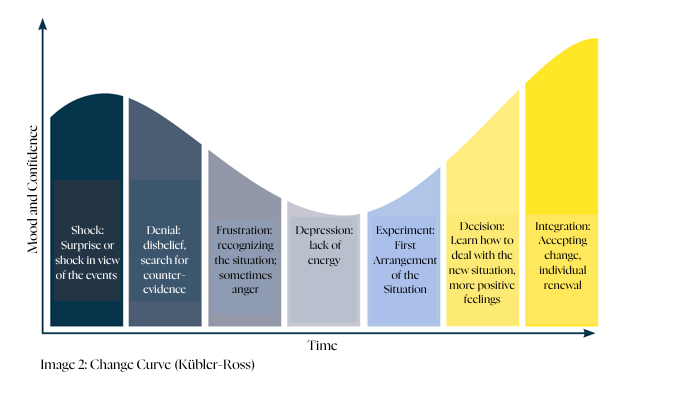
Resistance is part of every change process. As Elisabeth Kübler-Ross’s change curve (Figure 2) shows, many people go through emotional phases such as shock, frustration, and uncertainty before they reach acceptance and integration.

Tips:

  • Create an open atmosphere in which people can express their emotions and concerns.
  • Explain the change process clearly and repeatedly to enable a thorough understanding.
  • Show empathy and recognize the stress that comes with change.

    3. Establish a Growth Mindset

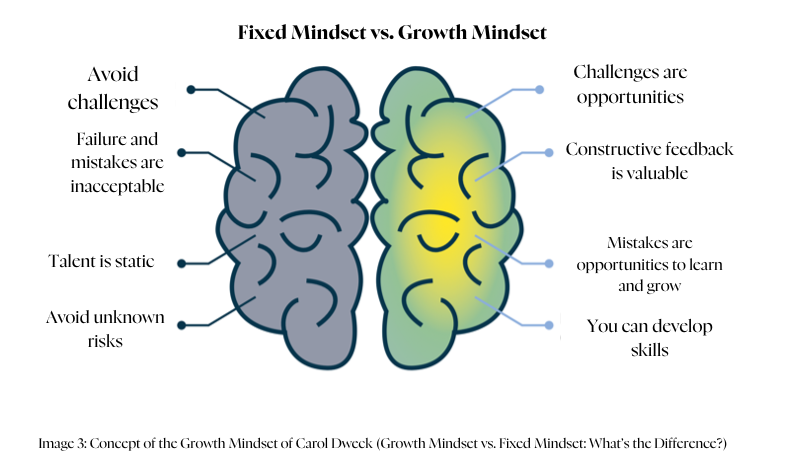
    A growth mindset helps you see challenges as opportunities, learn from mistakes, and continuously develop. This attitude is essential to remain capable of action in dynamic and complex situations.

    Tips:

    • Promote a willingness to embrace change by creating a learning-oriented environment – for example, through regular reflection sessions in which developmental steps and insights are discussed.
    • Establish an open feedback culture that supports the exchange of perspectives and ideas.
    • Create targeted learning opportunities, e.g. through peer learning or mentoring programs.
    • Celebrate progress – even small successes – and focus on positive development.
    • Set an example by being open to feedback and showing your willingness to learn.

      4. Broaden Your Perspective: Critically Question the Status Quo

      Discussions about change often focus either on the advantages of the new or the disadvantages of the change. However, the question of what disadvantages the status quo entails or whether it is even a viable option is rarely asked. This perspective can provide valuable insights for the change process.

      Image 2 Change Curve (Kübler-Ross)
      Fixed Mindset vs. Growth Mindset

      Tips:

      • Make the drivers of change transparent to create understanding and acceptance.
      • Explain the risks and disadvantages of sticking to the status quo – or make it clear if this is not a realistic option.
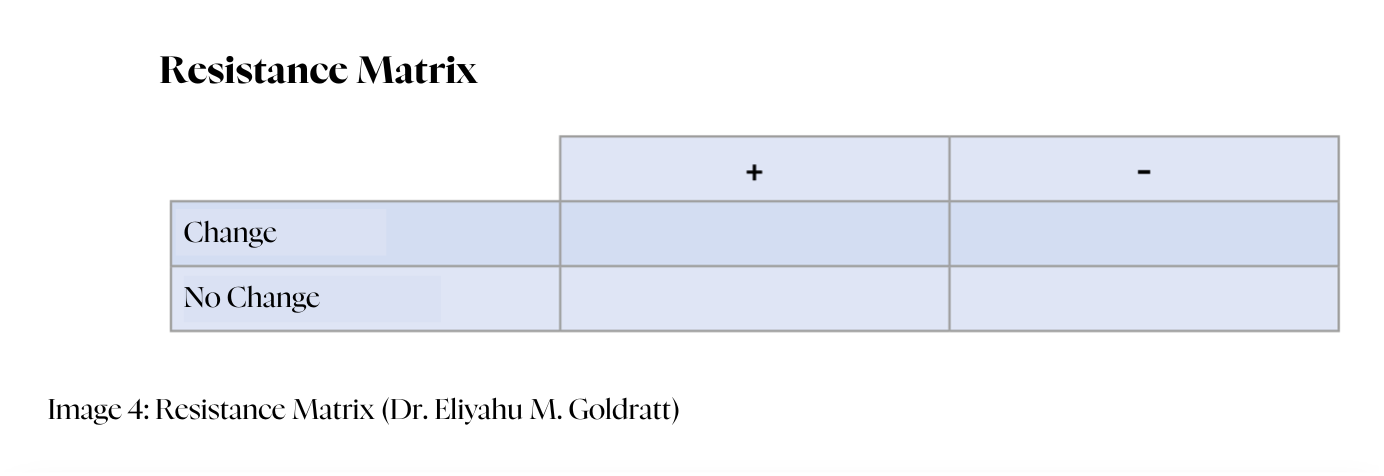
      • Use analytical tools such as the resistance matrix (Figure 4) to systematically illuminate all perspectives.
      Resistance Matrix

      Conclusion

      Change is a constant in today’s world – and as a leader, you have the task of actively shaping that change. By recognizing your team’s change preferences, taking emotions seriously, promoting a growth mindset, and incorporating different perspectives, you can successfully manage change processes. With the right strategies and clear communication, you can motivate your team to embrace change as an opportunity and help shape it.

      This blog article is the first in a series on change management. Click here to go to the second part!

      Anita Berger

      Anita Berger

      MDI partner and trainer

      Anita Berger is an executive coach, consultant, and trainer with a strong focus on leadership development in the VUCA/BANI world, design and facilitation of transformation processes and organizational culture development, as well as international human resources management. She is a co-owner and partner of MDI, Management Development International. With over 25 years of experience in management and leadership positions (including in the management of Coca-Cola Hellenic Austria & Slovenia & Konica Minolta Business Solutions) in various industries and company sizes, from medium-sized businesses to international corporations. Numerous contributions focus on leading virtual and hybrid teams, agile change management, organizational and leadership culture, as well as strategic talent management.
      • LinkedIn

      Download our MDI Whitepaper here:

      What might help you next?

      What If AI Doesn’t Replace Us — But Drowns Us Out?

      by Martin Maglia | 24. June 2026 | Digital Transformation, Leadership and AI, Short Knowledge Bits | 0 Comments

      What If AI Doesn't Replace Us — But Drowns Us Out? Over the weekend, I watched a thought-provoking video from Rick Beato. (You can find the link at the end of this article.) For those who don't know him: Rick Beato is a musician, producer, educator, guitarist, and one...
      Read More

      Use It or Lose It: How AI and Digital Tools May Be Changing Our Brains

      by Florian Biedermann | 26. May 2026 | Leadership and AI, Leadership Tips, Learning Transfer | 0 Comments

      Use It or Lose It: How AI and Digital Tools May Be Changing Our Brains You travel to Madrid and want to chat with the locals, but you realize that after five years without practice, your rudimentary Spanish skills are now practically nonexistent and you even struggle...
      Read More

      How Artificial Intelligence Shapes Who We Become

      by Meike Hinnenberg | 19. May 2026 | Impuls series, Leadership and AI, Leadership in the digital transformation | 0 Comments

      How Artificial Intelligence Shapes Who We Become Meike’s Reflections on Artificial Intelligence Do you prefer to listen to this article? Click below to access our AI-generated audio version!How Artificial Intelligence Shapes Who We Become Meike’s Reflections on...
      Read More

      Zeca Ruiz on Cross-Generational Leadership and Navigating Change

      by Jana Wölfl | 13. May 2026 | Leadership Impact, MDI Spotlight Series, Training Insights | 0 Comments

      Zeca Ruiz on Cross-Generational Leadership and Navigating Change This blog is an excerpt from our new podcast! You can find the entire podcast episode here. Zeca Ruiz on Cross-Generational Leadership and Navigating Change In the fourth episode of our podcast “Voices...
      Read More

      AI-Empowered Leadership: 6 Guiding Principles

      by Gunther Fürstberger | 14. April 2026 | Leadership and AI, Leadership Tips, MDI Whitepaper | 0 Comments

      AI-Empowered Leadership: 6 Guiding Principles This blog post is a detailed summary of the whitepaper "Guiding Principles of AI-Empowered Leadership" by MDI's CEO, Gunther Fürstberger. You can find the full whitepaper here! Let's be honest: most conversations about AI...
      Read More

      What AI Shows You — and What It Doesn’t

      by Meike Hinnenberg | 1. April 2026 | Digital Transformation, Impuls series, Leadership and AI | 0 Comments

      What AI Shows You — and What It Doesn't Meike’s Reflections on Artificial Intelligence Do you prefer to listen to this article? Click below to access our AI-generated audio version! What AI Shows You — and What It Doesn't Meike’s Reflections on Artificial Intelligence...
      Read More

      Leading in the Age of AI: How AI Discourse Shapes Responsibility and Power

      by Meike Hinnenberg | 18. March 2026 | Impuls series, Leadership and AI, Leadership Tips | 0 Comments

      Leading in the Age of AI: How AI Discourse Shapes Responsibility and Power Meike’s Reflections on Artificial Intelligence Do you prefer to listen to this article? Click below to access our AI-generated audio version!Leading in the Age of AI: How AI Discourse Shapes...
      Read More

      AI Ethics for Leaders: Why Context and Critical Thinking Matter More Than Ever

      by Meike Hinnenberg | 11. March 2026 | Impuls series, Leadership and AI, Learning Transfer | 0 Comments

      AI Ethics for Leaders: Why Context and Critical Thinking Matter More Than Ever. Meike’s Reflections on Artificial Intelligence Do you prefer to listen to this article? Click below to access our AI-generated audio version!AI Ethics for Leaders: Why Context and Critical...
      Read More

      A Success Story – When AI Sharpens Human Judgement

      by Claude MacDonald, Rafael Ungvari | 6. March 2026 | Customer Story, Digital Transformation, Leadership and AI | 0 Comments

      A Success Story – When AI Sharpens Human Judgement Do you prefer to listen to this article? Click here to access our AI-generated audio version! When AI Amplifies Human Judgment: A Customer Success Story About This Project At MDI, we believe that great leadership and...
      Read More

      How Do You Lead People Who Don’t Think the Way You Do?

      by Zeca Ruiz | 4. February 2026 | Leadership Impact, Leadership Tips, Learning Transfer | 0 Comments

      How Do You Lead People Who Don't Think the Way You Do? Do you want to listen to this article? Click here to access our AI-generated audio version!   How do you lead people who do not think the way you do? Leadership is a challenge, especially when you are not...
      Read More
      AI Transformation: How Companies Need to Adapt

      AI Transformation: How Companies Need to Adapt

      by Gunther Fürstberger | Feb 12, 2025 | Digital Transformation, Leadership and AI, Leadership Tips | 0 comments

      AI transformation: how companies and leaders need to adapt

      Economic history repeatedly shows how technological leaps revolutionize entire industries. 150 years ago, sailing ships dominated world trade, while steamships were only used on lakes and rivers. But within 30 years, the ratio was reversed: steamships took over the market, while sailing ships lost their importance.

      Interestingly, it was not the established companies with capital that drove this change, but new companies that took advantage of the new technology. This is a pattern that keeps repeating itself – just as Blockbuster was replaced by Netflix or the traditional automotive industry is facing the challenge of electric mobility.

      What does this mean for our time?

      Digitization and, in particular, artificial intelligence (AI) are today’s disruptive technologies. Companies are faced with a choice: do they want to be among the pioneers or do they want to wait and see? The question of what our job description will look like in five to ten years is not a hypothetical one.

      Stability or change? The influence on digital transformation

      Some people tend to seek stability, to preserve security and proven values. Others, on the other hand, are change-seekers, curious and willing to explore new technologies. However, digital transformation requires companies to actively engage with change.

      Europe tends to regulate rather than innovate. However, AI applications are becoming increasingly important, and it is crucial not only to consider the risks but also to seize the opportunities. Responsible participation is essential to avoid being controlled from the outside.

      AI and its impact on companies

      AI and its impact on companies

      AI is changing many aspects of the economy:

      • Business opportunities and risks: Those who do not adapt could soon become irrelevant. Established processes can become ineffective while new technologies are faster, more efficient and more cost-effective.
      • Efficiency and productivity: Automated processes improve workflows, reduce errors and increase the speed of decision-making.
      • The world of work: Some jobs will disappear, while new ones will be created. The challenge lies in preparing employees for the new world of work.
      • Learning and development: AI makes it easier to create and personalize learning content, enabling better education and development processes in the long term.
      • Customer focus: AI can help create personalized customer experiences and better understand needs.

      The role of leaders

      Leaders face the challenge of creating transparency. They must educate about the potential, limitations, and deployment scenarios of AI, but they must also promote acceptance and reduce fears. A successful transformation does not proceed linearly, but rather in so-called transformation loops:


      1. Why? Why are we doing this?
      2. Planning: What steps are necessary?
      3. Implementation: How do we implement it?
      4. Evaluation: What works well, what doesn’t?

      Methods for successful AI integration

      • Target group: Clarifies for whom and for what purpose AI is used. This involves defining what results are to be achieved and how success will be measured.
      • AI roadmap & AI transformation map: Structured implementation planning helps to formulate corporate goals clearly and in a solution-oriented manner.
      • Commitment game board: Maximizes employee participation by actively involving various stakeholders in the process.
      • ADKAR model: Helps with individual change by raising awareness, motivation, knowledge transfer, application and reinforcement. The following questions could be asked: Why do we have to change? What’s in it for me? What new skills do I need? How can I apply what I have learned? How do I maintain the change?
      Learning from practice: AI at MDI

      Learning from practice: AI at MDI

      At MDI, we have set up an AI task force that works according to the principle “do, reflect, learn, do”. Early involvement and continuous reflection ensure that insights can be implemented quickly. In addition, we are constantly developing our AI Leadership Lab, which revolutionizes learning processes through AI-supported role playing, knowledge bots and leadership coaching.

      Sustainable integration into everyday business

      Regular reviews and retrospectives are crucial to the long-term success of AI in everyday business. Companies should ask themselves:

      • What are the intermediate results?
      • What are the successes?
      • What went well?
      • Where is there room for improvement?

      Implementing AI requires not only technical know-how but also communication skills. Building trust is essential because the longer internal communication is neglected, the greater the resistance to transformation.

      Leaders of the future

      To successfully deal with AI, leaders need five core competencies:

      1. Recognizing the potential of AI
      2. Enthusiasm for lifelong learning with AI
      3. Mastering agile transformation management
      4. Ensuring ethical communication
      5. Promoting responsible thinking

      The AI revolution is in full swing – companies and executives must position themselves now to remain successful in the long term.

      Want to learn more about this topic? Watch the new (German) webinar here “Mastering AI Integration: Your Roadmap for Leadership Success and Sustainable Transformation” by Gunther Fürstberger. Dive into the world of AI leadership!

      Gunther Fürstberger

      Gunther Fürstberger

      CEO | MDI Management Development International

      Gunther Fürstberger is a management trainer, author and CEO of Metaforum and MDI – a global consulting company providing solutions for leadership development. His main interest is to make the world a better place through excellent leadership. He has worked for clients including ABB, Abbvie, Boehringer Ingelheim, DHL, Hornbach, PWC and Swarovski. His core competence is leadership in digital transformation. He gained his own leadership experience as HR Manager of McDonald’s Central Europe/Central Asia.  At the age of 20 he already started working as a trainer.

      • LinkedIn

      What serves you next?

      Zeca Ruiz on Cross-Generational Leadership and Navigating Change

      by Jana Wölfl | 13. May 2026 | Leadership Impact, MDI Spotlight Series, Training Insights | 0 Comments

      Zeca Ruiz on Cross-Generational Leadership and Navigating Change This blog is an excerpt from our new podcast! You can find the entire podcast episode here. Zeca Ruiz on Cross-Generational Leadership and Navigating Change In the fourth episode of our podcast “Voices...
      Read More

      How Do You Lead People Who Don’t Think the Way You Do?

      by Zeca Ruiz | 4. February 2026 | Leadership Impact, Leadership Tips, Learning Transfer | 0 Comments

      How Do You Lead People Who Don't Think the Way You Do? Do you want to listen to this article? Click here to access our AI-generated audio version!   How do you lead people who do not think the way you do? Leadership is a challenge, especially when you are not...
      Read More

      How You Deal With Neurodiversity as a Leader

      by Iris Kandlbauer | 3. February 2026 | Leadership Impact, Leadership Tips, Short Knowledge Bits | 0 Comments

      How You Deal With Neurodiversity as a Leader You prefer listening to this article? You can find our AI-generated audio version below! How You Deal With Neurodiversity as a Leader What might be behind “strange” behavior in a team—and how leaders can deal with it...
      Read More

      Generation Z isn’t the Problem but Our System is

      by Zeca Ruiz | 3. December 2025 | Impuls series, International leadership development, Leadership in the digital transformation | 0 Comments

      Generation Z Isn’t the Problem, but Our System is. Read this article on crossgenerational management by Zeca Ruiz to find out more!

      Read More

      The Lasting Impact of Leadership Horizon – Meike’s Perspectives

      by Meike Hinnenberg | 2. July 2025 | Leadership Impact, MDI Inside, Short Knowledge Bits | 0 Comments

      The Lasting Impact of Leadership Horizon - Meike's Perspectives Do you prefer to listen to this article? Click below to access our AI-generated audio version!The Lasting Impact of Leadership Horizon - Meike's Perspectives MDI’s Meike Hinnenberg shares her reflections...
      Read More

      Success Through Change: How to Stay Oriented During Transitions

      by Anita Berger | 14. April 2025 | Impuls series, Leadership Impact, Leadership Tips | 0 Comments

      Success Through Change: How to Stay Oriented During Transitions Do you prefer to listen to this article? Click below to access our AI-generated audio version:Success Through Change: How to Stay Oriented During Transitions Change processes often involve challenges....
      Read More

      4 Tips on How to Shape Change Processes as a Leader

      by Anita Berger | 3. April 2025 | Impuls series, Leadership Impact, Leadership Tips | 0 Comments

      4 Tips on How to Shape Change Processes as a Leader Do you prefer to listen to this article? Click below to access our AI-generated audio version:4 Tips on How to Shape Change Processes as a Leader Imagine a dynamic network of paths that is constantly changing. While...
      Read More

      Successful Team Building for Boehringer Ingelheim RCV

      by Anita Berger | 29. March 2024 | Customer Story, International leadership development, MDI Inside | 0 Comments

      Successful Team Building for Boehringer Ingelheim RCV Do you prefer to listen to this article? Click below to access our AI-generated audio version:Successful Team Building for Boehringer Ingelheim RCV In the interview with our MDI trainer and partner, Anita Berger On...
      Read More

      Organize Your Team in a Hybrid Workplace

      by Peter Grabuschnig | 14. March 2024 | Impuls series, International leadership development, Leadership in the digital transformation | 0 Comments

      Organize Your Team in a Hybrid Workplace Prefer to listen to the article? Click below to access our AI speech-generated audio. However, if you want to read it as usual, keep scrolling.Organize Your Team in a Hybrid Workplace In his new Rise Course, our MDI trainer and...
      Read More

      Exploring the Influence of AI on Leadership Roles – an experiment by a CEO

      by Gunther Fürstberger | 14. November 2023 | International leadership development, Leadership and AI, Leadership in the digital transformation | 0 Comments

      Exploring the Influence of AI on Leadership Roles: Learn more about the ongoing ChatGPT experiment by MDI CEO Gunther Fürstberger Do you prefer to listen to this article? Click below to access our AI-generated version. Exploring the Influence of AI on Leadership...
      Read More
      Mastering Communication: The Why, How, and What

      Mastering Communication: The Why, How, and What

      by Marcin Swierkocki | Jan 14, 2025 | Agile Leadership, Leadership Tips, Short Knowledge Bits | 0 comments

      Mastering Communication: The Why, How, and What

      Do you prefer to listen to this article? Click below to access our AI-generated audio version!

      Mastering Communication: The Why, How, and What

      Have you ever heard an employee say something like, “I won’t be able to meet the upcoming deadlines”? While the words may seem straightforward, they often hint at deeper underlying concerns. In this article, I delve into this statement through the lens of two well-known iceberg models, uncovering what lies beneath the surface…..

      The iceberg models of Paul Watzlawick (of communication) and William Ury’s/Roger Fisher’s and Daniel Shapiro’s (positions vs. interests) share a common structure that emphasizes the elements of human interaction. Aligning these two models provides a deeper understanding of the interplay within communication strategies.

      Watzlawick’s communication iceberg model:

      1. Above the surface – Fact-based communication: The pure content of the communication, such as words, facts or data communicated to the interlocutor. E.g.: ‘I want to complete this project by the end of this week’.
      2. Below the surface – Relational communication: The unspoken and emotional dynamic that underlies the actual content, such as tone, trust, non-verbal signals, and power. E.g.: A leader’s tone of voice suggests frustration or urgency, which influences how the message is received.

      Ury and Shapiro’s iceberg model – positions vs interests:

      1. Above the surface – Positions: Explicit messages about what someone wants. Positions are noticeable but do not yet reveal underlying motivations. E.g.: ‘I need a 10% increase in my head count next year’.
      2. Below the surface – Interests: The deeper needs, desires, fears, and motivations that drive a position. Interests often refer to humanistic needs such as autonomy, recognition, or security. E.g.: Asking for a higher amount of workers next year reflects my need for recognition, security, or justice.

      Both models emphasize the importance of understanding not only what is visible, but also what lies beneath the surface in human interaction. They agree with each other to the following extent:

      Watzlawick’s iceberg model of communication

      Ury’s/Shapiro’s iceberg model – positions vs interests

      Fact-based communication (above the surface): Focuses on the pure content of the communication, such as words, facts or data.

      Positions (above the surface): A clear request or message about what is wanted.

      Relational communication (below the surface): Focuses on implicit dynamics such as tone, emotions, trust and the quality of the relationship.

      Interests (below the surface): The deeper needs, concerns and motivations driving our positions.

      Key findings: What is said is influenced by relational aspects (e.g. trust, power). Ignoring relational dynamics quite often leads to misunderstandings.

      Key findings: Specific positions often mask hidden interests. Only an understanding of mutual interests can lead to a more constructive outcome.

      Communication models

      Practical implementation (1):

      1. Communication while staying in touch with your Stakeholders:

      Factual communication (based on your position) only serves as a starting point in reaching a solution, while relational communication (tone, trust) determines how your position is perceived. Recognizing deeper interests guides relational communication to build rapport and mutual understanding.

      2. Conflict resolution:

      Relationship breakdown (the hidden dynamic in Watzlawick’s model) results from long-established positions (evident in the Ury/Shapiro model). Addressing relational issues (e.g. respect, autonomy) generally leads to the discovery of shared/agreed interests.

      3. Key questions so as to ‘dive below the surface’:

      • What is being said by the other side? (Positions/facts)
      • How is it being said? (Relationship dynamics)
      • Why is it being said? (Interests/basic motivations).

      Practical implementation (2): Conflict in the workplace.

      Scenario: An employee says: ‘I am unable to meet the upcoming deadlines’.

      • Watzlawick’s perspective: The actual message is failure to meet a deadline; the relational message may (our assumption) include frustration or fear of being perceived as an incompetent co-worker.
      • Ury’s/Shapiro’s perspective: The position is to refuse to meet a deadline; the interest may be to avoid burnout, being overloaded, or the need for greater clarity on priorities.

      Conclusions:

      By addressing both relational communication (e.g. showing empathy, and understanding people’s psychological needs) and underlying interests (e.g. redistribution of tasks or a new role in the team), a leader is able to solve issues/problems more effectively than by merely focusing on positions or factual messages.

      Marcin Swierkocki

      Marcin Swierkocki

      Trainer, Coach & MDI Partner

      Marcin Swierkocki works as an HR business consultant who has specialized in L&D, change- and project management. He brings over 25 years of international experience in change management and operational development with him. His personal motto is influenced by Viktor Frankl: ‘Between stimulus and response there is a space. In that space is our power to choose our response. In our response lies our growth…’. His personal inspiration comes from his optimistic and positive character and by draining the energy that successfully supporting others gives him.

      • LinkedIn

      What serves you next?

      What If AI Doesn’t Replace Us — But Drowns Us Out?

      by Martin Maglia | 24. June 2026 | Digital Transformation, Leadership and AI, Short Knowledge Bits | 0 Comments

      What If AI Doesn't Replace Us — But Drowns Us Out? Over the weekend, I watched a thought-provoking video from Rick Beato. (You can find the link at the end of this article.) For those who don't know him: Rick Beato is a musician, producer, educator, guitarist, and one...
      Read More

      Use It or Lose It: How AI and Digital Tools May Be Changing Our Brains

      by Florian Biedermann | 26. May 2026 | Leadership and AI, Leadership Tips, Learning Transfer | 0 Comments

      Use It or Lose It: How AI and Digital Tools May Be Changing Our Brains You travel to Madrid and want to chat with the locals, but you realize that after five years without practice, your rudimentary Spanish skills are now practically nonexistent and you even struggle...
      Read More

      How Artificial Intelligence Shapes Who We Become

      by Meike Hinnenberg | 19. May 2026 | Impuls series, Leadership and AI, Leadership in the digital transformation | 0 Comments

      How Artificial Intelligence Shapes Who We Become Meike’s Reflections on Artificial Intelligence Do you prefer to listen to this article? Click below to access our AI-generated audio version!How Artificial Intelligence Shapes Who We Become Meike’s Reflections on...
      Read More

      Zeca Ruiz on Cross-Generational Leadership and Navigating Change

      by Jana Wölfl | 13. May 2026 | Leadership Impact, MDI Spotlight Series, Training Insights | 0 Comments

      Zeca Ruiz on Cross-Generational Leadership and Navigating Change This blog is an excerpt from our new podcast! You can find the entire podcast episode here. Zeca Ruiz on Cross-Generational Leadership and Navigating Change In the fourth episode of our podcast “Voices...
      Read More

      AI-Empowered Leadership: 6 Guiding Principles

      by Gunther Fürstberger | 14. April 2026 | Leadership and AI, Leadership Tips, MDI Whitepaper | 0 Comments

      AI-Empowered Leadership: 6 Guiding Principles This blog post is a detailed summary of the whitepaper "Guiding Principles of AI-Empowered Leadership" by MDI's CEO, Gunther Fürstberger. You can find the full whitepaper here! Let's be honest: most conversations about AI...
      Read More

      What AI Shows You — and What It Doesn’t

      by Meike Hinnenberg | 1. April 2026 | Digital Transformation, Impuls series, Leadership and AI | 0 Comments

      What AI Shows You — and What It Doesn't Meike’s Reflections on Artificial Intelligence Do you prefer to listen to this article? Click below to access our AI-generated audio version! What AI Shows You — and What It Doesn't Meike’s Reflections on Artificial Intelligence...
      Read More

      Leading in the Age of AI: How AI Discourse Shapes Responsibility and Power

      by Meike Hinnenberg | 18. March 2026 | Impuls series, Leadership and AI, Leadership Tips | 0 Comments

      Leading in the Age of AI: How AI Discourse Shapes Responsibility and Power Meike’s Reflections on Artificial Intelligence Do you prefer to listen to this article? Click below to access our AI-generated audio version!Leading in the Age of AI: How AI Discourse Shapes...
      Read More

      AI Ethics for Leaders: Why Context and Critical Thinking Matter More Than Ever

      by Meike Hinnenberg | 11. March 2026 | Impuls series, Leadership and AI, Learning Transfer | 0 Comments

      AI Ethics for Leaders: Why Context and Critical Thinking Matter More Than Ever. Meike’s Reflections on Artificial Intelligence Do you prefer to listen to this article? Click below to access our AI-generated audio version!AI Ethics for Leaders: Why Context and Critical...
      Read More

      A Success Story – When AI Sharpens Human Judgement

      by Claude MacDonald, Rafael Ungvari | 6. March 2026 | Customer Story, Digital Transformation, Leadership and AI | 0 Comments

      A Success Story – When AI Sharpens Human Judgement Do you prefer to listen to this article? Click here to access our AI-generated audio version! When AI Amplifies Human Judgment: A Customer Success Story About This Project At MDI, we believe that great leadership and...
      Read More

      How Do You Lead People Who Don’t Think the Way You Do?

      by Zeca Ruiz | 4. February 2026 | Leadership Impact, Leadership Tips, Learning Transfer | 0 Comments

      How Do You Lead People Who Don't Think the Way You Do? Do you want to listen to this article? Click here to access our AI-generated audio version!   How do you lead people who do not think the way you do? Leadership is a challenge, especially when you are not...
      Read More
      « Older Entries
      Next Entries »

      Information

      • Imprint
      • MDI company website

      Social Media

      • Facebook
      • Twitter
      • Youtube
      • LinkedIn

      © MDI Management Development Institute, 2020