

Use It or Lose It: How AI and Digital Tools May Be Changing Our Brains
You travel to Madrid and want to chat with the locals, but you realize that after five years without practice, your rudimentary Spanish skills are now practically nonexistent and you even struggle to ask for directions. Then you try to find your way using a paper city map and notice that without GPS navigation, you are completely lost when it comes to finding the nearest tapas bar. This phenomenon can be extended in many directions: Your physical condition deteriorates rapidly without exercise, and your mental sharpness declines if your daily life consists solely of TikTok videos. Simply put, “use it or lose it” – both your muscles and your brain lose their abilities if you stop using them.
The Hidden Cost of Convenience and Digital Dependence
This natural selection of our abilities has, of course, existed since the dawn of humanity and affects everyone equally. In recent years, however, our lives have changed significantly in terms of convenience and the outsourcing of skills and knowledge. Especially due to apps like Google Maps, as well as functions such as autocorrect, we no longer have to make much effort and thus gradually lose both cognitive and physical abilities – our handwriting says it all.
We have all likely made this observation, both in ourselves and in others, but I have often wondered whether this is merely a subjective impression or a real phenomenon. In other words, are there reliable studies showing that the excessive use of tools gradually causes us to lose our cognitive abilities?
“There is a hotly debated but widely accepted consensus that the increasing use of navigation aids is accompanied by a decline in our cognitive navigation abilities,” explained PD Dr. Kai Hamburger from the Department of General Psychology and Cognitive Research at Justus Liebig University Giessen (JLU) as early as 2023. The same applies to handwriting, which activates the brain more than typing; teachers observe that less handwriting correlates with poor spelling. And regular GPS use leads to measurable declines in spatial memory and an accelerated loss of navigation-related skills.
How AI Is Reshaping Critical Thinking and Human Interaction
So far, so bad – but since 2022, we have had a new sparring partner in our lives that makes many things easier and takes a lot off our hands: Artificial Intelligence (AI).
Compared to autocorrect, text prediction, or GPS, AI tools offer a vast array of functions that can significantly impact our lives. This also affects critical thinking and conscious decision-making, which we are increasingly happy to “ask the AI” to handle for us. Instead of doing our own research, we use AI for ideas, texts, and problem-solving. And when we systematically delegate decisions and evaluations, we train our own judgment and creativity less and less, placing ourselves in ever greater dependence on AI.
Furthermore, depending on how it is used, AI can also have significant effects on our personal development and social skills. More and more people are using chatbots, avatars, and social AI tools as conversation partners, advisors, and sometimes even as friends. And because AI generally agrees with you and does what you tell it to, it is likely only a matter of time before we gradually lose our ability to engage in critical discourse, resolve conflicts, clear up misunderstandings, and build relationships and empathy.
MIT Study: What Happens to the Brain When We Use ChatGPT?
Media scientists at the Massachusetts Institute of Technology (MIT) conducted a study on this topic in 2025 and published it under the title “Your Brain on ChatGPT: Accumulation of Cognitive Debt when Using an AI Assistant for Essay Writing Tasks.”
More than 50 American adults between the ages of 18 and 39 participated in this small study. The participants were asked to write four essays over a four-month period, using:
- ChatGPT
- A search engine such as Google or Yahoo!
- Their own brains (without search or AI tools)
Electroencephalography (EEG) was used to record the participants’ brain activity in order to assess their cognitive engagement and mental effort, and to gain a deeper understanding of neural activation during the essay task.
For the first three essays, electrical connectivity in the ChatGPT group’s brains was lower than in the other two groups. It was also lower in the search engine group than in the group that used only their own brains.
For the final essay, the groups were swapped: The “brain-only” group was now allowed to use ChatGPT, and the ChatGPT group was required to rely only on their brains. The group that had switched from using ChatGPT to relying solely on their own thinking showed significantly lower electrical connectivity in the brain than the “brain-only” group had in their third session, reported a reduced sense of personal responsibility for what they wrote, and showed a poorer ability to recall quotes from the essay they had written.
The Cognitive Risks of Overusing AI Tools
According to a 2024 research review, an increasing reliance on AI assistants and digital tools when performing tasks that require deeper thinking can entail the following risks:
- Reduced mental engagement
- Neglect of cognitive abilities such as arithmetic or information retrieval
- Declining memory
- Shorter attention spans and concentration problems
- Inability to apply knowledge to new situations
- Ethical and social concerns, such as reduced interpersonal interaction and social isolation
- Mental health challenges, such as reduced self-confidence
Does AI Make Us Less Intelligent?
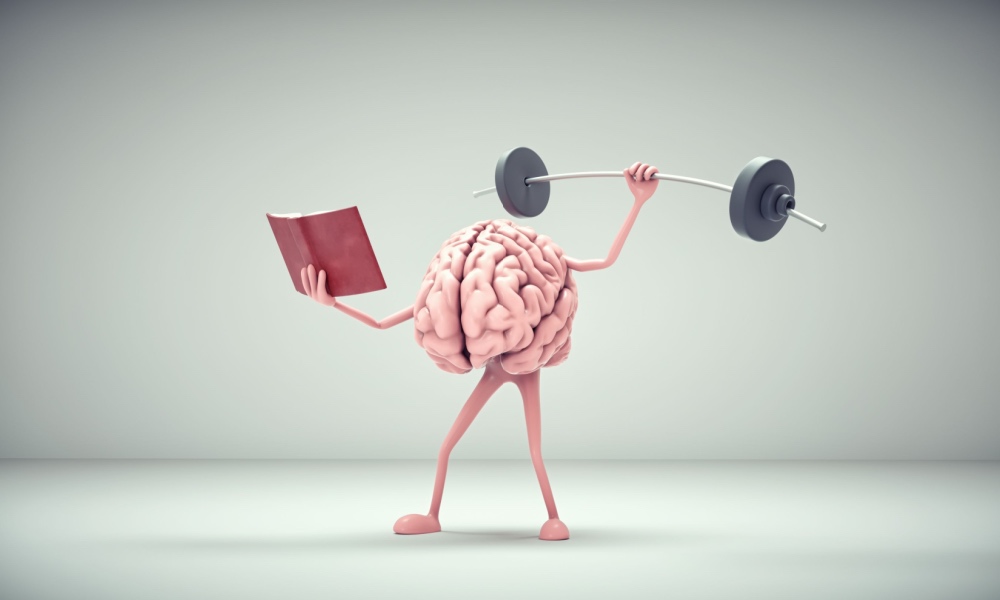
So does AI make us less independent or even dumber?
The answer is yes and no: excessive use of and reliance on AI technology can profoundly impair our understanding and critical thinking skills, but it does not have to be that way – it always depends on how and how often these tools are used.
On the other hand, AI is not inherently bad. When used correctly, it can certainly stimulate our creativity and promote learning. When applied appropriately – such as in cancer screening – it can work wonders.
It is therefore not simply a matter of “using AI less”; what is most important is that, for tasks requiring deeper thinking, we primarily use our own brains and employ AI at most as a supporting aid. When used correctly, it can even help foster deeper thinking, stimulate creativity, and increase efficiency.
How to Use AI Without Losing Your Cognitive Abilities
1. Think for Yourself First, Then Use AI
- First formulate your own ideas or answers, then use AI to supplement them, find counterarguments, or uncover blind spots.
- Use AI as a “sparring partner”: it can provide alternative perspectives, pros and cons, or additional hypotheses that you consciously examine and evaluate.
- Practice conscious reflection: always view AI’s responses as suggestions and actively question them (“What is accurate here, what is missing, and what do I see differently?”).
2. Use AI as a Starting Point for Research
- Use AI for initial structuring, clarification of terms, or exploring a topic – then move on to primary sources, studies, and specialist texts.
- Practice source criticism: consciously compare AI answers with other sources to assess validity, timeliness, and quality – this strengthens critical thinking.
- Promote metacognitive learning: obtain an answer from AI first and then analyze it critically (“What did it leave out? What is unclear? What sources would we need for this?”).
3. Use AI for Analysis, Not as a Shortcut
- Identify patterns that are hard to spot on your own: AI can quickly analyze large amounts of data or complex patterns – you then consciously use the results to make decisions.
- Run through scenarios: ask AI “what if?” questions in strategy, change management, or product development and use the variations as a basis for team discussion.
- Delegate operational tasks, retain the thinking: outsource repetitive tasks such as sorting, transcribing, or formatting to AI in order to reserve your cognitive resources for conceptualization, evaluation, and creative decisions.
4. AI as an Idea Generator, Not an Idea Replacement
- First create your own drafts, then use AI to generate variations, stylistic ideas, or examples.
- Simulate a change of perspective: ask AI to argue from the perspective of other stakeholders – this fosters empathy and systems thinking when you actively evaluate its input.
- Use AI as a writing coach instead of a ghostwriter: ask for feedback on clarity, structure, or tone instead of having it write entire texts.
5. AI as an Assistant, Not an Autopilot
- Use AI as an assistant that provides inspiration but does not take over your entire thought process.
- Brain first, then prompt: spend 2–3 minutes thinking or sketching out ideas yourself before asking AI.
- Use AI judiciously: accelerate complex or time-sensitive tasks with AI, but consciously handle simple everyday tasks without AI to maintain basic skills.
The Future of AI: Benefit or Dependency?
Will we adhere to such rules? Some of us, for whom it is important to keep training as many of our faculties as possible and to avoid dependence on technical tools, will certainly use AI wisely. But for humanity as a whole, I honestly see a rather bleak future. Too many inventions that were originally intended for a positive purpose have unfortunately been turned into the exact opposite in reality.
One example of this is Alfred Nobel’s invention of dynamite. It was originally developed as a safer alternative to nitroglycerin in order to facilitate tunneling, road construction, and mining, and to protect human lives. Yet in reality, dynamite is used less often for meaningful civilian purposes than for destroying things and killing people.
What was once intended for bridge-building is more frequently used to destroy bridges.
Not least for this reason, Alfred Nobel established a foundation to counter his negative image as a “merchant of death” and to do some good for the world by honoring people who have rendered outstanding service to humanity.
May AI also bring more benefit than destruction in the future – it is still in our hands.

Florian Biedermann
Learning & Development Consultant at MDI
Florian Biedermann is a Learning & Development Consultant at MDI (Management Development Institute) – a global consulting company that offers solutions for leadership development. His focus is on making complex issues understandable and inspiring people to think – and act. Florian previously worked for many years as an author and manager in the e-learning sector, after spending over a decade as a freelance journalist.