
• MDI
  • German version
  • Contact us
MDI Management Development
  • Agile leadership
  • Lateral Leadership
  • Leadership Impact
  • Leadership Development
Select Page
3 tips for efficient and sustainable OKR results

3 tips for efficient and sustainable OKR results

by Gunther Fürstberger | Oct 17, 2022 | Best Practice, Leadership Tips, Training Insights | 0 comments

3 tips for efficient and sustain

Do you want to learn more about OKR – Objectives & Key Results? Here are 3 leadership tips for efficient and sustainable OKR results.

1. Reserve the meeting dates for a year in advance

Long-term OKR scheduling

Long-term scheduling makes it easier to adjust to spontaneous changes on short notice. OKR meetings should become a routine. Habits, once achieved, require little energy. When team members have learned that, for example, the OKR quarterly planning meeting is always on the last Thursday of the quarter and an OKR check-in meeting is scheduled every other Thursday in between – OKR becomes a no-brainer.

OKR should become a no-brainer

Experience has shown that only the timely meetings are a challenge due to many other planned events. If you always send the appointment invitations for the entire next year, the company will get used to it and you will have more energy for content-related work.

Very practical are serial appointments with individual corrections, e.g. if they fall on holidays or on the Christmas vacation.

2. Max. 8 participants in the quarterly OKR planning meeting

The optimal OKR meeting size

4 – 8 participants are an optimal size for quarterly planning meetings, in order to consider sufficiently different perspectives on the one hand and to be able to discuss actively and time-efficiently on the other. However, if the team consists of fewer members, that is also OK. 2-3 people can manage with much less time.

In planning meetings at higher hierarchical levels, such as when developing the OKR set for the entire company, more people often want to be present. This is understandable, since the quarterly priorities are set for the company.

However, discussions with more than 8 people can be lengthy or lead to different levels of participation.

Take turns and have a OKR rotation schedule

One proven way to keep the number of participants low is for owners of similar departments or functions to take turns participating. If you personally do not have a place in the next meeting, you can make your wishes known in advance via the backlog list or another representative.

All hands OKR meeting

Never has it been more important to adjust continually to a dynamic environment. OKR proves to be a great method to overcome crisis situations – read more about it here. 
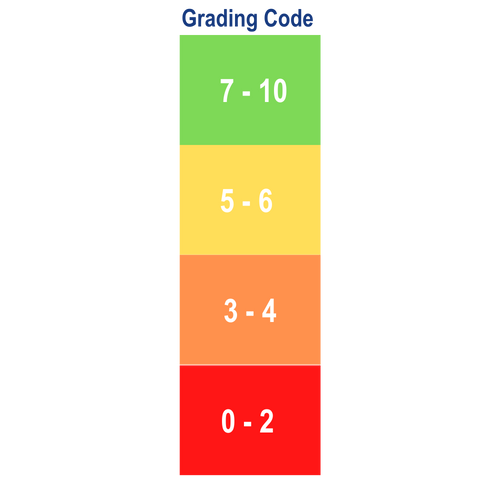
3. Visualize the progress also during the quarter 

Discuss your progress regularly

Choosing well-worded OKRs is one side of success, the other is discussing progress regularly, e.g. bi-weekly. For this, it helps to visibly grade progress. Some prefer to work with color codes from the beginning. I.e. all Key Results start in red and partly reach the colors orange, yellow and green during the quarter. Others prefer to work with the numbers 0,0 – 1 during the quarter and use the colors only at the quarterly review. A third possibility are progress bars, where the filled area increases step by step.

Progress visualization increases motivation because messenger substances such as dopamine and endorphins are released in the brain.

Mag. Gunther Fürstberger

Mag. Gunther Fürstberger

CEO | MDI Management Development International

Gunther Fürstberger is a management trainer, author and CEO of Metaforum and MDI – a global consulting company providing solutions for leadership development. His main interest is to make the world a better place through excellent leadership. He has worked for clients including ABB, Abbvie, Boehringer Ingelheim, DHL, Hornbach, PWC and Swarovski. His core competence is leadership in digital transformation. He gained his own leadership experience as HR Manager of McDonald’s Central Europe/Central Asia.  At the age of 20 he already started working as a trainer.

  • LinkedIn

What serves you next?

Benefits of OKR

What are the benefits of the OKR system?

What are the benefits of the OKR method and how does it work exactly? MDI trainer and OKR master Susanne Spath gives us an introduction and a story to visualize the OKR method.

Read article

Agile leadership orientation and basics

Agile leadership - orientation and basics

There are plenty of agile methods – but what are the benefits of each method? MDI trainer Alexandra Sock talks about her agile leadership seminar, which gives you an overview of different agile methods.

Read article

Scrum& Agile leadership

Scrum & Agile leadership

Scrum is one of the oldest agile methods and is the mother of all agile methods in many people’s opinion. Susanne Spath is OKR master and Scrum certified gives us an introduction to this method and tells us for whom it makes sense to implement Scrum.

Read article

or maybe this?

Hybrid Leadership – Making the best of both worlds

Hybrid Leadership – Making the best of both worlds

by Gunther Fürstberger | Jun 27, 2022 | Leadership in the digital transformation, MDI Inside | 0 comments

Hybrid Leadership – Making the the best of both worlds

Even though the call to return to the office is noticeable in many places, home office has come to stay. For leaders, the task is to manage and motivate teams in a mix of presence, absence and making the best of both worlds with efficient hybrid leadership

Better work-life balance

According to a recent study by telecoms company Cisco, 79 per cent of workers think their work-life balance has improved as a result of hybrid working. A total of 28,000 employees from 27 countries were surveyed. In Austria, almost half see hybrid working as the model of the future, 64 percent want to be able to choose whether they attend meetings online or offline in the future.

While at the beginning of the pandemic there was no alternative to working at home, the attitude of employees has clearly changed. And now, at the latest, the understanding of leadership must also change.

Still unfamiliar

“Surprisingly, a natural approach to leading hybrid teams is still rather the exception,”

says Gunther Fürstberger, Managing Director of MDI Training.

Mostly, for example, meetings are planned either online or in presence. “Hybrid meetings are often seen as difficult and inefficient, although it has been possible for a few years now to communicate very pleasantly and efficiently with online and present participants at the same time with little financial effort.”

The hybrid world is here to stay

There is a broad consensus that the hybrid world is here to stay. What is still lacking is the corresponding mindset. Fürstberger understands this to mean the awareness that technical possibilities should be gladly and increasingly utilised for efficiency as well as positive effects on the environment.

Hybrid Leadership Workshop 

In a one-day MDI workshop, participants learn how to put the success factors of hybrid leadership “Purpose”, “People” and “Performance” into practice, but also how to strengthen togetherness and motivation despite distance.

Continue reading

Just click here to continue reading the entire (german) interview with “Die Presse”.

Read the full "the Presse" interview
Mag. Gunther Fürstberger

Mag. Gunther Fürstberger

CEO | MDI Management Development International

Gunther Fürstberger is a management trainer, author and CEO of Metaforum and MDI – a global consulting company providing solutions for leadership development. His main interest is to make the world a better place through excellent leadership. He has worked for clients including ABB, Abbvie, Boehringer Ingelheim, DHL, Hornbach, PWC and Swarovski. His core competence is leadership in digital transformation. He gained his own leadership experience as HR Manager of McDonald’s Central Europe/Central Asia.  At the age of 20 he already started working as a trainer.


  • Facebook
  • LinkedIn

What serves you next?

3 P’s – The 3 success factors of hybrid leadership

3 P’s – The 3 success factors of hybrid leadership

by Dominik Etzl, Gunther Fürstberger, Peter Grabuschnig | Jun 23, 2022 | Digital Transformation, Leadership Tips, MDI Inside | 0 comments

The 3 P’s – The 3 success factors of hybrid leadership

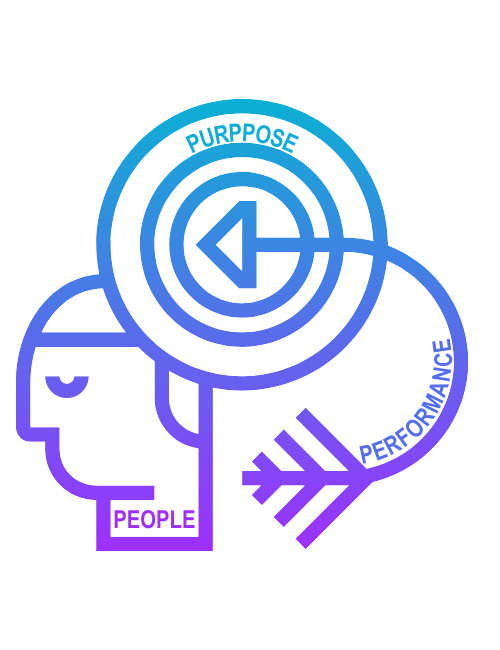
Basically, the concept of leadership in a hybrid set-up can be broken down to 3 main factors:

Purpose, People and Performance.

Each of these factors is an important piece of the puzzle that allows us to work efficiently and at full speed in hybrid. Here you will get a brief introduction to the basic principles of hybrid working and leading and why our 3 P’s are the 3 main success factors of hybrid leadership.

PURPOSE

Who would want to return to a workplace where you can’t identify with the values and thus don’t feel comfortable at all?

Everybody needs a reason to want to open the laptop every day – whether at home or in the office. In the hybrid world, you have to take care even more about keeping all of your employees on the ball. To do that, you need a collective mission – a Purpose.

At MDI, for example, we’ve made it our mission to develop leaders who “strive for a better world.” If your employees have a mantra that reminds them of why they have an important position in the company, they will be much more motivated to work and achieve more.

PEOPLE

Of course, employment itself should not be the only reason to enjoy showing up at the office. Often, it’s the people who motivate you to work every day. Much more emphasis should be put on the relationship among each other – the trust, the cohesion in the teams and the bond to the company. Especially when many employees are not physically in the office, you have to make sure that everyone is seen and heard. Transparent communication and respectful mutual behavior can quickly resolve conflicts and create a pleasant working atmosphere.

PERFORMANCE

The last P – Performance – is made up of three components:

  • Motivation
  • Competence and
  • Doing the Right Thing.

We ask ourselves the following questions: How much can and want our employees to achieve good results? Every starting situation of our colleagues is different. It is important to be understanding of each situation, to inquire regularly and to offer support where necessary.

We should also always keep up to date with the latest technology developments that can potentially facilitate processes and ways of working in the hybrid set-up. New apps and features are constantly being developed that make our routine workflows much easier and more flexible.

Clearly, hybrid work and especially leadership is still new territory for all of us. But before we despair and give up, let’s try around and keep the 3 P’s in mind.

Want to learn more aboute 3 P’s – The 3 success factors of hybrid leadership?

There are so many resources we can tap into to make work uncomplicated.

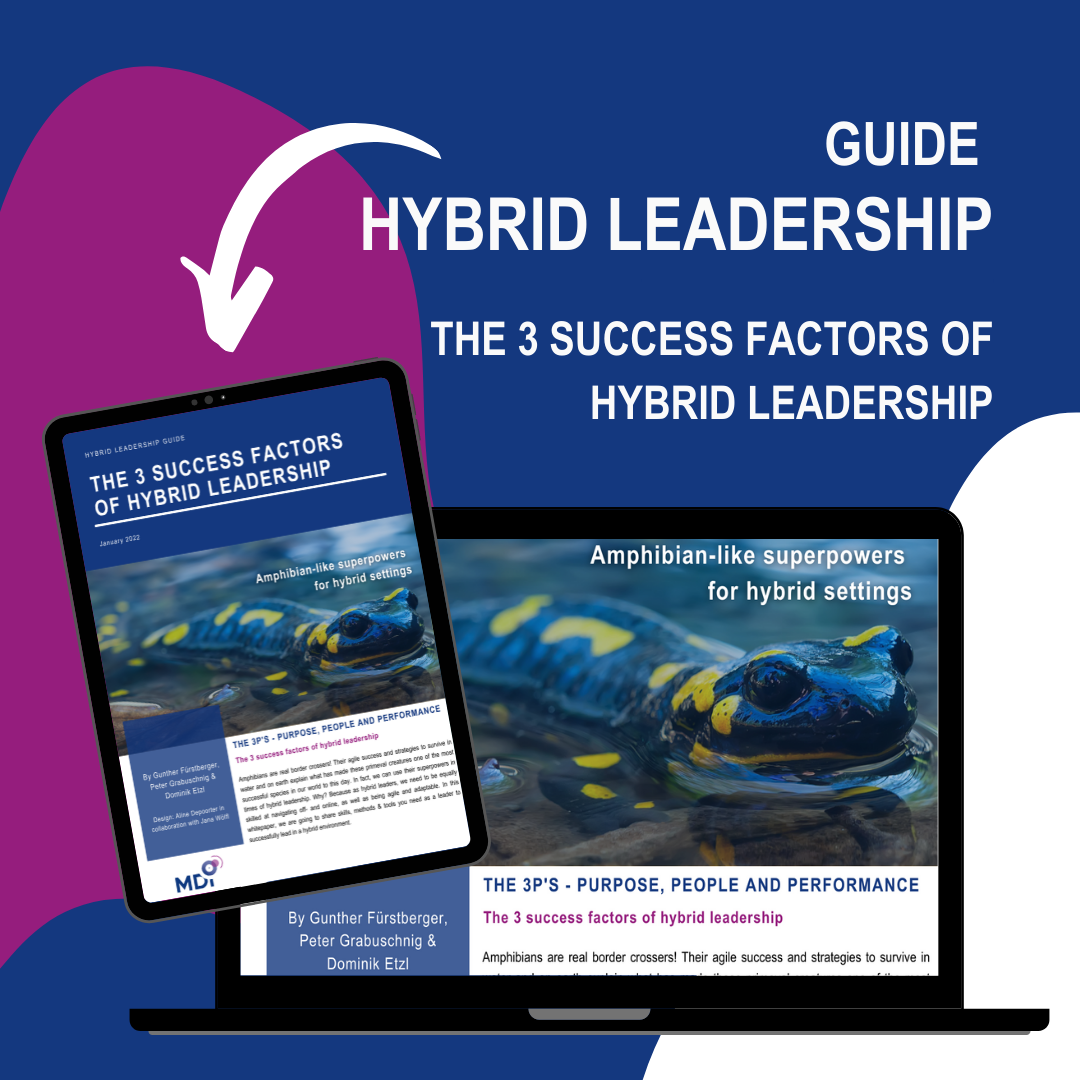
For more practical tips and tools, check out our guide

Successful hybrid leadership –

The 3 success factors of hybrid leadership

… and/or join our LinkedIn Leadership Community:

What serves you next?

How Do You Lead People Who Don’t Think the Way You Do?

by Zeca Ruiz | 4. February 2026 | Leadership Impact, Leadership Tips, Learning Transfer | 0 Comments

How Do You Lead People Who Don't Think the Way You Do? Do you want to listen to this article? Click here to access our AI-generated audio version!   How do you lead people who do not think the way you do? Leadership is a challenge, especially when you are not...
Read More

How You Deal With Neurodiversity as a Leader

by Iris Kandlbauer | 3. February 2026 | Leadership Impact, Leadership Tips, Short Knowledge Bits | 0 Comments

How You Deal With Neurodiversity as a Leader You prefer listening to this article? You can find our AI-generated audio version below! How You Deal With Neurodiversity as a Leader What might be behind “strange” behavior in a team—and how leaders can deal with it...
Read More

Generation Z isn’t the Problem but Our System is

by Zeca Ruiz | 3. December 2025 | Impuls series, International leadership development, Leadership in the digital transformation | 0 Comments

Generation Z Isn’t the Problem, but Our System is. Read this article on crossgenerational management by Zeca Ruiz to find out more!

Read More

The Lasting Impact of Leadership Horizon – Meike’s Perspectives

by Meike Hinnenberg | 2. July 2025 | Leadership Impact, MDI Inside, Short Knowledge Bits | 0 Comments

The Lasting Impact of Leadership Horizon - Meike's Perspectives Do you prefer to listen to this article? Click below to access our AI-generated audio version!The Lasting Impact of Leadership Horizon - Meike's Perspectives MDI’s Meike Hinnenberg shares her reflections...
Read More

Success Through Change: How to Stay Oriented During Transitions

by Anita Berger | 14. April 2025 | Impuls series, Leadership Impact, Leadership Tips | 0 Comments

Success Through Change: How to Stay Oriented During Transitions Do you prefer to listen to this article? Click below to access our AI-generated audio version:Success Through Change: How to Stay Oriented During Transitions Change processes often involve challenges....
Read More

4 Tips on How to Shape Change Processes as a Leader

by Anita Berger | 3. April 2025 | Impuls series, Leadership Impact, Leadership Tips | 0 Comments

4 Tips on How to Shape Change Processes as a Leader Do you prefer to listen to this article? Click below to access our AI-generated audio version:4 Tips on How to Shape Change Processes as a Leader Imagine a dynamic network of paths that is constantly changing. While...
Read More

Successful Team Building for Boehringer Ingelheim RCV

by Anita Berger | 29. March 2024 | Customer Story, International leadership development, MDI Inside | 0 Comments

Successful Team Building for Boehringer Ingelheim RCV Do you prefer to listen to this article? Click below to access our AI-generated audio version:Successful Team Building for Boehringer Ingelheim RCV In the interview with our MDI trainer and partner, Anita Berger On...
Read More

Organize Your Team in a Hybrid Workplace

by Peter Grabuschnig | 14. March 2024 | Impuls series, International leadership development, Leadership in the digital transformation | 0 Comments

Organize Your Team in a Hybrid Workplace Prefer to listen to the article? Click below to access our AI speech-generated audio. However, if you want to read it as usual, keep scrolling.Organize Your Team in a Hybrid Workplace In his new Rise Course, our MDI trainer and...
Read More

Exploring the Influence of AI on Leadership Roles – an experiment by a CEO

by Gunther Fürstberger | 14. November 2023 | International leadership development, Leadership and AI, Leadership in the digital transformation | 0 Comments

Exploring the Influence of AI on Leadership Roles: Learn more about the ongoing ChatGPT experiment by MDI CEO Gunther Fürstberger Do you prefer to listen to this article? Click below to access our AI-generated version. Exploring the Influence of AI on Leadership...
Read More

AI as a Co-Trainer in Leadership Development

by Gunther Fürstberger | 14. November 2023 | Impuls series, International leadership development, Leadership and AI | 0 Comments

Artificial Intelligence as a Co-Trainer in Leadership Development Do you prefer to listen to this blog article? Click below to access our AI-generated version. Artificial Intelligence as a Co-Trainer in Leadership Development In a world that is constantly evolving, we...
Read More

or maybe this?

Our journey of becoming CO2 neutral – reasons and tips

Our journey of becoming CO2 neutral – reasons and tips

by Alexandra Eichler, Gunther Fürstberger | Dec 10, 2021 | Leadership Impact, MDI Inside | 0 comments

MDI is CO2 neutral

The pandemic has made us more thoughtful.

Adult education in presence is connected with traveling. Often these are only short distances, but we also had seminar weeks where participants came together from all over the world. With the Pandemic Lockdowns, we switched to virtual delivery and realized that continuing education is fun and effective this way, too. Of course, it’s not quite the same. Still, we know from several of our customers that they want to continue delivering our programs virtually in the future.

If we conduct about half of the measures online, then


  • we reduce the CO2 footprint,
  • we save participants’ and trainers’ travel time
  • the company saves travel and hotel costs
  • we still get the opportunity to meet in person from time to time, exchange ideas, network and have great experiences in the real world.

We don’t want to say goodbye to travel either, as travel itself is an important learning tool. But we are striving for a balance between being present and online. It’s win-win-win! 

For the main lever travel, we want to make sure that

  • when choosing the means of travel, we give higher priority to the ecological impact than to personal convenience, e.g. public transport whenever possible.
  • the location of the seminar is deliberately chosen in order to optimize the average travel time of the participants.
  • the relation of travel expenses to implementation time is taken into account, e.g. a 2-day module instead of 4 half-days. Or if it has to be half-days, that these are, if possible, arranged in such a way that the trainer can supervise several groups one after the other.

Online meetings also cost energy and cause a CO2 footprint

but significantly less than most face-to-face meetings. While energy use could be reduced by switching away video, we strongly discourage this, at least for seminars.

Good video and audio transmission is what makes online seminars a truly effective alternative and prevents unnecessary travel. But here, too, we see a few levers we can pull:

Tips for hosting more sustainable online meetings


  • Video quality does not have to be excessive.
  • People who are in the same office can get together in one room and have a hybrid conference with the online participants.
  • The choice of technology has a massive impact on energy consumption: using a fiber optic line is several times more environmentally friendly than using 3G mobile Internet, for example.

Despite all efforts, MDI produces an annual CO2 emission of 119 tons.

To neutralize this, we support the following projects

  • We have neutralized our greenhouse gas emissions by purchasing certificates from the “VCS & CCBS Forest Conservation Brazil” project. Here we support the strict monitoring of the management of forests in Para.
  • In addition, we also wanted to do something at our site. So we also signed a bee patronage and are privileged to enjoy the honey of our bees as well.

MDI’s vision is to work on a sustainable leadership culture for a better world.

For us, sustainability includes several aspects, but ecology is a very central one. Growth can no longer be the main paradigm of economic activity. Renewable resources and the calculation of long-term environmental costs should be natural components of any corporate strategy.

As an executive development institute, we see ourselves as having a special responsibility here. In the sense of Walk the Talk, CO2 neutrality is actually an overdue requirement for us.

Authors:

Gunther Fürstberger

Gunther Fürstberger

CEO , MDI Management Development International

Gunther Fürstberger is a management trainer, book author and CEO of MDI, a global leadership development institute and managing director of Metaforum. His core competence is leadership in the digital transformation. He gained his own leadership experience as HR manager of McDonald’s Central Europe/Central Asia, among others.

  • LinkedIn
Alexandra Eichler

Alexandra Eichler

Senior Project Management & Management Assistance & Office Management

Alexandra Eichler  is not only a Senior Project Management, Management Assistance & Office Manager. At the same time, she is passionate about sustainability and demonstrates it throughout the MDI office. She has led the major Co2 neutrality project and completed it at record speed, setting many steps towards a more sustainable mdi.

  • LinkedIn

What might help you next?

Even more Leadership Development Content: 

AI-Empowered Leadership: 6 Guiding Principles

by Gunther Fürstberger | 14. April 2026 | Leadership and AI, Leadership Tips, MDI Whitepaper | 0 Comments

AI-Empowered Leadership: 6 Guiding Principles This blog post is a detailed summary of the whitepaper "Guiding Principles of AI-Empowered Leadership" by MDI's CEO, Gunther Fürstberger. You can find the full whitepaper here! Let's be honest: most conversations about AI...
Read More

What AI Shows You — and What It Doesn’t

by Meike Hinnenberg | 1. April 2026 | Digital Transformation, Impuls series, Leadership and AI | 0 Comments

What AI Shows You — and What It Doesn't Meike’s Reflections on Artificial Intelligence Do you prefer to listen to this article? Click below to access our AI-generated audio version! What AI Shows You — and What It Doesn't Meike’s Reflections on Artificial Intelligence...
Read More

Leading in the Age of AI: How AI Discourse Shapes Responsibility and Power

by Meike Hinnenberg | 18. March 2026 | Impuls series, Leadership and AI, Leadership Tips | 0 Comments

Leading in the Age of AI: How AI Discourse Shapes Responsibility and Power Meike’s Reflections on Artificial Intelligence Do you prefer to listen to this article? Click below to access our AI-generated audio version!Leading in the Age of AI: How AI Discourse Shapes...
Read More

AI Ethics for Leaders: Why Context and Critical Thinking Matter More Than Ever

by Meike Hinnenberg | 11. March 2026 | Impuls series, Leadership and AI, Learning Transfer | 0 Comments

AI Ethics for Leaders: Why Context and Critical Thinking Matter More Than Ever. Meike’s Reflections on Artificial Intelligence Do you prefer to listen to this article? Click below to access our AI-generated audio version!AI Ethics for Leaders: Why Context and Critical...
Read More

A Success Story – When AI Sharpens Human Judgement

by Claude MacDonald, Rafael Ungvari | 6. March 2026 | Customer Story, Digital Transformation, Leadership and AI | 0 Comments

A Success Story – When AI Sharpens Human Judgement Do you prefer to listen to this article? Click here to access our AI-generated audio version! When AI Amplifies Human Judgment: A Customer Success Story About This Project At MDI, we believe that great leadership and...
Read More

How Do You Lead People Who Don’t Think the Way You Do?

by Zeca Ruiz | 4. February 2026 | Leadership Impact, Leadership Tips, Learning Transfer | 0 Comments

How Do You Lead People Who Don't Think the Way You Do? Do you want to listen to this article? Click here to access our AI-generated audio version!   How do you lead people who do not think the way you do? Leadership is a challenge, especially when you are not...
Read More

How You Deal With Neurodiversity as a Leader

by Iris Kandlbauer | 3. February 2026 | Leadership Impact, Leadership Tips, Short Knowledge Bits | 0 Comments

How You Deal With Neurodiversity as a Leader You prefer listening to this article? You can find our AI-generated audio version below! How You Deal With Neurodiversity as a Leader What might be behind “strange” behavior in a team—and how leaders can deal with it...
Read More

Anita’s Key to Success for International Cooperation

by Jana Wölfl | 3. February 2026 | Leadership and AI, Leadership Tips, MDI Spotlight Series | 0 Comments

Anita's Key to Success for International Cooperation This blog is an excerpt from our new podcast! You can find the entire podcast episode here. Anita's Key to Success for International Cooperation In our new video podcast format, “Voices of Leadership – an MDI...
Read More

Fostering True Workplace Commitment

by Marcin Swierkocki | 14. January 2026 | Leadership Tips, Learning Transfer, Short Knowledge Bits | 0 Comments

Fostering True Workplace Commitment Do you prefer to listen to this article? Click below to access our AI-generated audio version! Fostering True Workplace Commitment Throughout my years of practice, I've found that deep workplace commitment is achieved not through...
Read More

Marcin Swierkocki on the Full Range Leadership Model

by Jana Wölfl | 19. December 2025 | Leadership and AI, Leadership Tips, MDI Spotlight Series | 0 Comments

Marcin Swierkocki on the Full Range Leadership Model This blog is an excerpt from our new podcast! You can find the entire podcast episode here. Marcin Swierkocki on the Full Range Leadership Model In the newest episode of our podcast “Voices of Leadership | An MDI...
Read More
Five Characteristics of Agile Leadership Development

Five Characteristics of Agile Leadership Development

by Gunther Fürstberger | Jun 22, 2021 | Agile Leadership, International leadership development, learning effectiveness | 0 comments

What does the future of agile Leadership Development look like?

MDI CEO Gunther Fürstberger has answers and shows you five helpful Characteristics.

In the past, leadership development was mainly carried out in the classic mindset of project management. To achieve specific goals, a project team led by the Learning & Development department defined multi-modular development programs and educational catalogs.

Lifelong learning

With the spread of e-learning, development programs were enriched with blended learning elements. With home offices, learning experience platforms and the need for lifelong learning, it is time for an agile mindset and toolset to take hold in leadership development as well.

Starting from the learner

L&D-driven training programs with a transfer concept will continue to exist, but no longer as a core component, but as a supplement to a development concept starting from the learner. The transfer of learning, which is at least theoretically held in high regard, is also part of the ‘waterfall view’ of traditional project management.

Learning that is demand-driven, tailored and up-to-date

In the meantime, Youtube, Netflix, etc. have enabled demand-driven, tailored and up-to-date learning. For example, if you want to learn to change the wheel of a micro-scooter, you can get immediately actionable offers on the Internet. Many programs learn as they go and suggest to learners, with AI support, what they will need next. Agile leadership development means enabling timely, appropriate learning experiences for ongoing leadership learning needs and is driven by five characteristics:

5 Characteristics of Agile Leadership Development:

  • Iteration
  • Empowerment
  • Purposeful learning motivation
  • Effective, transparent learning process
  • Use of current learning technology

1. Iteration

Agile methods such as Scrum or OKR are based on the principle of checking in regular, rather shorter intervals: “Where do we stand and where do we want to go?” The same principle makes sense in L&D: For example, reviewing once per quarter based on target competencies and results:

  • Where do we stand? (Review)
  • How was the learning process? (Retrospective)
  • What do we want to have learned in the coming quarter? (Goal setting)
  • During the quarter, we work towards the goals. Regular check-ins, e.g., weekly, are used to review learning progress, set next learning activities, and ensure that the importance of learning can prevail over the urgency of day-to-day business.

2. Empowerment

The learner as designer: in the past, companies mainly saw the L&D department as primarily responsible for operational learning. Today, it proves to be more efficient if the learners themselves take the main responsibility. L&D can support by making particularly attractive parts of the “learning ocean” accessible through research and negotiation with learning providers and can also ensure that the corporate culture and strategy are supported through pre-selection of content.

Planned training programs with consistent participants fit less in the agile learning world than in traditional learning environments. And in the trainings, the methodology also changes towards

  • Working with practical cases from the participants
  • More coaching orientation than teaching
  • Accompanying learners in practical applications through shadowing.

The consistent orientation towards the learner and the intensive involvement in the design of the learning process also increases commitment.

3. Meaningful learning motivation

Learners are no longer sent to seminars. The focus is on intrinsic motivation. In other words, learners know why they are learning something at a particular time in a particular way. Usually because they themselves have identified a challenge that they now want to overcome.

When the L&D department wants to promote a learning project, it focuses primarily on the “why.” What are the opportunities, what is the benefit of what has been learned? If employees understand for themselves that an agile learning culture brings more advantages than disadvantages for them, then the ball will keep rolling. In this way, a sustainable, agile learning culture can be built that is not lived by push from the outside, but pull from within.

4. Effective, transparent learning process

The meaningfulness of lifelong learning for leaders means that no quarter goes by without a need to learn. As a result, learning is a process in which 3 sub-steps are repeated on a regular basis:

Step 1

Define target competencies and learning outcomes: Learners define the target competencies together with their own leaders, L&D and, in some cases, colleagues and customers. A distinction can be made between two time horizons:

Long-term: this is a set of competencies valid for e.g. 2 years for the current function description. This long-term set of competencies is adjusted once a year for the next two years.

Short-term: effectiveness is increased by focusing on only a few competencies and expected learning outcomes within a quarter, e.g., 3 in total.

Learning objectives are defined as either intended learning outcomes or competencies. The recommended formulation is the future completed at the end of the quarter, “I will have learned X.” This envisioned image exerts motivational traction for the learning process.

Step 2 

Learning and measuring progress during the quarter: During the quarter, learners have a variety of asynchronous and synchronous learning opportunities available to them:

Asynchronous offerings are e-learnings, learning videos, or learning audios from inside and outside the organization.

Synchronous offerings are face-to-face events and virtual measures such as webinars, master classes, etc., usually with the possibility of direct exchange among learners and with the trainer or coach.

Since learning preferences vary, it is largely up to the learner to decide which offerings, at what intensity, and at what times are best suited. Some prefer to learn via audio files while doing sports, others need personal exchange with colleagues or a trainer. Since many things are constantly changing anyway, learning is understood as a continuous process for which a certain time and financial budget is dedicated.

Those who see learning as a project could run the risk of valuable time being lost between projects and the learning projects themselves losing relevance even before they have been completed.

Measuring progress is done through check-in meetings with yourself and a learning partner. Many learning platforms offer an automatic reminder, but a recurring appointment in Outlook is also sufficient. Intermediate grading in percentages helps visualize progress, making it more present.

Step 3

Diagnose competencies at the end of the quarter, review and adjust intended learning outcomes: At the end of the quarter, learners take a final grading before the learning cycle begins again with the definition of new intended learning outcomes. Average goal attainment is less important than the process of continuous learning. It promotes motivation when the learning trend is made visible across quarters. Gamification of the entire learning journey with bonus games, treasure hunts, and continuous feedback will contribute to the joy of learning especially for younger learners.

5. Use of current learning technology

In the meantime, the use of e-learning to supplement other learning formats has become a common practice. There are hundreds of learning platforms on the market that aim to support different learning scenarios. LMS are mostly used to provide web-based learning content, track learning progress and facilitate communication.

Current developments are moving in the direction of learning experience platforms that use artificial intelligence to make learning suggestions to the learner based on his or her past queries. Internet applications such as Amazon, Booking.com, etc. observe user behavior and thus make suggestions that are as accurate as possible. AI is helping to get to know users better and better. It becomes more convenient for users because they are supported in their routines.

At the same time, atypical learning experiences should be maintained, since deeper learning involves confusion and breaking away from old concepts.

The original german article was written for Magazin Training by

Gunther Fürstberger

Gunther Fürstberger

CEO , MDI Management Development International

Gunther Fürstberger is a management trainer, book author and CEO of MDI, a global leadership development institute and managing director of Metaforum. His core competence is leadership in the digital transformation. He gained his own leadership experience as HR manager of McDonald’s Central Europe/Central Asia, among others.

  • LinkedIn

Do you want to master the most effective tools and concepts for innovation, productivity and growth?

Then shape your path to success in digitalisation with agile leadership!

Secure a place on the course now

What might help you next?

AI-Empowered Leadership: 6 Guiding Principles

by Gunther Fürstberger | 14. April 2026 | Leadership and AI, Leadership Tips, MDI Whitepaper | 0 Comments

AI-Empowered Leadership: 6 Guiding Principles This blog post is a detailed summary of the whitepaper "Guiding Principles of AI-Empowered Leadership" by MDI's CEO, Gunther Fürstberger. You can find the full whitepaper here! Let's be honest: most conversations about AI...
Read More

What AI Shows You — and What It Doesn’t

by Meike Hinnenberg | 1. April 2026 | Digital Transformation, Impuls series, Leadership and AI | 0 Comments

What AI Shows You — and What It Doesn't Meike’s Reflections on Artificial Intelligence Do you prefer to listen to this article? Click below to access our AI-generated audio version! What AI Shows You — and What It Doesn't Meike’s Reflections on Artificial Intelligence...
Read More

Leading in the Age of AI: How AI Discourse Shapes Responsibility and Power

by Meike Hinnenberg | 18. March 2026 | Impuls series, Leadership and AI, Leadership Tips | 0 Comments

Leading in the Age of AI: How AI Discourse Shapes Responsibility and Power Meike’s Reflections on Artificial Intelligence Do you prefer to listen to this article? Click below to access our AI-generated audio version!Leading in the Age of AI: How AI Discourse Shapes...
Read More

AI Ethics for Leaders: Why Context and Critical Thinking Matter More Than Ever

by Meike Hinnenberg | 11. March 2026 | Impuls series, Leadership and AI, Learning Transfer | 0 Comments

AI Ethics for Leaders: Why Context and Critical Thinking Matter More Than Ever. Meike’s Reflections on Artificial Intelligence Do you prefer to listen to this article? Click below to access our AI-generated audio version!AI Ethics for Leaders: Why Context and Critical...
Read More

A Success Story – When AI Sharpens Human Judgement

by Claude MacDonald, Rafael Ungvari | 6. March 2026 | Customer Story, Digital Transformation, Leadership and AI | 0 Comments

A Success Story – When AI Sharpens Human Judgement Do you prefer to listen to this article? Click here to access our AI-generated audio version! When AI Amplifies Human Judgment: A Customer Success Story About This Project At MDI, we believe that great leadership and...
Read More

How Do You Lead People Who Don’t Think the Way You Do?

by Zeca Ruiz | 4. February 2026 | Leadership Impact, Leadership Tips, Learning Transfer | 0 Comments

How Do You Lead People Who Don't Think the Way You Do? Do you want to listen to this article? Click here to access our AI-generated audio version!   How do you lead people who do not think the way you do? Leadership is a challenge, especially when you are not...
Read More

How You Deal With Neurodiversity as a Leader

by Iris Kandlbauer | 3. February 2026 | Leadership Impact, Leadership Tips, Short Knowledge Bits | 0 Comments

How You Deal With Neurodiversity as a Leader You prefer listening to this article? You can find our AI-generated audio version below! How You Deal With Neurodiversity as a Leader What might be behind “strange” behavior in a team—and how leaders can deal with it...
Read More

Anita’s Key to Success for International Cooperation

by Jana Wölfl | 3. February 2026 | Leadership and AI, Leadership Tips, MDI Spotlight Series | 0 Comments

Anita's Key to Success for International Cooperation This blog is an excerpt from our new podcast! You can find the entire podcast episode here. Anita's Key to Success for International Cooperation In our new video podcast format, “Voices of Leadership – an MDI...
Read More

Fostering True Workplace Commitment

by Marcin Swierkocki | 14. January 2026 | Leadership Tips, Learning Transfer, Short Knowledge Bits | 0 Comments

Fostering True Workplace Commitment Do you prefer to listen to this article? Click below to access our AI-generated audio version! Fostering True Workplace Commitment Throughout my years of practice, I've found that deep workplace commitment is achieved not through...
Read More

Marcin Swierkocki on the Full Range Leadership Model

by Jana Wölfl | 19. December 2025 | Leadership and AI, Leadership Tips, MDI Spotlight Series | 0 Comments

Marcin Swierkocki on the Full Range Leadership Model This blog is an excerpt from our new podcast! You can find the entire podcast episode here. Marcin Swierkocki on the Full Range Leadership Model In the newest episode of our podcast “Voices of Leadership | An MDI...
Read More
« Older Entries
Next Entries »

Information

  • Imprint
  • MDI company website

Social Media

  • Facebook
  • Twitter
  • Youtube
  • LinkedIn

© MDI Management Development Institute, 2020