
• MDI
  • German version
  • Contact us
MDI Management Development
  • Agile leadership
  • Lateral Leadership
  • Leadership Impact
  • Leadership Development
Select Page
What is Sustainable Individualization in Leadership?

What is Sustainable Individualization in Leadership?

by Iris Burner | Jun 28, 2023 | Digital Transformation, Leadership Impact, Leadership in the digital transformation | 0 comments

Sustainable individualization in leadership – pious hope or real alternative?

In line with the last blog post on our MDI website “Inner Development Goals For a Better Leadership World“, this time we dedicate ourselves to the megatrend topic of individualization and the connection with the Inner Development Goals (IDGs) towards sustainable leadership.

Individualization instead of multi-module programs

The status quo often shows that companies rely on multi-module programs to develop and train their executives. Depending on the target group, these programs provide a broad general basis of tools and methods – a so-called “toolbox” from which the appropriate tool can be selected according to the situation.

In times of ever scarcer resources (keywords: time and knowledge, cost efficiency and environment) and living realities in climate change, however, one topic is increasingly coming to the fore in the education and training of our future shapers of tomorrow: individualization.

Individualization – one of the 12 megatrends

Individualization was presented by the Zukunftsinstitut 2023 as one of the 12 megatrends. These megatrends are the central trends of our time. They are the biggest drivers of change in business and society and shape our future – not just in the short term, but in the medium to long term. Megatrends unfold their dynamics over decades.

IDGs & SDGs 2030

This time horizon may seem long, especially considering the Inner Development Goals (IDGs), which are based on the implementation of the Sustainable Development Goals for 2030. This deadline means that the implementation of this megatrend can no longer be delayed. 

But when we think of Sustainable Development Goals, can we give individualization any room at all? Doesn’t individualization always consume considerably more resources than a collective measure? 

Megatrend-Map

Quelle: Zukunftsinstitut.de 

Sustainability vs. Individualization – Dealbreaker or Complement?

Sustainability and individualization have an interesting interaction with IDGs. On the one hand, individualization can be seen as a potential challenge to sustainability, as it may require more resources and lead to fragmentation of actions. If individualized programs are developed for each leader or individual, this can add time and cost and may be inefficient.

On the other hand, individualization also offers opportunities for sustainability. By enabling people to consider their interests, strengths, and needs, tailored development and education can take place. When leaders are supported in their development processes and have the opportunity to leverage their strengths, they can develop more effective leadership approaches that are also aligned with sustainability goals.

Promoting Individual Strengths and Creating Sustainability for Leaders and Organizations

IDGs are leveraging the megatrend of individualization to promote personal development and inner growth. By focusing on individual needs and goals, they enable people to realize their full potential and shape their own growth. This also includes the development of leadership competencies required for the sustainable transformation of organizations and societies.

Sustainable individualization in leadership thus means reconciling individual development and sustainability goals. This requires careful planning and design of educational activities to address both individual needs and sustainability issues. It is about fostering individual strengths while creating a common foundation for sustainable leadership.

Transfer to practice – 3 concrete approaches

What concrete measures can companies now take to initiate a sustainable and individualized leadership era?

1. IDG potential analysis

As a possible tool, the IDG potential analysis, for example, can provide an initial basic assessment. The basis of this analysis is a questionnaire based on the five IDGs (Being, Thinking, Relating, Collaborating, and Acting). By evaluating the analysis, the leader receives a self-assessment and finds out where they stand on the company values.


The results of the analysis serve as a basis for targeted measures to promote personal and professional growth in line with the IDGs and are particularly suitable for organizational and personnel development, leadership, team development, and change processes.

generational management

2. Team workshops with team profiles

In order to validate the self-assessment, there is also the possibility to get an external assessment from a colleague. Based on this, there is the possibility to conduct team workshops with team profiles to strengthen cooperation regarding the IDGs.

3. Mentoring program

Another way to put these findings into practice is to implement a mentoring program. This program supports leaders in realizing their individual goals and needs and integrating sustainability-oriented approaches into their leadership practice.

Executives are paired individually with an experienced mentor to foster their personal development and leadership skills. Thus, individual leaders’ needs and goals are addressed by assigning them a mentor who has experience and expertise in the specific areas the leader wants to work on.

The mentoring relationship allows executives to identify their individual strengths and weaknesses and work on them specifically. At the same time, the mentor and mentee are in a two-way exchange on a variety of topics, allowing them to learn from and with each other. This helps the leaders to integrate sustainability-oriented approaches into their leadership practice and to drive positive change in their organizations.

Conclusion

Ultimately, IDGs and customization can help create a new generation of leaders who are both personally fulfilled and focused on sustainable change. By addressing the individual needs and potential of each individual, IDGs can pave the way for sustainable and individualized leadership that can have a positive impact on organizations, society, and the environment.

Commitment MDI – We support leaders who strive for a better world

As an official partner of the Inner Development Goals (IDG), we are actively engaged in collaborating with other stakeholders, organizations, and individuals to advance the integration of transformational sustainable development skills into our leadership development. Our goal is to facilitate dialogue, knowledge sharing, and collaboration to advance the SDGs agenda.

Iris Burner

Iris Burner

Learning & Development Consultant

Since 2022, Iris has been an L&D Consultant at MDI, supporting leaders and organisations worldwide in personal development and creating tailored training programs. She values the personal learning experience and ensures clients benefit from valuable insights. With a background in adult education and professional experience in a renowned corporation, Iris has a comprehensive understanding of company needs and develops customized solutions for sustainable development and growth.


  • LinkedIn

This could also help you:

What If AI Doesn’t Replace Us — But Drowns Us Out?

by Martin Maglia | 24. June 2026 | Digital Transformation, Leadership and AI, Short Knowledge Bits | 0 Comments

What If AI Doesn't Replace Us — But Drowns Us Out? Over the weekend, I watched a thought-provoking video from Rick Beato. (You can find the link at the end of this article.) For those who don't know him: Rick Beato is a musician, producer, educator, guitarist, and one...
Read More

Use It or Lose It: How AI and Digital Tools May Be Changing Our Brains

by Florian Biedermann | 26. May 2026 | Leadership and AI, Leadership Tips, Learning Transfer | 0 Comments

Use It or Lose It: How AI and Digital Tools May Be Changing Our Brains You travel to Madrid and want to chat with the locals, but you realize that after five years without practice, your rudimentary Spanish skills are now practically nonexistent and you even struggle...
Read More

How Artificial Intelligence Shapes Who We Become

by Meike Hinnenberg | 19. May 2026 | Impuls series, Leadership and AI, Leadership in the digital transformation | 0 Comments

How Artificial Intelligence Shapes Who We Become Meike’s Reflections on Artificial Intelligence Do you prefer to listen to this article? Click below to access our AI-generated audio version!How Artificial Intelligence Shapes Who We Become Meike’s Reflections on...
Read More

Zeca Ruiz on Cross-Generational Leadership and Navigating Change

by Jana Wölfl | 13. May 2026 | Leadership Impact, MDI Spotlight Series, Training Insights | 0 Comments

Zeca Ruiz on Cross-Generational Leadership and Navigating Change This blog is an excerpt from our new podcast! You can find the entire podcast episode here. Zeca Ruiz on Cross-Generational Leadership and Navigating Change In the fourth episode of our podcast “Voices...
Read More

AI-Empowered Leadership: 6 Guiding Principles

by Gunther Fürstberger | 14. April 2026 | Leadership and AI, Leadership Tips, MDI Whitepaper | 0 Comments

AI-Empowered Leadership: 6 Guiding Principles This blog post is a detailed summary of the whitepaper "Guiding Principles of AI-Empowered Leadership" by MDI's CEO, Gunther Fürstberger. You can find the full whitepaper here! Let's be honest: most conversations about AI...
Read More

What AI Shows You — and What It Doesn’t

by Meike Hinnenberg | 1. April 2026 | Digital Transformation, Impuls series, Leadership and AI | 0 Comments

What AI Shows You — and What It Doesn't Meike’s Reflections on Artificial Intelligence Do you prefer to listen to this article? Click below to access our AI-generated audio version! What AI Shows You — and What It Doesn't Meike’s Reflections on Artificial Intelligence...
Read More

Leading in the Age of AI: How AI Discourse Shapes Responsibility and Power

by Meike Hinnenberg | 18. March 2026 | Impuls series, Leadership and AI, Leadership Tips | 0 Comments

Leading in the Age of AI: How AI Discourse Shapes Responsibility and Power Meike’s Reflections on Artificial Intelligence Do you prefer to listen to this article? Click below to access our AI-generated audio version!Leading in the Age of AI: How AI Discourse Shapes...
Read More

AI Ethics for Leaders: Why Context and Critical Thinking Matter More Than Ever

by Meike Hinnenberg | 11. March 2026 | Impuls series, Leadership and AI, Learning Transfer | 0 Comments

AI Ethics for Leaders: Why Context and Critical Thinking Matter More Than Ever. Meike’s Reflections on Artificial Intelligence Do you prefer to listen to this article? Click below to access our AI-generated audio version!AI Ethics for Leaders: Why Context and Critical...
Read More

A Success Story – When AI Sharpens Human Judgement

by Claude MacDonald, Rafael Ungvari | 6. March 2026 | Customer Story, Digital Transformation, Leadership and AI | 0 Comments

A Success Story – When AI Sharpens Human Judgement Do you prefer to listen to this article? Click here to access our AI-generated audio version! When AI Amplifies Human Judgment: A Customer Success Story About This Project At MDI, we believe that great leadership and...
Read More

How Do You Lead People Who Don’t Think the Way You Do?

by Zeca Ruiz | 4. February 2026 | Leadership Impact, Leadership Tips, Learning Transfer | 0 Comments

How Do You Lead People Who Don't Think the Way You Do? Do you want to listen to this article? Click here to access our AI-generated audio version!   How do you lead people who do not think the way you do? Leadership is a challenge, especially when you are not...
Read More
Why Should We Lead More Sustainably?

Why Should We Lead More Sustainably?

by Aline Depoorter, Jana Wölfl | Jun 26, 2023 | Leadership Impact, Leadership Tips, MDI Inside | 0 comments

Why Should We Lead More Sustainably?

It is hard to imagine most companies today without the concept of “sustainable leadership.” Leaders are not only becoming more privately aware of the impact of climate change but also want to fight it on a corporate level.

In this article, you will learn what exactly is meant by Sustainable Leadership and how we at MDI are doing our part.

What is Sustainable Leadership?

In the Journal of Corporate Citizenship, Sustainable Leadership is defined as a leadership style that incorporates social, economic, and environmental issues into its professional concepts. Sustainable leadership is the collaboration of multiple individuals striving to provide the best possible professional future for future generations.

It is important to have an eco-centric mindset (sustainable consumption both privately and as a company), to plan for the long term, and to innovate new, environmentally friendly methods and models.

This means, then, that in a sustainable management style, strong thought is given to the future generation of workers. By consciously paying attention to the environment and planning sustainably in the company, you directly contribute to a generally more sustainable leadership culture.

What Are the Benefits of Sustainable Leadership?

According to a Forbes article, two-thirds of international organizations are striving to be more sustainable in their business. They are focusing heavily on expanding sustainable approaches because, on the one hand, they are feeling the effects of climate change both physically and financially (especially companies in the agricultural sector).

On the other hand, sustainability strategies lead to better financial performance and thus higher profitability, as a Harvard Business Review study has found.

Another relevant aspect is the fact that many job applicants prefer a sustainable management style and would rather accept a job that shares their values and where they can make a difference. 69% of workers consider the aspect of sustainability when choosing a career.

Sustainable leadership is therefore not only a financial advantage for companies but also an attractive factor for applicants and employees.

Sustainable Leadership

Sustainable Leadership @ MDI

At MDI, we also take sustainability to heart. For starters, we conduct the majority of our seminars virtually, which significantly reduces our carbon footprint by saving our participants’ travel expenses and the company travel and hotel costs.

Since virtual conferences can also have a negative impact on the environment, the quality of the video does not have to be extremely high. The type of technology also plays a major role – according to this, a fiber optic line is a much more environmentally friendly alternative to standard 3G mobile internet.

In addition, when choosing the means of transport, it is also important to us that public connections are used, for example, in order to reduce the ecological footprint. We also make sure that the average of our participants does not have a long or far journey to the seminar location.

However, MDI still has an annual CO2 emission of 119 tons, which is why we offset our greenhouse gas emissions by purchasing certificates from the “VCS & CCBS Forest Conservation Brazil” project. We also strive to implement sustainable management strategies at our main site in Vienna.

In general, we are aware of the state of the environment and we always strive to do our part for a more sustainable leadership culture in the spirit of Sustainable Leadership.

Office Inner Development Goals (IDG) Collaboration Partner

As an official Inner Development Goals (IDG) collaborating partner, we at MDI are committed to actively engaging with other stakeholders, organizations, and individuals, to promote the integration of transformational skills for sustainable development into our Leadership Development. We aim to facilitate dialogue, knowledge sharing, and collaboration to advance the agenda of the IDGs.

Read more on our Inner Development Goals for a Better Leadership World

Sources:

https://www.researchgate.net/publication/263604448_Sustainable_Leadership_Towards_a_Workable_Definition

https://www.forbes.com/sites/forbeshumanresourcescouncil/2022/09/07/the-importance-of-sustainable-leadership/?sh=36805631b6ae

https://hbr.org/2017/09/how-to-quantify-sustainabilitys-impact-on-your-bottom-line

https://news.gallup.com/poll/346619/environmental-record-factor-job-seekers.aspx

Aline Depoorter

Aline Depoorter

Marketing Manager

Aline joined MDI in 2020 as a Marketing Manager with over 10 years of B2B marketing experience. She is primarily responsible for the overall coordinated organisation of MDI’s advertising activities and the management of marketing projects. This includes, among others, the MDI Business Unit SDI as well as Leadership Horizon and personalist.at. Aline is a strong marketing all-rounder with a passion for leadership development, digital transformation and event organisation.

  • LinkedIn
Jana Wölfl

Jana Wölfl

Marketing Assistant

Jana Wölfl works at MDI as a marketing assistant and writes blog posts for our site in addition to her studies at Leiden University.

She also works for SDI and supports us with writing content there as well.

  • LinkedIn

This could also interest you:

What If AI Doesn’t Replace Us — But Drowns Us Out?

by Martin Maglia | 24. June 2026 | Digital Transformation, Leadership and AI, Short Knowledge Bits | 0 Comments

What If AI Doesn't Replace Us — But Drowns Us Out? Over the weekend, I watched a thought-provoking video from Rick Beato. (You can find the link at the end of this article.) For those who don't know him: Rick Beato is a musician, producer, educator, guitarist, and one...
Read More

Use It or Lose It: How AI and Digital Tools May Be Changing Our Brains

by Florian Biedermann | 26. May 2026 | Leadership and AI, Leadership Tips, Learning Transfer | 0 Comments

Use It or Lose It: How AI and Digital Tools May Be Changing Our Brains You travel to Madrid and want to chat with the locals, but you realize that after five years without practice, your rudimentary Spanish skills are now practically nonexistent and you even struggle...
Read More

How Artificial Intelligence Shapes Who We Become

by Meike Hinnenberg | 19. May 2026 | Impuls series, Leadership and AI, Leadership in the digital transformation | 0 Comments

How Artificial Intelligence Shapes Who We Become Meike’s Reflections on Artificial Intelligence Do you prefer to listen to this article? Click below to access our AI-generated audio version!How Artificial Intelligence Shapes Who We Become Meike’s Reflections on...
Read More

Zeca Ruiz on Cross-Generational Leadership and Navigating Change

by Jana Wölfl | 13. May 2026 | Leadership Impact, MDI Spotlight Series, Training Insights | 0 Comments

Zeca Ruiz on Cross-Generational Leadership and Navigating Change This blog is an excerpt from our new podcast! You can find the entire podcast episode here. Zeca Ruiz on Cross-Generational Leadership and Navigating Change In the fourth episode of our podcast “Voices...
Read More

AI-Empowered Leadership: 6 Guiding Principles

by Gunther Fürstberger | 14. April 2026 | Leadership and AI, Leadership Tips, MDI Whitepaper | 0 Comments

AI-Empowered Leadership: 6 Guiding Principles This blog post is a detailed summary of the whitepaper "Guiding Principles of AI-Empowered Leadership" by MDI's CEO, Gunther Fürstberger. You can find the full whitepaper here! Let's be honest: most conversations about AI...
Read More

What AI Shows You — and What It Doesn’t

by Meike Hinnenberg | 1. April 2026 | Digital Transformation, Impuls series, Leadership and AI | 0 Comments

What AI Shows You — and What It Doesn't Meike’s Reflections on Artificial Intelligence Do you prefer to listen to this article? Click below to access our AI-generated audio version! What AI Shows You — and What It Doesn't Meike’s Reflections on Artificial Intelligence...
Read More

Leading in the Age of AI: How AI Discourse Shapes Responsibility and Power

by Meike Hinnenberg | 18. March 2026 | Impuls series, Leadership and AI, Leadership Tips | 0 Comments

Leading in the Age of AI: How AI Discourse Shapes Responsibility and Power Meike’s Reflections on Artificial Intelligence Do you prefer to listen to this article? Click below to access our AI-generated audio version!Leading in the Age of AI: How AI Discourse Shapes...
Read More

AI Ethics for Leaders: Why Context and Critical Thinking Matter More Than Ever

by Meike Hinnenberg | 11. March 2026 | Impuls series, Leadership and AI, Learning Transfer | 0 Comments

AI Ethics for Leaders: Why Context and Critical Thinking Matter More Than Ever. Meike’s Reflections on Artificial Intelligence Do you prefer to listen to this article? Click below to access our AI-generated audio version!AI Ethics for Leaders: Why Context and Critical...
Read More

A Success Story – When AI Sharpens Human Judgement

by Claude MacDonald, Rafael Ungvari | 6. March 2026 | Customer Story, Digital Transformation, Leadership and AI | 0 Comments

A Success Story – When AI Sharpens Human Judgement Do you prefer to listen to this article? Click here to access our AI-generated audio version! When AI Amplifies Human Judgment: A Customer Success Story About This Project At MDI, we believe that great leadership and...
Read More

How Do You Lead People Who Don’t Think the Way You Do?

by Zeca Ruiz | 4. February 2026 | Leadership Impact, Leadership Tips, Learning Transfer | 0 Comments

How Do You Lead People Who Don't Think the Way You Do? Do you want to listen to this article? Click here to access our AI-generated audio version!   How do you lead people who do not think the way you do? Leadership is a challenge, especially when you are not...
Read More
When and why should leadership be shared?

When and why should leadership be shared?

by Bardia Monshi | Mar 27, 2023 | Agile Leadership, International leadership development, learning effectiveness | 0 comments

The Power of Shared Leadership

When and why should leadership be shared?

Bardia Monshi talks on-stage on 23.05.2023 @ the Leadership Horizon about the challenge of Shared Leadership. He is convinced it’s time for WeQ! He gives practical examples of when and why leadership should be shared, especially in times of uncertainty.

(more…)

5 measures for an integrative corporate culture

5 measures for an integrative corporate culture

by Desiree Jonek | Mar 6, 2023 | Best Practice, International leadership development, Leadership Tips | 0 comments

5 measures for an integrative corporate culture

In this interview, we ask Desiree Jonek , co-founder of WoMentor and the author of the brand new paper “5 effective measures to navigate the shift to an inclusive and performing corporate culture “, 3 big questions about Diversity, Equity and Inclusion (DEI):

(more…)

One Size Fits None: An Appeal for Better Leaders

One Size Fits None: An Appeal for Better Leaders

by Hamza Khan | Feb 27, 2023 | International leadership development, Leadership Impact, Leadership Tips | 0 comments

One Size Fits None: An Appeal for Better Leaders

According to Deloitte University Press, 86% of companies have identified developing new leaders as an “urgent” need. And upon closer inspection, it’s clear to see why. 

Incompetency as a Norm

When it comes to managers’ performance, alarmingly, the norm seems to be incompetence. In a recent study, Gallup found that companies fail to choose suitable candidates for management roles a staggering 82% of the time. Now to be fair, there are not many qualified potential people to choose from in the first place.

In another report, Gallup revealed that only 1 in 10 people possess requisite management talents, such as the ability to build relationships that create trust, open dialogue, and full transparency. And of those who do end up becoming managers, their talent is seldom nurtured. 

A survey by Career Builders found that a whopping 58% of managers receive little-to-no management training. Alas, most bosses aren’t necessarily good at making the people around them better. And how this plays out in workplaces across the planet is disheartening.

For instance, a Harvard Business Review study uncovered that 58% of people trust strangers more than their bosses. So arguably, they are more willing to let their children get into an Uber driven by a complete stranger than they are to let them work with their boss. In light of these findings, it’s no surprise that most employees—upwards of 80% according to some of the most comprehensive studies—are disengaged, looking for other jobs, and ditching traditional employment to pursue entrepreneurship. 

Who is your Leadership Inspiration?

As it happens, the modern workplace is overrun by bosses who aren’t qualified to lead. Reflect on your career for a moment by thinking about the best boss you worked for, as well as the worst boss you worked for. Once you’ve visualized them, ask yourself: whose leadership style do you strive to emulate?

If you picked the best boss you worked for, then you have an innate understanding of the complex problem at hand, as well as its embarrassingly simple solution.

On one side, it’s heartening to see organizations worldwide upgrade from simple Corporate Social Responsibility commitments to more holistic and comprehensive Environmental, Social, and Governance commitments, as well as aspire to B-Corp status.

Glimpses of a positive-sum thriving future are visible through the cracks of the prevailing zero-sum failing system. A full year before we plunged into the chaos of the COVID-19 pandemic, Marc Benioff, CEO of Salesforce, made this urgent appeal to his contemporaries at the 2019 Business Roundtable Forum: 

“The purpose of business now transcends shareholders. We need a reinvented system focused on employees, customers, communities, and the planet.”  

Leadership Inspiration

Meaningful Leadership

Benioff believes that companies should use their power to advance meaningful causes. And chief among them is the fight against climate change. In doing so, he joins a small but rising list of industry captains—including Patagonia Founder Yves Chouinard, who made headlines for relinquishing his entire stake in the company to fight climate change—who speak up about the necessary structural changes required to stand a chance against the world’s most pressing issue.

So on one side, it seems that leaders have their hearts in the right places as far as environmental sustainability is concerned. But on the other, a peculiar problem is intensifying: organizations are living shorter and shorter lives. Consider that in 1958, the average age of an S&P 500 company was a healthy 61 years. But in 2023, that number is down to a mere 18 years.

In fact, McKinsey calculates that most S&P 500 companies will disappear by 2027. I suspect that this rate of decay has a lot to do with the aforementioned issue of bad bosses. As I wrote about extensively in my pandemic-inspired book, “Leadership, Reinvented,” during times of change and crises, people don’t “step up”—they actually “fall back” and “sink” to the level of their values, training, and preparation. 

Given that most managers are incompetent and that our world is becoming increasingly volatile, uncertain, complex, and ambiguous, the problem becomes clearer: overwhelmed and incompetent bosses are reverting to and doubling down on a counterproductive style of management—a remnant of the early Industrial Revolutions, known in the leadership literature as “Dominance.” 

Dominance-Oriented Leadership

Dominance-oriented leadership it’s a one-size-fits-all style of management which relies on force and intimidation to induce fear. Below are common traits of this leadership style:

  1. Assertive
  2. Highly Directive
  3. Top-Down
  4. Traditional
  5. Command-And-Control
  6. Hierarchical 
  7. Coercive
  8. Intimidating
  9. Punitive
  10. Authoritative

Dominance-oriented leaders are inclined to enjoy giving orders, intimidating subordinates, overly relying on reward and punishment, and prioritizing the organization’s needs over those it employs. The one critical problem with this management style is that it doesn’t replicate.

And so, in the truest sense of the word, it’s an unsustainable approach to managing. After all, think back to the bad boss you visualized earlier—you’re actively choosing not to replicate their management style.


Dominance-oriented leadership

Caught up in Dominance cycles, most companies—whether on the S&P 500 or FTSE Eurofirst 300—haven’t committed to comprehensive measures to fight climate change, such as running net zero carbon operations. Staring into the abyss of time, afraid, the managers of these companies are making the grave mistake of prioritizing greater profits.

All the while, they’re exacerbating the very problem that will upend their business. Intimidation can beget compliance, but relationships based on Dominance are less stable. Getting out of unstable survival mode involves looking to the opposite approach to Dominance, namely, Prestige. 

Prestige-Oriented Leadership

This style of management involves the sharing of expertise or know-how to gain respect. Prestige-oriented leaders are servant leaders who care about relationships with their team, avoid intimidation and coercion, strive to be role models, use soft power to influence subordinates, and create more organizational leaders. Below are common traits of this leadership style:

  1. Transformational 
  2. Humble
  3. Non-Directive
  4. Empowering
  5. Egalitarian
  6. Inspiring
  7. Generous
  8. Admired
  9. Supportive
  10. Authentic

Benefits of Prestige-Oriented Leadership

Compared to Dominance, Prestige is more tedious to manifest, for it requires substantial tailoring to the needs of individuals. But the caveat is that of the two, Prestige is the only style that is widely and willingly replicated. In this way, it’s the only sustainable option. But putting aside the question of ease, Prestige is actually better for business.

A ten-year examination of stock market returns for the 20 best-ranked public companies on Glassdoor reveals that 60% have beaten the S&P 500, and 91% have had positive returns. And behold, Fortune’s Top 100 best companies to work at also outperformed the S&P 500 over the past decade. The top company, Adobe, beat the market by 9.5% each year and returned 1762% during this time.

And according to the American College of Occupational and Environmental Medicine, companies that promote a culture of health, safety, and well-being also outperformed the market by 2% per year, with a weighted return on equity of 264% (compared with the S&P 500 return of 243%). It turns out that exceptional places to work create outstanding returns for their shareholders. So while Prestige may be a more challenging path to the top, it’s absolutely worth doing.


Prestige-Oriented Leadership

Dominance or Prestige?

Are there situations where a Dominance-oriented leader performs better than a Prestige-oriented leader? Yes. A top-down, dominant approach can be efficient when a solid plan is in place, and a highly coordinated, unified effort is needed to deliver it.

A dominant leader can make each part of a company adhere to clearly defined actions, and can save time through quick and firm decision-making. But all this assumes that there is a healthy relationship between managers and employees, and that good communication and buy-in have taken place.

Which, as we know, is simply not the case in the modern workplace. One way to rethink the Prestige-Dominance dichotomy is as a permission-based blend—the privilege of successful Prestige orientation is the earned ability to switch to Dominance as the needs of the organization and its people change. 

For Human Resources and Learning & Development professionals, the business case is clear. And it needs to be communicated to managers across the organization—potential managers, newly minted managers, and C-Suite alike: lead with Prestige. Early in my career, a mentor advised me that a leader’s true purpose is to “develop new leaders.”

A coordinated contingent of Prestige-oriented leaders is critical to navigating our world away from impending environmental catastrophe and toward a sustainable positive-sum future. And this global effort depends on every organization’s ability to develop new leaders. 

Hamza Khan

Hamza Khan

Keynote Speaker

Hamza Khan is a best-selling author, award-winning entrepreneur, and globally-renowned keynote speaker whose TEDx talk “Stop Managing, Start Leading” has been viewed over two million times.

The world’s leading organizations trust him to enhance modern leadership, inspire purposeful productivity, nurture lasting resilience, and navigate constant change.

This could also interest you:

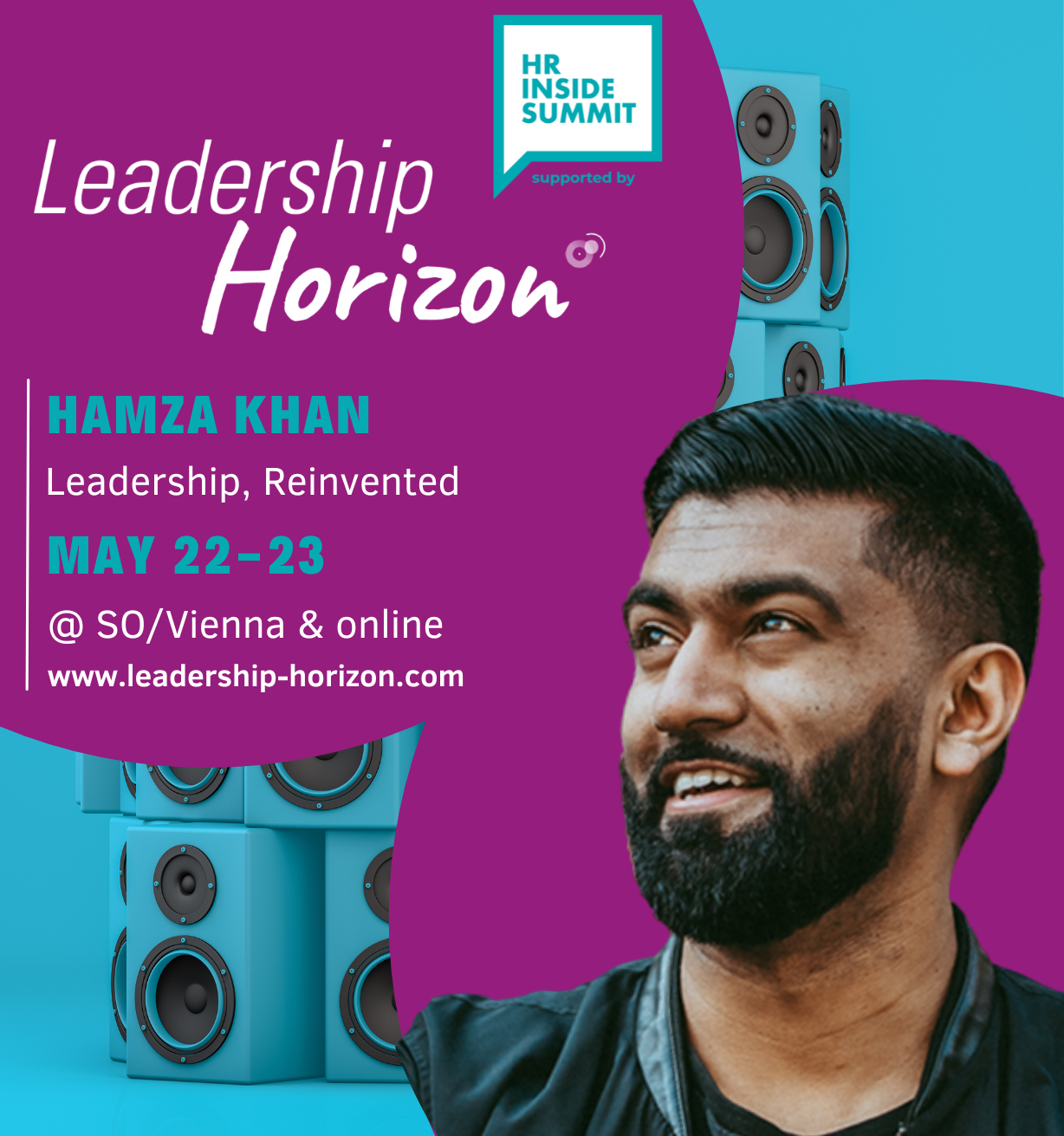
Leadership Horizon powered by HR INSIDE SMMIT

What If AI Doesn’t Replace Us — But Drowns Us Out?

by Martin Maglia | 24. June 2026 | Digital Transformation, Leadership and AI, Short Knowledge Bits | 0 Comments

What If AI Doesn't Replace Us — But Drowns Us Out? Over the weekend, I watched a thought-provoking video from Rick Beato. (You can find the link at the end of this article.) For those who don't know him: Rick Beato is a musician, producer, educator, guitarist, and one...
Read More

Use It or Lose It: How AI and Digital Tools May Be Changing Our Brains

by Florian Biedermann | 26. May 2026 | Leadership and AI, Leadership Tips, Learning Transfer | 0 Comments

Use It or Lose It: How AI and Digital Tools May Be Changing Our Brains You travel to Madrid and want to chat with the locals, but you realize that after five years without practice, your rudimentary Spanish skills are now practically nonexistent and you even struggle...
Read More

How Artificial Intelligence Shapes Who We Become

by Meike Hinnenberg | 19. May 2026 | Impuls series, Leadership and AI, Leadership in the digital transformation | 0 Comments

How Artificial Intelligence Shapes Who We Become Meike’s Reflections on Artificial Intelligence Do you prefer to listen to this article? Click below to access our AI-generated audio version!How Artificial Intelligence Shapes Who We Become Meike’s Reflections on...
Read More

Zeca Ruiz on Cross-Generational Leadership and Navigating Change

by Jana Wölfl | 13. May 2026 | Leadership Impact, MDI Spotlight Series, Training Insights | 0 Comments

Zeca Ruiz on Cross-Generational Leadership and Navigating Change This blog is an excerpt from our new podcast! You can find the entire podcast episode here. Zeca Ruiz on Cross-Generational Leadership and Navigating Change In the fourth episode of our podcast “Voices...
Read More

AI-Empowered Leadership: 6 Guiding Principles

by Gunther Fürstberger | 14. April 2026 | Leadership and AI, Leadership Tips, MDI Whitepaper | 0 Comments

AI-Empowered Leadership: 6 Guiding Principles This blog post is a detailed summary of the whitepaper "Guiding Principles of AI-Empowered Leadership" by MDI's CEO, Gunther Fürstberger. You can find the full whitepaper here! Let's be honest: most conversations about AI...
Read More

What AI Shows You — and What It Doesn’t

by Meike Hinnenberg | 1. April 2026 | Digital Transformation, Impuls series, Leadership and AI | 0 Comments

What AI Shows You — and What It Doesn't Meike’s Reflections on Artificial Intelligence Do you prefer to listen to this article? Click below to access our AI-generated audio version! What AI Shows You — and What It Doesn't Meike’s Reflections on Artificial Intelligence...
Read More

Leading in the Age of AI: How AI Discourse Shapes Responsibility and Power

by Meike Hinnenberg | 18. March 2026 | Impuls series, Leadership and AI, Leadership Tips | 0 Comments

Leading in the Age of AI: How AI Discourse Shapes Responsibility and Power Meike’s Reflections on Artificial Intelligence Do you prefer to listen to this article? Click below to access our AI-generated audio version!Leading in the Age of AI: How AI Discourse Shapes...
Read More

AI Ethics for Leaders: Why Context and Critical Thinking Matter More Than Ever

by Meike Hinnenberg | 11. March 2026 | Impuls series, Leadership and AI, Learning Transfer | 0 Comments

AI Ethics for Leaders: Why Context and Critical Thinking Matter More Than Ever. Meike’s Reflections on Artificial Intelligence Do you prefer to listen to this article? Click below to access our AI-generated audio version!AI Ethics for Leaders: Why Context and Critical...
Read More

A Success Story – When AI Sharpens Human Judgement

by Claude MacDonald, Rafael Ungvari | 6. March 2026 | Customer Story, Digital Transformation, Leadership and AI | 0 Comments

A Success Story – When AI Sharpens Human Judgement Do you prefer to listen to this article? Click here to access our AI-generated audio version! When AI Amplifies Human Judgment: A Customer Success Story About This Project At MDI, we believe that great leadership and...
Read More

How Do You Lead People Who Don’t Think the Way You Do?

by Zeca Ruiz | 4. February 2026 | Leadership Impact, Leadership Tips, Learning Transfer | 0 Comments

How Do You Lead People Who Don't Think the Way You Do? Do you want to listen to this article? Click here to access our AI-generated audio version!   How do you lead people who do not think the way you do? Leadership is a challenge, especially when you are not...
Read More
« Older Entries
Next Entries »

Information

  • Imprint
  • MDI company website

Social Media

  • Facebook
  • Twitter
  • Youtube
  • LinkedIn

© MDI Management Development Institute, 2020