
• MDI
  • German version
  • Contact us
MDI Management Development
  • Agile leadership
  • Lateral Leadership
  • Leadership Impact
  • Leadership Development
Select Page
Generation Z isn’t the Problem but Our System is

Generation Z isn’t the Problem but Our System is

by Zeca Ruiz | Dec 3, 2025 | Impuls series, International leadership development, Leadership in the digital transformation | 0 comments

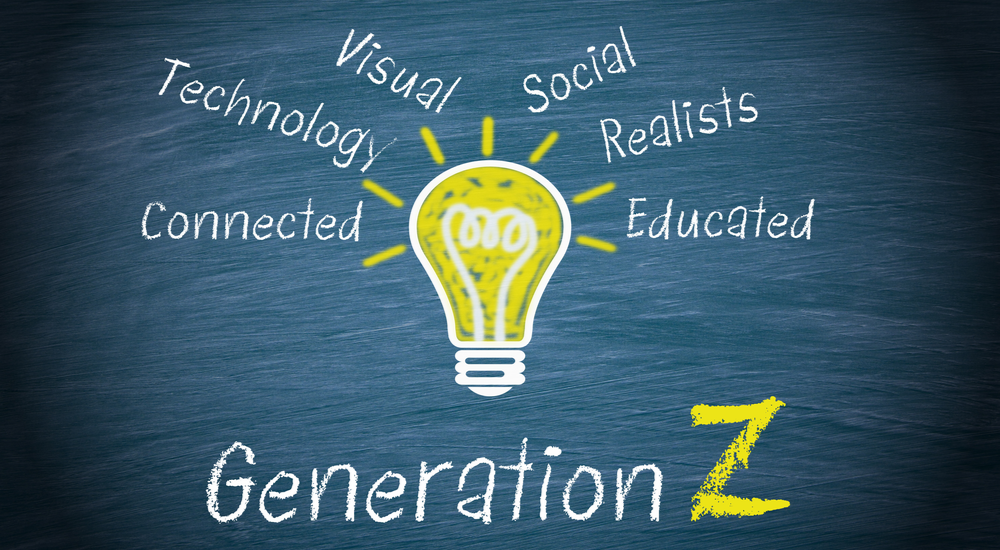
Generation Z isn’t the Problem, but Our System is

Do you want to listen to this article? Click here to access our AI generated audio version!


Generation Z isn’t the Problem, but Our System is

The discomfort we feel in relation to them reveals that something in us needs to change, because when an entire generation steps away from the same path, perhaps it is not the generation that is lost, but the path itself that is poorly designed.

Zeca is our MDI Trainer based in Latin America and an expert on generational cooperation. This blog article is the first part of a series – read below to find out what he thinks about the youngest generation in the workforce, Generation Z, and let’s start a discussion on LinkedIn!

Today, in leadership conversations, it has almost become a mantra to say that “young people from Generation Z are lost and we cannot expect much from them.”

As a corporate trainer I repeatedly hear complaints or questions that express how difficult it has been for us to relate to this generation.

GenZ – The Useless Generation?

Many leaders describe this generation as immature, fragile, hard to manage, not very committed, rebellious or even disrespectful. And this narrative has become so common that it starts to sound like an absolute truth.

We have reached a point where some companies have simply stopped hiring apprentices from this generation. They have turned their attention to professionals over fifty who, even at the end of their careers, still fit the current ways of working.

As the good contrarian I like to be, I want to bring up a point that only a minority takes the time to investigate.

Reflect, don’t judge!

Reflect, don’t judge!

When we evaluate a behavior only through the lens of the discomfort it causes us, we completely lose the ability to understand its function and existential role.

In the paradigm of complexity, we understand that subjectivity is an inseparable part of the system, including the observer, and that every behavior carries an internal logic that only reveals itself when we examine the context that produces it, not just the effect it generates in us.

It is like judging a book only by its cover. What we feel when we look at the cover, without knowing the real content, says much more about us than about the book.

In the same way, when we look at Gen Z, we do not see only who they are and what they do, we also see the contrast between the Generation Z way of existing and the way we were formed, our beliefs, our world models and the scale we learned to use to measure behavior, ours and others.

And if both the environment has shaped Gen Z and has also shaped the way we judge them, then we need to change the lens of this observation and step away from unilateral judgment.

We need to start asking ourselves, why are they like this, what are these behaviors responding to, which structures taught this generation to act the way it does and what role these responses are playing in today’s society.

Putting Gen Z Into Context

If we look at this Gen Z phenomenon from a systemic perspective, and not a reactive one, it becomes clear that no generation collectively “wakes up” more fragile, more rebellious or more difficult simply by choice.

Every behavior is always a reflection of the environment, always a condition inherent to the context, an adaptive response to specific conditions that are present.

And for me, based on the topics I explore and study, the behavioral expression of Generation Z is not pointing to their weakness, as we like to assume. It is pointing to the deep obsolescence of the system around them.

Every generation is an adaptive response to the environment it inherits from the previous one and Gen Z is no exception. They are a response to a world that has changed faster than organizations have been capable of following.

And let me be clear about something.

I am not here to idealize Gen Z or place them on any pedestal, I also see they carry traits that challenge them deeply, regardless of the system they inhabit.

They can be anxious, impatient, prematurely exhausted, emotionally overwhelmed, and often unprepared to sustain prolonged discomfort. These are real characteristics that demand development, maturity and guidance.

But acknowledging their difficulties does not contradict what I am saying, it actually reinforces it. Because the turning point comes when we stop looking only at what they lack and start recognizing how much of our own worldview, our expectations and our outdated structures shape the very behaviors we criticize.

The moment we take responsibility for the lens through which we see them, we finally create the conditions for growth on both sides.

Putting Gen Z Into Context

Why is Gen Z like this? (before labeling, we must contextualize and understand)

Before making any judgment, it is worth looking at this generation with analytical sobriety and recognizing the quality of their most striking traits, such as their authenticity, their search for meaning, their intolerance for incoherence, their rejection of rigid hierarchies, their heightened emotional sensitivity, their digital fluency and their constant questioning.

Born into the digital age, members of Generation Z arrive in the workplace with very clear expectations for agility, transparency and innovation.

And because they often bring an entrepreneurial and autonomy driven mindset, they tend to challenge traditional paradigms and seek more horizontal structures, with authentic and coherent leadership.

Seeing the Bigger Picture

These elements are not isolated characteristics, they are expressions of a way of existing that was shaped by an environment radically different from the one that structured the ways of the previous generations.

And although these traits are sometimes interpreted as opposition to earlier generations, or as the result of having had too many comforts which would have weakened their capacity for effort and discipline, they are actually a very interesting starting point for deeper, contextual investigation.

After all, as always happens in the transition between generations, these ways of behaving are adaptive responses to conditions that simply did not exist before.

So the invitation here is to broaden our perspective and look beyond isolated behavior. It is to observe the scenario that shaped this generation, the environment and the conditions that gave rise to each trait and to each way that Gen Z responds to the world.

Conclusion

Gen Z isn’t a sign of decline—they’re a sign that our systems haven’t kept pace. Their behavior points to the gaps in how we lead, organize and define work. When we stop labeling and start listening, we see that their traits aren’t flaws but responses to a world that changed faster than our structures did.

The real question isn’t what’s wrong with Gen Z, but what their reactions reveal about the environment we built. Once we shift the lens, it becomes clear: Generation Z isn’t the problem. They’re the diagnosis. The work ahead lies with us.

Zeca Ruiz

Zeca Ruiz

Leadership Trainer and Consultant

Zeca Ruiz is a Leadership Trainer, Facilitator and Consultant in Human and Organizational Development. He works in leadership development across Latin America and Europe, with experience in cultural transformation processes, team dynamics and the integration of systemic methodologies into corporate practice. He is a specialist in complex thinking, a generative coach and an integrative therapist, working at the intersection between human behavior, learning and the evolution of systems. He leads trainings, talks and development programs that combine depth, clarity and practical application to prepare people and organizations for high complexity environments.

  • LinkedIn

What serves you next?

Zeca Ruiz on Cross-Generational Leadership and Navigating Change

by Jana Wölfl | 13. May 2026 | Leadership Impact, MDI Spotlight Series, Training Insights | 0 Comments

Zeca Ruiz on Cross-Generational Leadership and Navigating Change This blog is an excerpt from our new podcast! You can find the entire podcast episode here. Zeca Ruiz on Cross-Generational Leadership and Navigating Change In the fourth episode of our podcast “Voices...
Read More

How Do You Lead People Who Don’t Think the Way You Do?

by Zeca Ruiz | 4. February 2026 | Leadership Impact, Leadership Tips, Learning Transfer | 0 Comments

How Do You Lead People Who Don't Think the Way You Do? Do you want to listen to this article? Click here to access our AI-generated audio version!   How do you lead people who do not think the way you do? Leadership is a challenge, especially when you are not...
Read More

How You Deal With Neurodiversity as a Leader

by Iris Kandlbauer | 3. February 2026 | Leadership Impact, Leadership Tips, Short Knowledge Bits | 0 Comments

How You Deal With Neurodiversity as a Leader You prefer listening to this article? You can find our AI-generated audio version below! How You Deal With Neurodiversity as a Leader What might be behind “strange” behavior in a team—and how leaders can deal with it...
Read More

Generation Z isn’t the Problem but Our System is

by Zeca Ruiz | 3. December 2025 | Impuls series, International leadership development, Leadership in the digital transformation | 0 Comments

Generation Z Isn’t the Problem, but Our System is. Read this article on crossgenerational management by Zeca Ruiz to find out more!

Read More

The Lasting Impact of Leadership Horizon – Meike’s Perspectives

by Meike Hinnenberg | 2. July 2025 | Leadership Impact, MDI Inside, Short Knowledge Bits | 0 Comments

The Lasting Impact of Leadership Horizon - Meike's Perspectives Do you prefer to listen to this article? Click below to access our AI-generated audio version!The Lasting Impact of Leadership Horizon - Meike's Perspectives MDI’s Meike Hinnenberg shares her reflections...
Read More

Success Through Change: How to Stay Oriented During Transitions

by Anita Berger | 14. April 2025 | Impuls series, Leadership Impact, Leadership Tips | 0 Comments

Success Through Change: How to Stay Oriented During Transitions Do you prefer to listen to this article? Click below to access our AI-generated audio version:Success Through Change: How to Stay Oriented During Transitions Change processes often involve challenges....
Read More

4 Tips on How to Shape Change Processes as a Leader

by Anita Berger | 3. April 2025 | Impuls series, Leadership Impact, Leadership Tips | 0 Comments

4 Tips on How to Shape Change Processes as a Leader Do you prefer to listen to this article? Click below to access our AI-generated audio version:4 Tips on How to Shape Change Processes as a Leader Imagine a dynamic network of paths that is constantly changing. While...
Read More

Successful Team Building for Boehringer Ingelheim RCV

by Anita Berger | 29. March 2024 | Customer Story, International leadership development, MDI Inside | 0 Comments

Successful Team Building for Boehringer Ingelheim RCV Do you prefer to listen to this article? Click below to access our AI-generated audio version:Successful Team Building for Boehringer Ingelheim RCV In the interview with our MDI trainer and partner, Anita Berger On...
Read More

Organize Your Team in a Hybrid Workplace

by Peter Grabuschnig | 14. March 2024 | Impuls series, International leadership development, Leadership in the digital transformation | 0 Comments

Organize Your Team in a Hybrid Workplace Prefer to listen to the article? Click below to access our AI speech-generated audio. However, if you want to read it as usual, keep scrolling.Organize Your Team in a Hybrid Workplace In his new Rise Course, our MDI trainer and...
Read More

Exploring the Influence of AI on Leadership Roles – an experiment by a CEO

by Gunther Fürstberger | 14. November 2023 | International leadership development, Leadership and AI, Leadership in the digital transformation | 0 Comments

Exploring the Influence of AI on Leadership Roles: Learn more about the ongoing ChatGPT experiment by MDI CEO Gunther Fürstberger Do you prefer to listen to this article? Click below to access our AI-generated version. Exploring the Influence of AI on Leadership...
Read More
Young, working & thriving – Dreams & expectations of the new Gen Z

Young, working & thriving – Dreams & expectations of the new Gen Z

by Jana Wölfl | Jul 21, 2022 | MDI Inside | 0 comments

Young, working & thriving – Dreams and expectations of the new Gen Z

According to PwC, Millennials will make up 50% of the workforce by 2030. But as quickly as Millennials have moved into the workforce, another, even larger generation is coming along:

Generation Z.

And they are capable of being a disruptive force in the workplace. They are more diverse, more technologically advanced and, even though Millennials and members of Generation Z are close in age, their belief systems are verry different.

The way employees, managers and HR professionals interact with this new group of professionals will determine whether they create an amazing corporate culture that benefits both employees and the employer – or miss the mark entirely.

How do leaders and companies need to adapt?

That’s what we try to find out in an interview with MDI’s youngest team member, Jana! Born in 2003, she is part of the Generation Z.

About Jana

In her gap year after high school and before university, Jana started as a team assistant at MDI.

In April she went on an Interrail trip where she discovered 7 cities in Europe. Besides traveling, she likes to spend her time on creative outlets like crocheting, photography or cooking.

Being part of Generation Z, her cell phone is naturally a bigger part of her life than she would like.

Dear Jana, Let’s Spill the Tea on Generation Z 🙂

Tell us a little bit about yourself.

What are your professional interests and what further education do you aspire to?

My professional interests actually change all the time. Right now, though, I’m about to start my bachelor’s degree in the Netherlands – International Studies at Leiden University. It’s an interdisciplinary degree that studies economics, culture, language, and politics based on a specific world region. So it’s perfect for someone like me who has no idea what exactly she’s interested in or what she wants to do later on.

However, I could well imagine going in a creative direction later on (e.g. in the field of graphic design) or writing and reporting for media as I am doing right now at MDI.

What would an employer have to offer (website, job advertisement, etc.) to appeal to you?

First, the price-performance ratio needs to be right – I don’t want to do more work than I get paid for. At the same time, I must get the feeling that I fit in with this company – this can happen through a nicely designed website, a pleasant ad or an exciting job description.

Requirements currently too high

But it’s also important that the employer doesn’t set too many conditions that I can’t fulfil. A common problem in my environment is that you don´t have as much previous professional experience due to school and university as is often required. Right now, it´s really hard to find even an easy job where experience in 10 different fields or a personal contact isn´t essential.

In general, do you already know what is important to you in your job?

No, not yet exactly. I know that I don’t want to spend 100% of my working time behind a screen. And this is going to sound banal, but I expect my job to make me want to go there and maybe even develop a passion for what I do. I can’t imagine anything worse than a workplace where my stomach clenches every time I think about it.

What motivates you in a professional context?

On one hand, as I said,

  • the interest in the job
  • and the fact that I enjoy going to work.
  • On the other hand, the people I cooperate with play a big role.

Team cohesion

I feel incredibly comfortable at MDI, mainly because we have great team cohesion. That motivates me – I always enjoy going into the office and chatting with my colleagues.

Recognition and feedback

Another factor for me, of course, is the recognition and feedback I get for the tasks I complete. It’s important for me to know that what I do for MDI every day is well received or that I’m doing a valuable job for the company. And if that’s not the case, I want that to be communicated honestly and transparently as well, so I know how I can improve.

What are professional must haves & no go’s for you?

For example, in terms of working hours, work models, on and offline work, etc.

Must-Have 

A must-have is the option of home office or third place working. For example, last week I was in quarantine, and it really helped that I could keep my mind busy, even at home. Also, I am very grateful that I can arrange my own working hours. Of course, I know that this is a privilege, and I don’t expect it to be the same later when I work more.

No-Go

A no-go for me would be if people don’t talk to me respectfully & eye to eye. In addition, I always want to be able to combine my private life with my professional life and not have to drown in my work.

Do you prefer home office, third place working, F2F working in the office or a mix of the above?

Hybrid Working

Definitely a mix. I still prefer to physically go to the office because I can socialize with my colleagues there. But also because I can separate my private life from my professional life more clearly there. In the office, my concentration is much higher and I’m not as easily distracted (e.g. by a spontaneous tidy-up).

Third Place Working

Nevertheless, every now and then I’m happy to be able to do my work from home or – even better – from a third location like a nice café.

What channels (social media) should an employer use to reach you?

Personally, I only use Instagram. However, I think it makes sense to display advertisements on all channels possible (Twitter, Facebook, Tiktok, …). After all, that’s where most young people spend their time and why not apply for a job right away if you’re already using the app?

What are your expectations from your direct manager?

I want to be appreciated for what I do. I don’t think much of hierarchical structures, so it’s important to me that my leadership doesn’t patronize me and meets me on the same level. And, as I said before, transparent and honest communication is a must for me.

How important is the age structure of your team to you?

I haven’t given that much thought yet. But basically, I’m always happy to see diversity – which means age diversity, too. It’s definitely important that the company consists of people of different ages, so that knowledge and experience can be drawn from different generations.

Diversity is more

But you have to remember that diversity is not just about age, but almost more about including different ethnicities, gender identities and people with disabilities.

How important are non-work social events with colleagues to you?

Very. Every lunch with the whole team brings me great joy. It’s nice to be able to talk not only about work, but also about our personal lives. I also particularly appreciate that at MDI – there are always opportunities to network outside of the professional context. Great regulars’ tables and parties are organized, where you can get a bit closer to each other.

Dear Jana, last question ? Make a choice ... a lot of money, but a job that makes little sense to you or vice versa?

I can answer this question in two ways.

On one hand, it clearly helps me for my current life situation to earn a lot of money in order to save something or to spend it on things that are important to me (my first apartment, traveling, etc.).

On the other hand, in the future, when I am employed full time in a company or maybe even self-employed, I would prefer to work in something that I also see a personal meaning in – even if I don’t earn much for it.

What serves you next?

Zeca Ruiz on Cross-Generational Leadership and Navigating Change

by Jana Wölfl | 13. May 2026 | Leadership Impact, MDI Spotlight Series, Training Insights | 0 Comments

Zeca Ruiz on Cross-Generational Leadership and Navigating Change This blog is an excerpt from our new podcast! You can find the entire podcast episode here. Zeca Ruiz on Cross-Generational Leadership and Navigating Change In the fourth episode of our podcast “Voices...
Read More

What AI Shows You — and What It Doesn’t

by Meike Hinnenberg | 1. April 2026 | Digital Transformation, Impuls series, Leadership and AI | 0 Comments

What AI Shows You — and What It Doesn't Meike’s Reflections on Artificial Intelligence Do you prefer to listen to this article? Click below to access our AI-generated audio version! What AI Shows You — and What It Doesn't Meike’s Reflections on Artificial Intelligence...
Read More

A Success Story – When AI Sharpens Human Judgement

by Claude MacDonald, Rafael Ungvari | 6. March 2026 | Customer Story, Digital Transformation, Leadership and AI | 0 Comments

A Success Story – When AI Sharpens Human Judgement Do you prefer to listen to this article? Click here to access our AI-generated audio version! When AI Amplifies Human Judgment: A Customer Success Story About This Project At MDI, we believe that great leadership and...
Read More

How Do You Lead People Who Don’t Think the Way You Do?

by Zeca Ruiz | 4. February 2026 | Leadership Impact, Leadership Tips, Learning Transfer | 0 Comments

How Do You Lead People Who Don't Think the Way You Do? Do you want to listen to this article? Click here to access our AI-generated audio version!   How do you lead people who do not think the way you do? Leadership is a challenge, especially when you are not...
Read More

How You Deal With Neurodiversity as a Leader

by Iris Kandlbauer | 3. February 2026 | Leadership Impact, Leadership Tips, Short Knowledge Bits | 0 Comments

How You Deal With Neurodiversity as a Leader You prefer listening to this article? You can find our AI-generated audio version below! How You Deal With Neurodiversity as a Leader What might be behind “strange” behavior in a team—and how leaders can deal with it...
Read More

From Lab to Practice: What We Learned With AI

by Rafael Ungvari | 3. September 2025 | Digital Transformation, Leadership and AI, Short Knowledge Bits | 0 Comments

From Lab to Practice: What We Learned With AI Do you prefer to listen to this article? Click here to access our AI-generated audio version! From Lab to Practice: What We Learned With AI AI in organizations isn’t a one-size-fits-all solution. And in people development,...
Read More

The Lasting Impact of Leadership Horizon – Meike’s Perspectives

by Meike Hinnenberg | 2. July 2025 | Leadership Impact, MDI Inside, Short Knowledge Bits | 0 Comments

The Lasting Impact of Leadership Horizon - Meike's Perspectives Do you prefer to listen to this article? Click below to access our AI-generated audio version!The Lasting Impact of Leadership Horizon - Meike's Perspectives MDI’s Meike Hinnenberg shares her reflections...
Read More

Leadership and AI: Between Responsibility and Opportunity

by Marina Begic | 6. May 2025 | Digital Transformation, Leadership and AI, Leadership Tips | 0 Comments

Leadership and AI: Between Responsibility and Opportunity Do you prefer to listen to this article? Click below to access our AI-generated audio version!Leadership and AI: Between responsibility and opportunity Artificial intelligence is no longer a pipe dream – it is...
Read More

AI Hears; Humans Listen: Become a Master of Attunement

by Hamza Khan | 18. April 2025 | Digital Transformation, Leadership and AI, Leadership in the digital transformation | 0 Comments

AI Hears; Humans Listen: Become a Master of Attunement Prefer to listen to the article? Click below to access our AI speech-generated audio. However, if you want to read it as usual, keep scrolling.AI Hears; Humans Listen: Become a Master of Attunement Not Black...
Read More

Success Through Change: How to Stay Oriented During Transitions

by Anita Berger | 14. April 2025 | Impuls series, Leadership Impact, Leadership Tips | 0 Comments

Success Through Change: How to Stay Oriented During Transitions Do you prefer to listen to this article? Click below to access our AI-generated audio version:Success Through Change: How to Stay Oriented During Transitions Change processes often involve challenges....
Read More

Information

  • Imprint
  • MDI company website

Social Media

  • Facebook
  • Twitter
  • Youtube
  • LinkedIn

© MDI Management Development Institute, 2020