

From Individual Growth to Leadership and Team Development
In the first part of our blog series, inspired by coach and NLP trainer Ivan Petric’s essay Model of Models, we explored how three well-known development models reveal a shared pattern of growth. From initial enthusiasm to frustration and, eventually, competence, we discovered why challenges aren’t necessarily obstacles to development, but often an essential part of it.
But development doesn’t happen in isolation. People grow within teams, organizations, and systems that influence how they learn, collaborate, and perform. And sometimes, even well-intentioned support can stand in the way of real progress.
Let’s explore why effective leadership isn’t just about solving today’s problems, but about developing people who can solve tomorrow’s challenges independently.
When the whole system develops
Development doesn’t happen inside one person. When a child starts school, it is officially the child who goes to school. In reality, the whole family has to reorganize getting up earlier, homework, who drops off and who picks up. After a while, routines settle, and life feels normal again. Until something changes: another child, a new job, a move.
This adds something important to the four-stage story. The fourth stage is not a lifelong graduation. It means that a person or system works well under certain conditions. Change enough of those conditions, and you can be back at the start very quickly. A leader who ran a top team for ten years can take over a different organization and find that old methods no longer work. The skill has not disappeared. The context has changed.
This is where Messi comes in. You can have eleven excellent players and still not have a good team. The team photo at the start of the season looks great. Everyone smiles. Forming is a very photogenic phase. Storming is less so. Then it becomes clear who actually plays, who sits on the bench, whose idea wins, and who takes the penalty. Sometimes, the arrival of a better player weakens a team for a while, not because the player is a problem, but because the whole system has to adjust.
Looking only at individuals, we ask who is better or more motivated. Looking at the team, we ask different questions: How are roles distributed? How does information flow? What happens after a mistake? Where is trust? Petric describes teams where almost nobody was a “problem case,” and there were still problems. Marketing blamed sales, sales blamed production, production blamed management. Each person’s story made sense. The problem lived between them.
So instead of only asking “Who is doing it wrong?”, he asks: “Which part of this relationship structure produces this behavior?” Maybe an employee does not need more training, because the issue is unclear roles. Maybe a team does not need team building, because the issue is a reward system that pits departments against each other.
And one more point: nobody stands outside the process. A father learns to be a father. A leader learns to lead. A new leader can be D1 in their own role while leading someone who is D3 in theirs.

The parent and the leader in one person
Ask leaders and HR people about the new generation of employees, and you hear similar things: “They ask why.” “If they don’t like it, they leave.” “They want feedback but don’t accept authority the way we did.” Petric suggests a better question than “What is wrong with this generation?” In what system did these people grow up, and what did they learn from it?
Each generation of parents tends to fix what it missed. Those who grew up with little worked so their children would have more. Those whose parents had no time tried to be more present. This is understandable. But as Peter Senge writes in The Fifth Discipline: “Today’s problems come from yesterday’s solutions.”
If I remove every obstacle for my child, I may also remove the chance to learn how to overcome obstacles.
Petric tells the familiar story of a man who watched a butterfly struggling to leave its cocoon. He took scissors and widened the opening. The wings never unfolded, and the butterfly never flew.
Then comes the closed loop. At home, parents tell their children: “Don’t let them take advantage of you.” “If they don’t value you, find another job.” “Don’t stay silent for twenty years as I did.” The next morning, the same parent drives to work and becomes a leader. Across the desk sits someone else’s child, who heard almost the same thing. That evening the parent-leader comes home and says: “I just don’t understand this new generation.”
Middle managers are squeezed between targets from above and new expectations from below. “It has to be done” used to end a conversation. Today it often starts one. A leader may experience this as a loss of authority. Or perhaps their own leadership repertoire has simply entered a new developmental phase. The model applies to the D2 leader as much as to the D2 employee.
Good leaders, like Marko’s teacher, do not remove the demands. They make them meaningful and help the person grow through them. Formal authority can produce obedience, but not necessarily competence, responsibility, or independence. If I want someone to reach D4, I cannot keep treating them like someone who only follows instructions.
Short-term efficiency and long-term development are not always the same thing.
“Just give me a summary”
Today it’s not only parents and leaders who can solve problems for us. AI can write a text, build a presentation, summarize a book, or write code in seconds. Petric hears one sentence again and again in training: “Just give me a summary.”
He is not against summaries. He uses them himself. When you already know a field, a summary saves time. The problem starts when a summary stops serving understanding and replaces the process of understanding.
If an app plays Marko a perfect guitar piece, we have music. If his goal is music, problem solved. If his goal is to become a guitarist, the app solved a different problem. The result is there, but the skill may be missing. The same applies to a junior employee who receives a brilliant AI-generated analysis but does not yet have the experience to judge what is good, what is wrong, and what to do when the situation no longer fits the pattern.
The interesting question is not “Can AI do this?” Very often it can. The question is: “What should a person be able to do after the AI has done it?”
What we actually do when we help someone develop
Two people can have the same problem on the surface and need completely different help. One needs knowledge, another practice. One needs support to get through uncertainty; another needs someone to stop rescuing them. A third may already have the skill but cannot access it in the current context.
Petric gives an example from coaching. A client says, “I have no patience.” Yet, at work, he can calmly listen to an angry customer for half an hour. At home, his partner says two sentences the wrong way, and after thirty seconds he stops listening. The ability clearly exists. The problem is transferring it to another context. That calls for a different intervention than building a skill from scratch. If Marko has never held a guitar, telling him to feel like Eric Clapton will not help. His fingers still have to learn. But if he plays well at home and freezes on stage, we are no longer working on chords.
Potential is free. Development is not.
The four-stage model then becomes a practical guide. Beginners usually need clarity and structure. Frustrated learners need clear feedback, support, and enough small wins to keep going. As competence grows, too much control gets in the way. And treating a truly competent person as if they need permission for every step is one of the worst leadership styles there is.
The problem is not any single style. It is using the same style regardless of where the person stands. The same is true for coaching: asking “What do you think you should do?” helps an experienced person reflect, but with a beginner it can be an elegant way of withholding information they really need.
Petric points to Croatian coach Ante Kostelić, who trained his children Janica and Ivica under far from ideal conditions. Years earlier, as a handball coach, he said: “My dream was to build, through training, a team that can play without me.” It is hard to find a better measure of development: Have I made people more dependent on me, or more independent?

The questions that remain
Petric reduces the practical side of his “model of models” to a few questions that should always run in the background:
- Where does this person stand in relation to this specific task?
- What can they already do, and what not yet?
- Is the issue a missing skill or a lack of access to an existing resource?
- How much structure, support, challenge, and autonomy do they need right now?
- And most importantly: what will they be able to do on their own after this intervention that they could not do before?
That last question protects coaches, trainers, leaders, and parents from a tempting mistake: the need to prove their own competence. A coach who solves the client’s problem may look like a genius. But in development, the result is not only what we solved today. It is also what we will not need to solve for that person tomorrow.
Not every moment is a development moment. If a plane has to land, you do not hand it to a trainee pilot for the sake of their growth. But if we always take the fastest route to today’s result, we may one day find we have built a system in which nobody has developed the ability to deliver tomorrow’s.
A model is a map
Petric is careful not to claim that the three models are “really the same”. Tuckman does not talk about skill development, and Situational Leadership is not a parenting manual. On one level, they differ. On another level, they describe the same structure.
A good model works like a map. It helps you see something in reality you would otherwise miss. But if you fall in love with the map more than the territory, you start pushing people into four neat boxes. Nobody is obliged to develop according to our slides. Teams get stuck, go backwards, speed up. And sometimes putting the guitar down after two months really is the best decision.
A model does not tell the truth about a person. It is a way to ask a better question about them.
Sometimes the model even tells us not to intervene. Once we have a tool, everything looks like a job for it. Coaches want to coach, leaders want to lead, parents want to help. Sometimes the best intervention is to let the person try again, let the team solve a conflict it can solve, or not answer a question the person can answer themselves.
Development needs support, but it also needs space. Marko did not need a guitar that played itself. He needed a teacher who made the task just manageable enough to progress, and just hard enough to grow.
The Real Goal of Development: Building Independence
Across both parts of this series, one central idea stands out: Development is not about making challenges disappear. It is about helping people become capable of overcoming them.
Whether we are teaching a child, coaching an employee, leading a team, or introducing AI into the workplace, the question remains the same: Are we creating opportunities for people to learn, or are we simply making things easier for them?
Perhaps the most important takeaway is this: The success of leadership and coaching should not only be measured by the problems we solve, but by the capabilities we help others develop. Because ultimately, great leadership is not about becoming indispensable. It is about empowering others to succeed without us.
Based on “Model modela: Tri modela. Jedan proces.“ by Ivan Petric (September 2026). Models referenced: the Four Stages of Competence, Situational Leadership (Hersey and Blanchard), Tuckman’s stages of group development, and Peter Senge’s “The Fifth Discipline”.
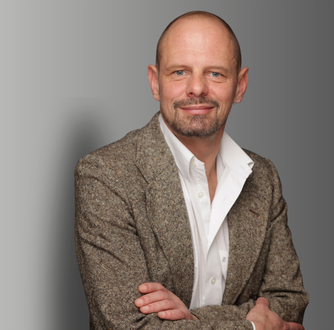
Florian Biedermann
Learning & Development Consultant at MDI
Florian Biedermann is a Learning & Development Consultant at MDI (Management Development Institute) – a global consulting company that offers solutions for leadership development. His focus is on making complex issues understandable and inspiring people to think – and act. Florian previously worked for many years as an author and manager in the e-learning sector, after spending over a decade as a freelance journalist.