
• MDI
  • German version
  • Contact us
MDI Management Development
  • Agile leadership
  • Lateral Leadership
  • Leadership Impact
  • Leadership Development
Select Page
Can AI Support EI Development For Leaders?

Can AI Support EI Development For Leaders?

by Vladimir Novac | Jan 29, 2024 | Impuls series, Leadership and AI, Short Knowledge Bits | 0 comments

Can AI Support EI Development For Leaders?

Do you prefer to listen to this article? Click below to access our AI-generated version of this blog article!

Our MDI trainer and partner Vladimir Novac asked around and collected a few thrilling insights on the connection between artificial and emotional intelligence. Here are 9 ways in which artificial intelligence can support leaders with their development of emotional intelligence. Enjoy reading!

1. Personalized coaching and feedback:

AI-driven platforms can provide personalized coaching to leaders based on their specific strengths and weaknesses in emotional intelligence. Real-time feedback can be generated by analyzing a leader’s communication style, facial expressions, and tone of voice during interactions.

2. Emotion recognition:

AI technologies like natural language processing and facial recognition can analyze leaders’ interactions and identify emotional cues. Feedback can be provided on how well a leader is recognizing and responding to the emotions of others.

3. Virtual reality simulations:

AI-powered VR simulations can create realistic scenarios to help leaders practice and improve their emotional intelligence in various situations. These simulations can mimic challenging workplace scenarios, allowing leaders to navigate emotional interactions in a controlled environment.

4. Chatbots for self-reflection:

AI-powered chatbots can engage leaders in conversations that prompt self-reflection on their emotional responses and decision-making processes. Chatbots can provide insights and resources to help leaders develop a deeper understanding of emotional intelligence concepts.

Are jobs being replaced by AI?

5. Data-driven insights

AI analytics can process large sets of data related to leadership behavior and performance, identifying patterns and correlations. Leaders can receive data-driven insights into their emotional intelligence development progress and areas that may need further attention.

6. Learning platforms with AI recommendations:

AI-driven learning platforms can recommend specific courses, resources, or activities tailored to a leader’s individual needs for developing emotional intelligence. Recommendations can be based on ongoing assessments and feedback.

7. Sentiment analysis in communication:

AI can be applied to analyze written or spoken communication to assess the sentiment and emotional tone. Leaders can receive feedback on how their communication may be perceived and suggestions for improvement.

8. Continuous monitoring and progress tracking:

AI tools can continuously monitor a leader’s interactions, providing ongoing feedback and tracking progress over time. Leaders can receive regular reports on their emotional intelligence development, allowing for adjustments and refinements to their learning strategies.

9. AI-powered coaching platforms:

AI-driven coaching platforms can simulate coaching sessions, providing leaders with practice scenarios and feedback on their emotional intelligence skills. These platforms may incorporate natural language processing to analyze communication patterns and emotional expressions.

As you can see, there are many ways in which AI influences leaders and their emotional intelligence. Join the conversation on Vlad’s LinkedIn to share your thoughts!

Vladimir Novac

Vladimir Novac

MDI Trainer & Partner

Vladimir Novac is based in Bucharest, Romania, and works as top-executive leadership trainer and coach around the globe. He is certified NLP Practicioner and Change Indicator Analyst and especially dedicated to the topics of team development, self leadership, performance management and change. Inspired by a big personal mission, he is enriching the MDI world since many years with knowledge and passion.

  • LinkedIn

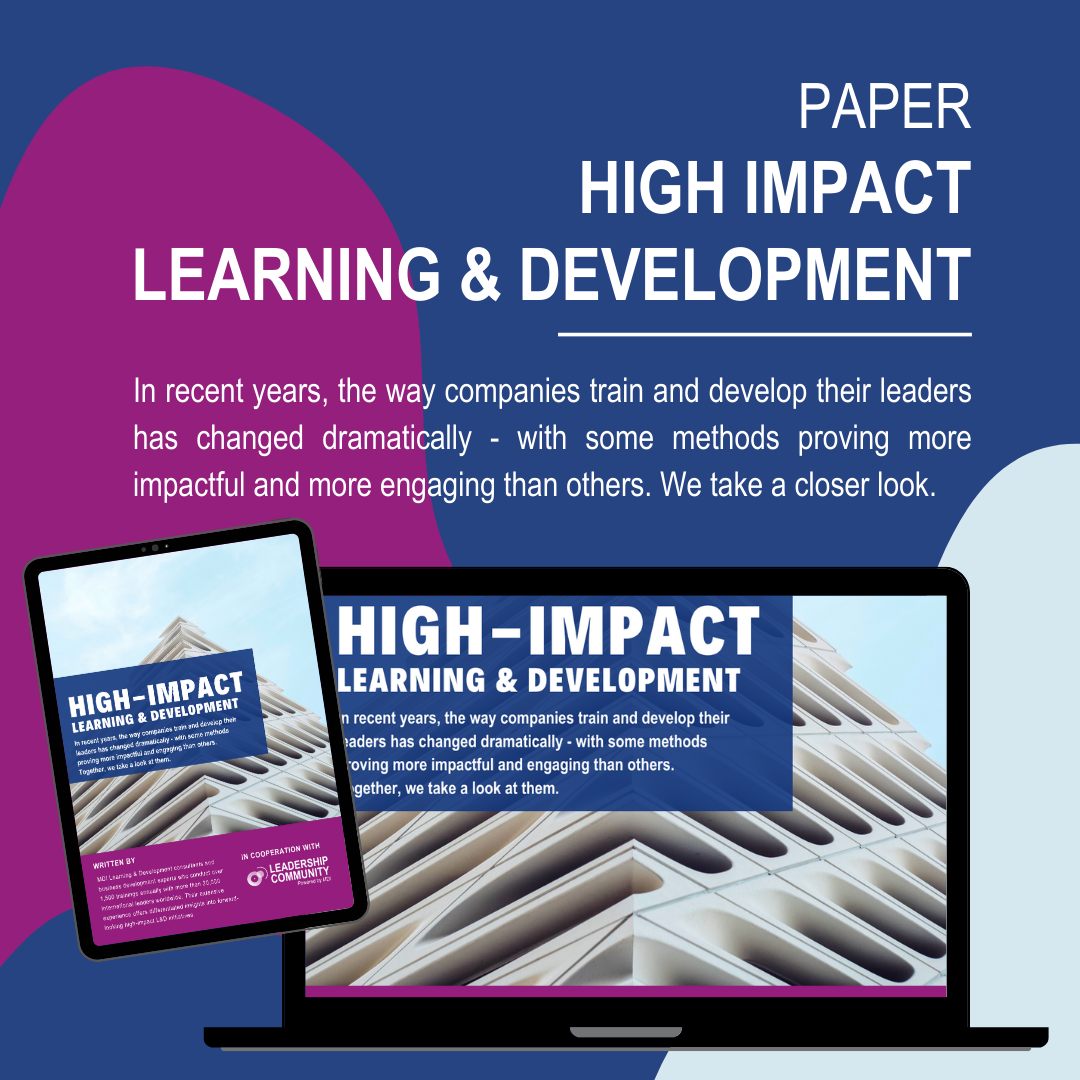
Download our MDI Paper:

Paper Mock Up

This could also help you:

AI-Empowered Leadership: 6 Guiding Principles

by Gunther Fürstberger | 14. April 2026 | Leadership and AI, Leadership Tips, MDI Whitepaper | 0 Comments

AI-Empowered Leadership: 6 Guiding Principles This blog post is a detailed summary of the whitepaper "Guiding Principles of AI-Empowered Leadership" by MDI's CEO, Gunther Fürstberger. You can find the full whitepaper here! Let's be honest: most conversations about AI...
Read More

What AI Shows You — and What It Doesn’t

by Meike Hinnenberg | 1. April 2026 | Digital Transformation, Impuls series, Leadership and AI | 0 Comments

What AI Shows You — and What It Doesn't Meike’s Reflections on Artificial Intelligence Do you prefer to listen to this article? Click below to access our AI-generated audio version! What AI Shows You — and What It Doesn't Meike’s Reflections on Artificial Intelligence...
Read More

Leading in the Age of AI: How AI Discourse Shapes Responsibility and Power

by Meike Hinnenberg | 18. March 2026 | Impuls series, Leadership and AI, Leadership Tips | 0 Comments

Leading in the Age of AI: How AI Discourse Shapes Responsibility and Power Meike’s Reflections on Artificial Intelligence Do you prefer to listen to this article? Click below to access our AI-generated audio version!Leading in the Age of AI: How AI Discourse Shapes...
Read More

AI Ethics for Leaders: Why Context and Critical Thinking Matter More Than Ever

by Meike Hinnenberg | 11. March 2026 | Impuls series, Leadership and AI, Learning Transfer | 0 Comments

AI Ethics for Leaders: Why Context and Critical Thinking Matter More Than Ever. Meike’s Reflections on Artificial Intelligence Do you prefer to listen to this article? Click below to access our AI-generated audio version!AI Ethics for Leaders: Why Context and Critical...
Read More

A Success Story – When AI Sharpens Human Judgement

by Claude MacDonald, Rafael Ungvari | 6. March 2026 | Customer Story, Digital Transformation, Leadership and AI | 0 Comments

A Success Story – When AI Sharpens Human Judgement Do you prefer to listen to this article? Click here to access our AI-generated audio version! When AI Amplifies Human Judgment: A Customer Success Story About This Project At MDI, we believe that great leadership and...
Read More

How Do You Lead People Who Don’t Think the Way You Do?

by Zeca Ruiz | 4. February 2026 | Leadership Impact, Leadership Tips, Learning Transfer | 0 Comments

How Do You Lead People Who Don't Think the Way You Do? Do you want to listen to this article? Click here to access our AI-generated audio version!   How do you lead people who do not think the way you do? Leadership is a challenge, especially when you are not...
Read More

How You Deal With Neurodiversity as a Leader

by Iris Kandlbauer | 3. February 2026 | Leadership Impact, Leadership Tips, Short Knowledge Bits | 0 Comments

How You Deal With Neurodiversity as a Leader You prefer listening to this article? You can find our AI-generated audio version below! How You Deal With Neurodiversity as a Leader What might be behind “strange” behavior in a team—and how leaders can deal with it...
Read More

Anita’s Key to Success for International Cooperation

by Jana Wölfl | 3. February 2026 | Leadership and AI, Leadership Tips, MDI Spotlight Series | 0 Comments

Anita's Key to Success for International Cooperation This blog is an excerpt from our new podcast! You can find the entire podcast episode here. Anita's Key to Success for International Cooperation In our new video podcast format, “Voices of Leadership – an MDI...
Read More

Fostering True Workplace Commitment

by Marcin Swierkocki | 14. January 2026 | Leadership Tips, Learning Transfer, Short Knowledge Bits | 0 Comments

Fostering True Workplace Commitment Do you prefer to listen to this article? Click below to access our AI-generated audio version! Fostering True Workplace Commitment Throughout my years of practice, I've found that deep workplace commitment is achieved not through...
Read More

Marcin Swierkocki on the Full Range Leadership Model

by Jana Wölfl | 19. December 2025 | Leadership and AI, Leadership Tips, MDI Spotlight Series | 0 Comments

Marcin Swierkocki on the Full Range Leadership Model This blog is an excerpt from our new podcast! You can find the entire podcast episode here. Marcin Swierkocki on the Full Range Leadership Model In the newest episode of our podcast “Voices of Leadership | An MDI...
Read More
Exploring the Influence of AI on Leadership Roles – an experiment by a CEO

Exploring the Influence of AI on Leadership Roles – an experiment by a CEO

by Gunther Fürstberger | Nov 14, 2023 | International leadership development, Leadership and AI, Leadership in the digital transformation | 0 comments

Exploring the Influence of AI on Leadership Roles:

Learn more about the ongoing ChatGPT experiment by MDI CEO Gunther Fürstberger

Do you prefer to listen to this article? Click below to access our AI-generated version. 

Exploring the Influence of AI on Leadership Roles:

Learn more about the ongoing ChatGPT experiment by MDI CEO Gunther Fürstberger

In a ChatGPT experiment, our CEO Gunther Fürstberger tried to test the boundaries between artificial intelligence and humans. He asked himself and ChatGPT the same questions to determine the differences. Read this blog post to see the results.

You can connect with Gunther Fürstberger on LinkedIn and join the conversation! 

“How much can the 4 main roles of a leader according to Covey be supported by AI”

Answers from Gunther Fürstberger:

1. Creating trust: Transparency: AI can visualize the most important things. AI can provide reliable and well-founded answers.

2. Develop visions: AI can calculate the probability of achieving a vision and create proposals for the Strategic Roadmap

3. Implement strategies: AI can coordinate alignment and coordination of priorities between departments and over time

4. Coach potentials: AI can make learning suggestions

Answers from ChatGPT:

The four main roles of a leader according to Covey – building trust, developing vision, implementing strategies, and coaching potential – can be supported to varying degrees by AI technologies. Here is an assessment of how each of these roles could benefit from AI:

Creating trust

AI can help bring transparency and objectivity to decision-making processes. Data-driven analytics can help leaders make informed decisions and build trust by demonstrating that decisions are based on verifiable information.

Developing visions

AI can help extract information from large amounts of data and identify trends that can help develop long-term visions and strategies. AI models can recognize patterns that are difficult for humans to perceive, providing valuable insights for the development of plans.

Implementing strategies

AI can assist in project and resource management. By analyzing data and predicting outcomes, AI can help leaders to better plan and adapt their strategies. Automation of recurring tasks can also create more time for strategic thinking.

Coaching potential

This is one of the biggest challenges for AI. While AI can assist to some extent in identifying individual strengths and weaknesses, the interpersonal and emotional intelligence required for effective coaching is a capability that AI has not yet fully achieved. However, AI can support learning platforms and personalized training to support the individual growth of team members.

It is important to note that AI is not meant to replace human leaders, but rather to complement and support them. Human intuition, interpersonal skills, and the ability to solve problems creatively remain crucial, especially in situations that require empathy, emotional understanding, and complex decision-making.

Better Leadership World with IDGs

“What can humans do better?”

Answers from Gunther Fürstberger:

1. Creating trust

When we talk about leading people, humans have a similar advantage. Trust is made up of integrity and competence. In terms of integrity, humans can draw on more experience with people (e.g. in the family) than with AI and would probably currently place more trust in a human leader. People can draw on intuitive skills.

2. Develop visions

Humans can use their own emotions to check how much a vision appeals to them.

3. Implement strategies

People can sometimes better recognize and deal with resistance.

4. Coaching potential

Some people are passionate about supporting the development of others.

ChatGPT answers:

Humans bring a set of skills and qualities that are difficult or even impossible to replicate by Artificial Intelligence (AI). Here are some areas where humans are often better:

Emotional intelligence and empathy

Humans can perceive subtle emotional nuances, understand interpersonal relationships, and show empathy. These skills are crucial in leadership positions, especially when it comes to motivating employees, resolving conflicts, and creating a supportive work environment.

Creativity and innovation

Creativity involves linking different ideas and concepts in unexpected ways. Humans can come up with unconventional solutions, develop ideas, and drive innovation beyond the programmatic capabilities of AI.

Complex interpersonal communication

Interpreting body language, non-verbal communication, and subtle signs is a human strength. In complex interpersonal situations, such as negotiations or conflict resolution, human understanding of communication is invaluable.

Values and ethics

People have moral and ethical considerations that influence their decision-making. The ability to weigh up right and wrong is strongly influenced by individual values and social norms, which AI does not have in the same way.

Intuition and gut feeling

People often make quick decisions based on intuition or gut feeling, based on experience and emotional signals. This can be useful in situations where data is incomplete or decision-making needs to be quick.

Contextual understanding

People can better grasp the context of a situation, including cultural, social, and historical aspects. This is important for making decisions based on a broader perspective.

Adaptability

People can adapt quickly to unexpected changes and new situations. They can react flexibly to unforeseen events and develop alternative solutions.

It is important to emphasize that AI and human skills can complement each other. AI can automate repetitive tasks, facilitate data analysis, and serve as a source of information, while humans bring their unique skills to manage complex situations and foster human relationships.

The 5 most important soft skills for leaders in the age of AI

How does AI influence the management task of delegation?

What do we delegate?

Answer from Gunther Fürstberger:

What we delegate and what we prefer to do ourselves is a personal question. It has to do with our abilities and wishes. If you want to build up a large company or a corporation should delegate as much as possible. If you want to learn as an expert, keep the exciting topics for yourself and delegate routine tasks.

As it ultimately comes down to the question of what work you want to do, what you find meaningful, and what you enjoy, it is probably better to engage in an internal dialogue about this than to leave these decisions to an AI app. AI programs such as Insightful can coach you on this, however.

Answer from ChatGPT:

Task automation

AI can automate repetitive and time-consuming tasks. This allows leaders to focus on more strategic and creative tasks.

Data analysis and decision-making

Leaders can delegate the analysis of large amounts of data and the derivation of insights to
AI systems to make informed decisions.

Communication and information management

Chatbots and intelligent assistance systems can support the management of communication and information by filtering emails, scheduling appointments, and organizing information.

Who do we delegate to?

Answer from Gunther Fürstberger:

AI itself takes on the function of an employee to whom it can be delegated. And the most interesting thing is that this employee is sure to get better, can take on more, and deliver higher-quality results. It wasn’t so long ago that we were hiring translation agencies to translate training materials into other languages.

Now this works in seconds with good quality. Learning search engines provide us with relevant information, and travel portals with suitable and affordable transportation and accommodation options. Navigation systems save us from traffic jams and radar fines. OpenAI can summarize books in 1000 characters or write poems for the Christmas party.

Which “human employees” you delegate to depends, for example, on their available capacity, skills, and wishes. If you as a line leader have a management span of e.g. 10 employees, then your assessment based on interviews is probably sufficient to decide which tasks you pass on to which person.

If the number of delegation candidates is very high, machine learning can help to create a selection of suitable candidates. There are consultant or coach databases and recruiting programs that suggest the top selection from a large number of people according to defined criteria.

Answer from ChatGPT:

AI systems and robots

Tasks can be delegated to specialized AI systems or robots that have been developed for specific tasks or processes.

Employees and teams

Leaders must decide which tasks are delegated to employees and teams and ensure that the resources and skills are in place to complete these tasks successfully. 

ai's developments

How do we delegate?

Answer from Gunther Fürstberger:

How you delegate determines the confidence and motivation with which your employees will carry out the task. Depending on their level of experience, employees should be given more or less autonomy. If the person receiving the delegation is a professional, it is sufficient to state the purpose of the task. “For example, could you please make sure that the visitors are happy”.

This would be too much for a beginner. This assessment of employees is currently still the responsibility of the leader and not an AI program. However, ChatGPT could be used to design skill tests or self-assessments. However, AI tools such as Taskade.com are good at generating lists of detailed tasks from main tasks.

Answer from ChatGPT:

Skills assessment

Leaders need to assess the skills and strengths of their employees and AI systems to delegate the right tasks to the right people or systems

Clear communication

Clear communication is crucial to set the expectations and goals of delegation. This is
particularly important when delegating tasks to AI systems as the programming and configuration must be correct.

Monitoring and feedback

Leaders need to monitor the progress and performance of delegated tasks and provide regular feedback to ensure that objectives are being met. Overall, integrating AI into delegation processes allows for a more efficient and targeted use of resources, enabling leaders to focus on strategic and valuable tasks while improving the overall performance of the organization.

However, it is important to consider the human and ethical aspects of delegation in the context of AI and ensure that it is in line with the organization’s values and goals.

How can AI contribute to corporate management?

Answer from Gunther Fürstberger:

Artificial intelligence has had a permanent place at the table in our leadership meetings since July 2023. It’s not yet a robot dressed in a costume or suit with speech recognition and output, but a member of the leadership team who gives AI a voice. At the moment, I’m taking care of it and doing it as follows:

1. We have a shared agenda document in MsTeams. About 1 day before our weekly 50-minute leadership meeting, I look at the agenda and select 1 topic, for which I usually create a ChatGPT4 prompt.

2. I show the answer in the meeting and we discuss it. There are almost always good suggestions that give us new ideas.

3. AI does not yet have a (co-)decision-making role. At the moment, it is more of a valued advisory role.

We have decided to integrate AI into company management for 2 main reasons:

As a management development institute, we see it as our responsibility to help shape the opportunities and risks of AI in leadership in general. This raises many interesting and challenging questions, such as “Do we want organizations in our society that will one day no longer be led by humans, but by AI?”

At the moment, we believe in the co-creation of leaders with AI and also want to learn from our own experiences in the spirit of “walking the talk“.

b. As a company, we are convinced that we need to keep disrupting ourselves to develop further and make a relevant and efficient contribution to society. AI currently offers enormous potential for disruption, which we want to exploit with passion and a sense of responsibility.

An interesting side effect of integrating AI at the management level is that we are using AI more consistently in a wide range of operational areas. We have now also launched an AI transformation journey for all areas of the company and introduced AI co-trainers. But there will be separate blog posts about this.

From today’s perspective, we can recommend the integration of AI in corporate management and would be delighted if you would also share your experiences with us, for example in the comments.

Leadership between Connectedness and AI-2

Now the answer from ChatGPT-4 to a slightly customized prompt:

“Please describe an example of the integration of AI in board meetings”

AI integration in board meetings: a practical example

Initial situation

An international technology company wants to increase the effectiveness of its board meetings. The meetings are often characterized by extensive reports, presentations, and data analyses, which slows down decision-making processes. It is decided to introduce an AI-powered solution to streamline discussions and facilitate real-time, data-based decisions.

Solution

1. Preparation of the meeting

An AI system consolidates all relevant data and reports from the various departments in advance. It checks these for completeness, up-to-dateness, and consistency. It then generates a summary of the most important points and visualizes them in easy-to-understand diagrams and graphics.

2. During the meeting

An AI-supported assistant projects information onto a screen in real-time. For example, if a board member asks a question about sales development in a specific market, the AI immediately displays the relevant data, historical trends, and forecasts. Through machine learning and pattern recognition, the AI can also suggest potential causes for deviations or anomalies.

3. Interactive discussions

The system enables board members to run through “what if” scenarios in real-time. For example, when discussing how an increase in the marketing budget could affect sales, the AI simulates the potential impact based on historical data and current market conditions.

4. Recording and task management

The AI records the meeting and transcribes it in real-time. Based on the discussion, it recognizes action items and assignments and automatically creates meeting minutes with a list of tasks, responsibilities, and deadlines.

5. Feedback loop

After the meeting, the AI collects feedback from the participants to continuously improve the process and the data presented. It learns from this feedback to make future meetings even more effective.

Conclusion

Integrating AI into board meetings can significantly speed up and improve the decision-making process. Providing data in real-time enables fact-based discussion and helps the board to make informed and strategic decisions. However, it is important to ensure that AI recommendations are transparent and that human intuition and expertise continue to play a central role in the decision-making process.

Insight from the ChatGTP response

So far, we have mainly used AI as a source of inspiration in management meetings. We will soon be trying out AI meeting software to optimize meeting documentation, including the formulation of action items.

Hopefully, these questions have given you something to think about. As you can see, there are still some differences between human and AI-created answers. 

Mag. Gunther Fürstberger

Mag. Gunther Fürstberger

CEO | MDI Management Development International

Gunther Fürstberger is a management trainer, author and CEO of Metaforum and MDI – a global consulting company providing solutions for leadership development. His main interest is to make the world a better place through excellent leadership. He has worked for clients including ABB, Abbvie, Boehringer Ingelheim, DHL, Hornbach, PWC and Swarovski. His core competence is leadership in digital transformation. He gained his own leadership experience as HR Manager of McDonald’s Central Europe/Central Asia.  At the age of 20 he already started working as a trainer.

  • LinkedIn

Download our International Whitepaper:


What serves you next?

AI-Empowered Leadership: 6 Guiding Principles

by Gunther Fürstberger | 14. April 2026 | Leadership and AI, Leadership Tips, MDI Whitepaper | 0 Comments

AI-Empowered Leadership: 6 Guiding Principles This blog post is a detailed summary of the whitepaper "Guiding Principles of AI-Empowered Leadership" by MDI's CEO, Gunther Fürstberger. You can find the full whitepaper here! Let's be honest: most conversations about AI...
Read More

What AI Shows You — and What It Doesn’t

by Meike Hinnenberg | 1. April 2026 | Digital Transformation, Impuls series, Leadership and AI | 0 Comments

What AI Shows You — and What It Doesn't Meike’s Reflections on Artificial Intelligence Do you prefer to listen to this article? Click below to access our AI-generated audio version! What AI Shows You — and What It Doesn't Meike’s Reflections on Artificial Intelligence...
Read More

Leading in the Age of AI: How AI Discourse Shapes Responsibility and Power

by Meike Hinnenberg | 18. March 2026 | Impuls series, Leadership and AI, Leadership Tips | 0 Comments

Leading in the Age of AI: How AI Discourse Shapes Responsibility and Power Meike’s Reflections on Artificial Intelligence Do you prefer to listen to this article? Click below to access our AI-generated audio version!Leading in the Age of AI: How AI Discourse Shapes...
Read More

AI Ethics for Leaders: Why Context and Critical Thinking Matter More Than Ever

by Meike Hinnenberg | 11. March 2026 | Impuls series, Leadership and AI, Learning Transfer | 0 Comments

AI Ethics for Leaders: Why Context and Critical Thinking Matter More Than Ever. Meike’s Reflections on Artificial Intelligence Do you prefer to listen to this article? Click below to access our AI-generated audio version!AI Ethics for Leaders: Why Context and Critical...
Read More

A Success Story – When AI Sharpens Human Judgement

by Claude MacDonald, Rafael Ungvari | 6. March 2026 | Customer Story, Digital Transformation, Leadership and AI | 0 Comments

A Success Story – When AI Sharpens Human Judgement Do you prefer to listen to this article? Click here to access our AI-generated audio version! When AI Amplifies Human Judgment: A Customer Success Story About This Project At MDI, we believe that great leadership and...
Read More

How Do You Lead People Who Don’t Think the Way You Do?

by Zeca Ruiz | 4. February 2026 | Leadership Impact, Leadership Tips, Learning Transfer | 0 Comments

How Do You Lead People Who Don't Think the Way You Do? Do you want to listen to this article? Click here to access our AI-generated audio version!   How do you lead people who do not think the way you do? Leadership is a challenge, especially when you are not...
Read More

How You Deal With Neurodiversity as a Leader

by Iris Kandlbauer | 3. February 2026 | Leadership Impact, Leadership Tips, Short Knowledge Bits | 0 Comments

How You Deal With Neurodiversity as a Leader You prefer listening to this article? You can find our AI-generated audio version below! How You Deal With Neurodiversity as a Leader What might be behind “strange” behavior in a team—and how leaders can deal with it...
Read More

Anita’s Key to Success for International Cooperation

by Jana Wölfl | 3. February 2026 | Leadership and AI, Leadership Tips, MDI Spotlight Series | 0 Comments

Anita's Key to Success for International Cooperation This blog is an excerpt from our new podcast! You can find the entire podcast episode here. Anita's Key to Success for International Cooperation In our new video podcast format, “Voices of Leadership – an MDI...
Read More

Fostering True Workplace Commitment

by Marcin Swierkocki | 14. January 2026 | Leadership Tips, Learning Transfer, Short Knowledge Bits | 0 Comments

Fostering True Workplace Commitment Do you prefer to listen to this article? Click below to access our AI-generated audio version! Fostering True Workplace Commitment Throughout my years of practice, I've found that deep workplace commitment is achieved not through...
Read More

Marcin Swierkocki on the Full Range Leadership Model

by Jana Wölfl | 19. December 2025 | Leadership and AI, Leadership Tips, MDI Spotlight Series | 0 Comments

Marcin Swierkocki on the Full Range Leadership Model This blog is an excerpt from our new podcast! You can find the entire podcast episode here. Marcin Swierkocki on the Full Range Leadership Model In the newest episode of our podcast “Voices of Leadership | An MDI...
Read More
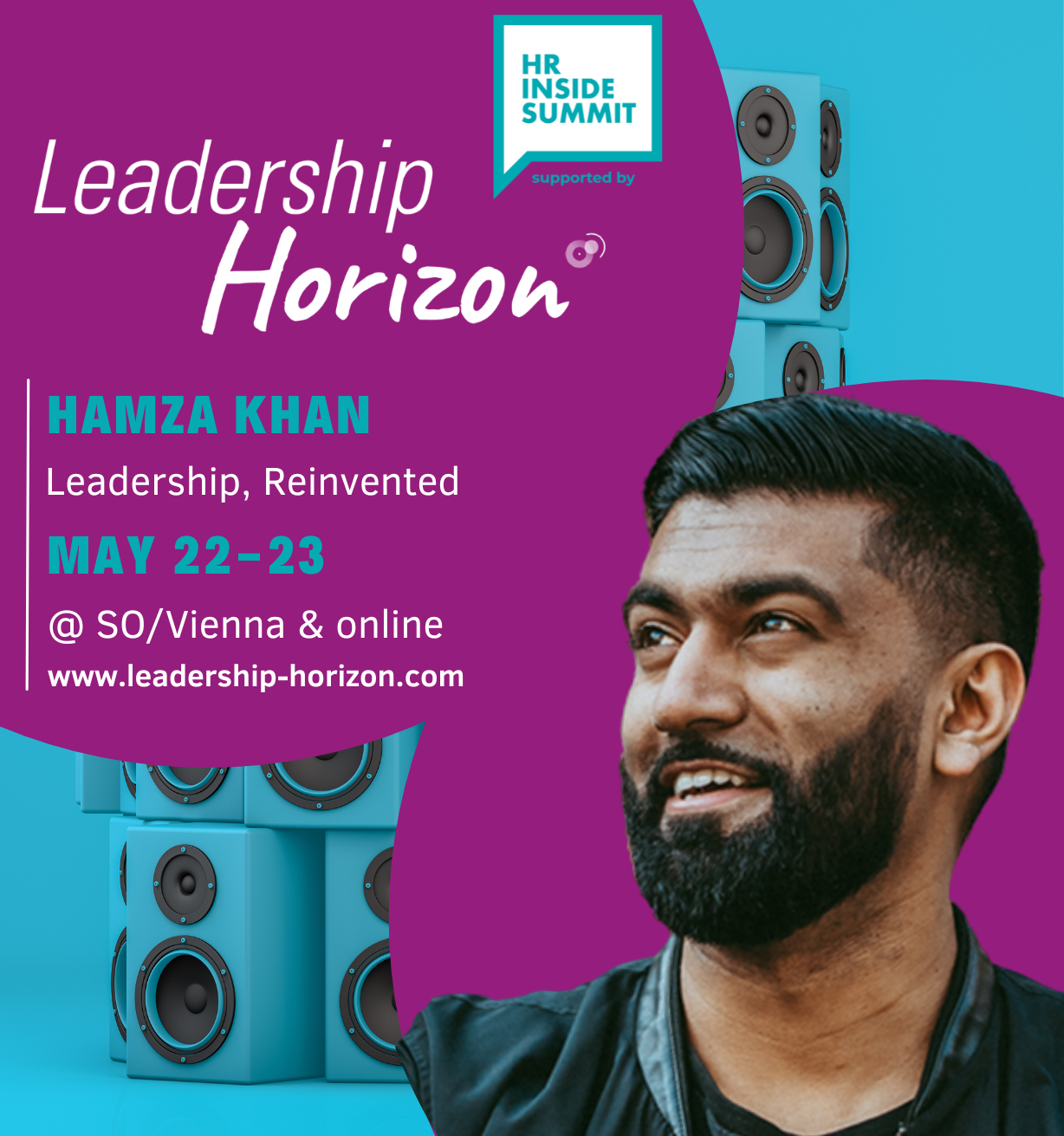
Leadership Between Connectedness and AI – A Conversation with Hamza Khan

Leadership Between Connectedness and AI – A Conversation with Hamza Khan

by Hamza Khan | Sep 29, 2023 | Digital Transformation, Impuls series, Leadership and AI | 0 comments

Leadership between Connectedness and AI – A Conversation With Hamza Khan

Prefer to listen to the article? Click below to access our AI speech-generated audio. However, if you want to read it as usual, keep scrolling.

Leadership between Connectedness and AI – A Conversation With Hamza Khan

For another part of our expert series “Leadership 4.0: Leadership in the AI Era,” Leadership Horizon 2023 keynote speaker Hamza Khan agreed to an interview with us. He tells us about the skills needed in the age of artificial intelligence, recommends active action steps for leaders, and explains why, in his opinion, a pure leadership culture through robots is unrealistic.

Read this interview to gain insights and explore how artificial intelligence changes today’s leadership culture.

In the context of artificial intelligence, some people often worry about their jobs being replaced by AI. How do you see this concern? Especially, what then becomes the role of a leader when using AI?

The concern about AI replacing jobs is both valid and urgent. Undoubtedly, jobs will be changed and replaced by the end of the decade. These sentiments are shared by nearly every think tank and strategy consulting firm. For instance, Deloitte estimates that 100 million global low-wage workers must find a different occupation by 2030. McKinsey reckons that 400 million to 800 million individuals could be displaced by 2030.

But viewing AI as a tool that can augment human capabilities rather than replace them entirely is essential. Through this lens, leaders play a crucial role in shaping the narrative by ensuring that AI enhances employees’ skills and productivity.

The role of a leader in the AI era is evolving to that of a steward—one that must balance the dichotomy of leadership (serving the needs of the mission vs. serving the needs of the people). And I believe that what’s good for the mission is what’s good for people and, by extension, the planet.

To that end, leaders should focus on leveraging AI to automate routine and especially mundane tasks, freeing up time for strategic thinking, creative thinking, and fostering a culture of continuous learning and adaptability among their teams.

AI can be a game-change force multiplier for good. But suppose leaders repeat the mistake of using it as a tool to merely increase profitability at the expense of people and the planet. In that case, we risk accelerating civilization toward the opposite of the greater good.

Are jobs being replaced by AI?

For what purposes do you think AI can be best utilized in a professional context?

AI is exceptionally valuable for data analysis, decision-making, and process optimization. My rule of thumb for optimally using AI is to give it that which is measurable, repeatable, and scalable.

My tasks offload to AI include increasingly complex coding, extracting insights from vast datasets, written (and soon multimedia) content editing, improving forecasting accuracy, and enhancing user experiences.

Which tools are most suitable for leaders in that regard?

Tools like machine learning algorithms, natural language processing, and data analytics platforms are most suitable for leaders effectively leveraging AI.

What skills must a leader possess to successfully use AI?

My wife (who, by the way, will be presenting at the next MDI Leadership Horizon) and I playfully interpret the “GPT” in ChatGPT as “Genius Partner For Thinking.” In that regard, leaders can use AI to map the various decisions and consequences. They can use it to synthesize complex ideas. They can use it for creating briefs.

It helps to think of AI as a droid (like C-3PO from Star Wars) without a body (for now). But to successfully use AI, leaders need skills such as data literacy to understand AI-generated insights, critical thinking to interpret AI recommendations, and emotional intelligence to manage teams effectively.

And discipline to use regularly, communication to get the most, creativity to imagine solutions, and humility to recognize their limitations.

What technical skills are necessary?

While skills like basic programming and data analysis can be beneficial, the good news is that leaders can be something other than technical experts.

But they should nevertheless have a fundamental understanding of AI concepts. Specifically, at this game stage, they should become adept at prompt design and engineering.

Artificial intelligence technologies are evolving rapidly. How can companies ensure that they keep up with all the latest developments and make their AI strategy successful in the long run?

To stay current, companies should invest in continuous learning and development programs for their employees. This effort includes staying abreast of industry trends (via news, reading, conferences, etc.), training on AI technologies, and ethical considerations.

Establishing cross-functional AI teams and fostering collaboration between IT and business departments can also ensure a successful long-term AI strategy. And I think it’s also helpful to have fun with technology—play with it, challenge each other to push the limits of their creativity, and ultimately try to improve people’s lives and the planet’s health.

Before undertaking any new AI initiative, ask, “How could this support life?”

ai's developments

How realistic is it that a portion of our leaders in the future will consist of robots?

While AI systems may assist in decision-making, it’s unlikely that robots will entirely replace human leaders. True leadership involves empathy, intuition, and understanding complex human dynamics, which are difficult for AI to replicate.

With that said, it’s realistic that we’ll see the widespread assistance of human leaders by robots. And this includes, further down our timeline, the physical augmentation of humans.

What would such a leadership style look like? One that is solely based on Artificial Intelligence?

Here, we can get quite philosophical about what it means to be a human leader. After all, successful leadership is transmitted. And this presupposes that something is learned, taught, and replicated. Therefore, if humans can do it—and it’s measurable, repeatable, and scalable—then it’s not out of the realm of possibility that AI could do it.

A purely AI leader, I think, would make decisions faster, it would hold larger amounts of data and scenarios, and even perhaps make better decisions insofar as the criteria have been established to support life (for people and the planet).

But it would require bravery from humans to default to AI to lead them, to cast aside our anthropocentric worldview, and embrace AI as a new species—A wild notion for a species that has historically had a hard time accepting people with other intersectionalities as their own!

But back to the original question: leadership style solely based on AI would lack the emotional intelligence, creativity, and adaptability that human leaders bring.

What do you see as the advantages and disadvantages in this scenario?

AI can excel in data-driven decision-making, efficiency, and objectivity. Ultimately, it would excel in sheer computational output and productivity—we could accelerate scenarios, projects, and tasks to their logical conclusions.

However, it may lack creativity, ethics, and the ability to understand the nuances of human behavior and emotions. A misstep here could accelerate consequences not in the best interest of supporting life.

What aspects can be taken over by Artificial Intelligence, and what should remain human?

AI should take over anything routine that can be done better, faster, or cheaper. But the caveat should be that surplus gains from labor should be used to offset losses incurred by humans.

This process could be achieved through such initiatives as universal basic income, subsidized upskilling and reskilling, and robust social welfare programs, to name a few. While decisions related to strategy, ethics, and employee well-being should remain human-driven.

At the same time, we need to start thinking ahead of the time when AI will gain sentience, at this point, we’ll have to be careful about thinking it as a tool.

AI in company use

Now that we’ve talked so much about artificial intelligence – what specific initial steps can companies/leaders take?

Start with small, manageable AI projects that solve specific problems. Start playing with the technology, use it more frequently, empower others to do so, and involve the entire organization in this endeavor.

Invest in employee training and AI literacy. Develop clear AI ethics guidelines to ensure responsible AI use. And encourage a culture of experimentation and learning.

How can we gradually integrate AI into our daily work routine?

To bring AI into your daily work routine, pick tasks that could use digital help. Ensure you’ve got the right data at your fingertips, and then find some AI tools that make sense for your goals.

Get your team on board by giving them a crash course in AI, so they’re on the same page. Test the waters with small pilot projects, tweaking things as you go along. Encourage everyone to work hand-in-hand with AI, where people bring the human touch, and AI brings the data smarts.

And don’t forget the ethics—set some clear rules for how AI should behave. If it all works out, consider rolling it out to more parts of your organization. Keep an eye on things, gather feedback, and ensure everyone’s still on board. Create a culture where AI is just another team member, with leaders who’ve got its back.

I have one last question that we will ask all our guests. What do you see as the biggest challenge for leaders in the next 5 years?

This is an excellent question to end with which to end our interview. I’m excited to revisit my answer in a year, as it might require substantial updating, given the exponential growth of the technology.

For now, one of the biggest challenges for leaders in the next five years will be navigating the evolving landscape of technology, AI, and sustainability while focusing on human well-being, planetary well-being, and ethical practices. Balancing these priorities will require adaptability, compassion, and visionary leadership.

It will require transcending our humans’ hardwired fear of change and a coordinated orientation toward using leadership to serve the greatest good: life.

Hamza Khan

Hamza Khan

Keynote Speaker

Hamza Khan is a best-selling author, award-winning entrepreneur, and globally-renowned keynote speaker whose TEDx talk “Stop Managing, Start Leading” has been viewed over two million times.

The world’s leading organizations trust him to enhance modern leadership, inspire purposeful productivity, nurture lasting resilience, and navigate constant change.

  • Facebook
  • Twitter
  • LinkedIn

Download our International Whitepaper:

This could also interest you:

AI-Empowered Leadership: 6 Guiding Principles

by Gunther Fürstberger | 14. April 2026 | Leadership and AI, Leadership Tips, MDI Whitepaper | 0 Comments

AI-Empowered Leadership: 6 Guiding Principles This blog post is a detailed summary of the whitepaper "Guiding Principles of AI-Empowered Leadership" by MDI's CEO, Gunther Fürstberger. You can find the full whitepaper here! Let's be honest: most conversations about AI...
Read More

What AI Shows You — and What It Doesn’t

by Meike Hinnenberg | 1. April 2026 | Digital Transformation, Impuls series, Leadership and AI | 0 Comments

What AI Shows You — and What It Doesn't Meike’s Reflections on Artificial Intelligence Do you prefer to listen to this article? Click below to access our AI-generated audio version! What AI Shows You — and What It Doesn't Meike’s Reflections on Artificial Intelligence...
Read More

Leading in the Age of AI: How AI Discourse Shapes Responsibility and Power

by Meike Hinnenberg | 18. March 2026 | Impuls series, Leadership and AI, Leadership Tips | 0 Comments

Leading in the Age of AI: How AI Discourse Shapes Responsibility and Power Meike’s Reflections on Artificial Intelligence Do you prefer to listen to this article? Click below to access our AI-generated audio version!Leading in the Age of AI: How AI Discourse Shapes...
Read More

AI Ethics for Leaders: Why Context and Critical Thinking Matter More Than Ever

by Meike Hinnenberg | 11. March 2026 | Impuls series, Leadership and AI, Learning Transfer | 0 Comments

AI Ethics for Leaders: Why Context and Critical Thinking Matter More Than Ever. Meike’s Reflections on Artificial Intelligence Do you prefer to listen to this article? Click below to access our AI-generated audio version!AI Ethics for Leaders: Why Context and Critical...
Read More

A Success Story – When AI Sharpens Human Judgement

by Claude MacDonald, Rafael Ungvari | 6. March 2026 | Customer Story, Digital Transformation, Leadership and AI | 0 Comments

A Success Story – When AI Sharpens Human Judgement Do you prefer to listen to this article? Click here to access our AI-generated audio version! When AI Amplifies Human Judgment: A Customer Success Story About This Project At MDI, we believe that great leadership and...
Read More

How Do You Lead People Who Don’t Think the Way You Do?

by Zeca Ruiz | 4. February 2026 | Leadership Impact, Leadership Tips, Learning Transfer | 0 Comments

How Do You Lead People Who Don't Think the Way You Do? Do you want to listen to this article? Click here to access our AI-generated audio version!   How do you lead people who do not think the way you do? Leadership is a challenge, especially when you are not...
Read More

How You Deal With Neurodiversity as a Leader

by Iris Kandlbauer | 3. February 2026 | Leadership Impact, Leadership Tips, Short Knowledge Bits | 0 Comments

How You Deal With Neurodiversity as a Leader You prefer listening to this article? You can find our AI-generated audio version below! How You Deal With Neurodiversity as a Leader What might be behind “strange” behavior in a team—and how leaders can deal with it...
Read More

Anita’s Key to Success for International Cooperation

by Jana Wölfl | 3. February 2026 | Leadership and AI, Leadership Tips, MDI Spotlight Series | 0 Comments

Anita's Key to Success for International Cooperation This blog is an excerpt from our new podcast! You can find the entire podcast episode here. Anita's Key to Success for International Cooperation In our new video podcast format, “Voices of Leadership – an MDI...
Read More

Fostering True Workplace Commitment

by Marcin Swierkocki | 14. January 2026 | Leadership Tips, Learning Transfer, Short Knowledge Bits | 0 Comments

Fostering True Workplace Commitment Do you prefer to listen to this article? Click below to access our AI-generated audio version! Fostering True Workplace Commitment Throughout my years of practice, I've found that deep workplace commitment is achieved not through...
Read More

Marcin Swierkocki on the Full Range Leadership Model

by Jana Wölfl | 19. December 2025 | Leadership and AI, Leadership Tips, MDI Spotlight Series | 0 Comments

Marcin Swierkocki on the Full Range Leadership Model This blog is an excerpt from our new podcast! You can find the entire podcast episode here. Marcin Swierkocki on the Full Range Leadership Model In the newest episode of our podcast “Voices of Leadership | An MDI...
Read More

Promoting Cohesion and Retaining Talent: Leadership in Focus

Promoting Cohesion and Retaining Talent: Leadership in Focus

by Peter Grabuschnig | Aug 17, 2023 | International leadership development, Leadership in the digital transformation, training new leader | 0 comments

Promoting Cohesion and Retaining Talent: Leadership in Focus

Prefer to listen to the article? Click below to access our AI speech-generated audio. However, if you want to read it as usual, keep scrolling.

Promoting Cohesion and Retaining Talent: Leadership in Focus

In a changing world of work, where motivation and employee retention are crucial, leaders are increasingly in the spotlight. Current statistics send alarming signals: 60% of leaders receive no leadership development at all. Gallup’s “State of the Global Workplace” report highlights the urgency of this problem.

Learn with this article how targeted leadership development can strengthen cohesion and serve as a key to retaining and motivating talent.

The motivation of European employees is in danger

People lack recognition for their performance. Much emphasis is placed on employer branding and new recruiting strategies – but what can leaders use to retain and motivate employees over the long term?

The “State of the Global Workplace” report by Gallup (June 2023) confirms this lack of motivation, which many HR managers suspected. Only a small number of employees show a real commitment to their work, colleagues, or supervisors.

Most respondents merely perform their duties and see their job as a means to an end. Worryingly, 72% of these people would change jobs given a better opportunity.

In Austria, only one in 10 employees are motivated on the job and feel a strong connection to the company. These employees feel valued by their direct supervisors and are satisfied in the team environment. They are also willing to go the “extra mile,” which is important in most companies.

More recognition and flexibility

Our goal for the future, at least according to Gallup, should be to support this specific group of employees in the company. As quickly as you can lose them, turning them into loyal employees would in principle be possible.

Small changes are often enough, such as

  • increased recognition
  • more flexibility
  • confidence in their abilities
  • or the expansion of a clearly defined scope for action and decision-making.

Jon Clifton, CEO of Gallup, sums it up:

“To address the challenges of our time, we need to change the way we lead people.”

Promoting Cohesion and Retaining Talent

Leadership in focus

This is a clear message that is not only directed at HR departments but above all at leaders. Both the times and the nature of leadership are changing and require new requirements and approaches. This does not necessarily mean that previous approaches were bad.

Nevertheless, we should think about how to respond to the new realities of our time. The COVID-19 pandemic has woken people up – not only to digitalization but also to their own work-life balance.

Developing a culture of belonging

The question that now arises is how companies are able, despite growing flexibility in the form of home offices, new time models, etc., to establish a culture that creates a sense of connection and belonging despite partial physical distance.

While corporate culture is often shaped by top management, it emerges and develops in completely different places. Each team, each department, and even each division shapes its own culture. This often reflects the values of the company, but not always.

What is the reason for this? Leadership!

Employees are not motivated because of the awesomeness of the company they work for. The main reason is a well-functioning and stable team. The leader is responsible for this. And this is exactly where the starting point lies.

60% of leaders do not receive leadership development.

Individuals are often promoted into leadership positions without receiving adequate experience or training – a phenomenon known as the “Peter Principle.” These practices lead to competency gaps and tolerate poor leadership, which in turn can lead to high employee turnover.

Although there is obviously harmful leadership behavior, there is often no intervention, possibly due to relationships with top management or perceived expertise.

Promoting Cohesion and Retaining Talent

The time for tolerating bad leadership is over

This neglect has long-term negative effects on the company. It’s time to stop tolerating bad leadership. Two main ways that corporate culture is slowly decomposing are rewarding toxic team members and self-centered leaders.

Successful company cultures rely on collaboration and encouragement rather than selfish approaches. Employees with excessive egos appropriate success and discourage talented colleagues. By tolerating this harmful behavior, team dynamics are undermined.

In order to strengthen a sense of belonging, employee commitment, productivity, and resilience, it is critical to actively address poor leadership. The future requires close monitoring and effective action against this problematic behavior.

The leader is the key to any successful team.

While salary, flexibility, and additional benefits are important, they are not the all-inclusive solution. Even a modern office can’t attract someone if the team climate isn’t right. Debates about work schedules like the 4-day work week should only come to the forefront when the team and leadership are in harmony.

Improve retention:

The most effective way to solidify employee commitment to the company is through effective leadership at the direct level. Contemporary, values-based leadership development is critical.

One-off face-to-face seminars are no longer enough. Continuous support and individual team development are indispensable. Concrete steps such as coaching, empowerment, and servant leadership should be implemented comprehensively. Only in this way can the bond and togetherness in the team be strengthened to achieve successful results together.


Tips for strengthening connectedness & belonging in hybrid daily life:

  • Emphasize transparent communication, coaching, and clear goals in a community.
  • Encourage regular sharing, team activities, and projects.
  • Establish a supportive culture of appreciation.
  • Prioritize flexibility and inclusion.
  • Identify and encourage development opportunities.
  • Promote generational understanding.
  • Connect function and purpose (1on1 virtual, face-to-face solutions).
  • Enable digital collaboration.
  • Evaluate and challenge collaboration regularly.
Peter Grabuschnig

Peter Grabuschnig

Trainer, Coach & MDI Partner

Peter is a partner and trainer at MDI, advising major international corporations on implementing hybrid work policies and building a hybrid work and leadership culture.

He is considered an expert in training design. With his Webinar Guru Framework he has developed a tool that helps to design training content for successful and activating virtual learning.

  • LinkedIn

Download our Whitepaper:

Paper Mock Up
One Size Fits None: An Appeal for Better Leaders

One Size Fits None: An Appeal for Better Leaders

by Hamza Khan | Feb 27, 2023 | International leadership development, Leadership Impact, Leadership Tips | 0 comments

One Size Fits None: An Appeal for Better Leaders

According to Deloitte University Press, 86% of companies have identified developing new leaders as an “urgent” need. And upon closer inspection, it’s clear to see why. 

Incompetency as a Norm

When it comes to managers’ performance, alarmingly, the norm seems to be incompetence. In a recent study, Gallup found that companies fail to choose suitable candidates for management roles a staggering 82% of the time. Now to be fair, there are not many qualified potential people to choose from in the first place.

In another report, Gallup revealed that only 1 in 10 people possess requisite management talents, such as the ability to build relationships that create trust, open dialogue, and full transparency. And of those who do end up becoming managers, their talent is seldom nurtured. 

A survey by Career Builders found that a whopping 58% of managers receive little-to-no management training. Alas, most bosses aren’t necessarily good at making the people around them better. And how this plays out in workplaces across the planet is disheartening.

For instance, a Harvard Business Review study uncovered that 58% of people trust strangers more than their bosses. So arguably, they are more willing to let their children get into an Uber driven by a complete stranger than they are to let them work with their boss. In light of these findings, it’s no surprise that most employees—upwards of 80% according to some of the most comprehensive studies—are disengaged, looking for other jobs, and ditching traditional employment to pursue entrepreneurship. 

Who is your Leadership Inspiration?

As it happens, the modern workplace is overrun by bosses who aren’t qualified to lead. Reflect on your career for a moment by thinking about the best boss you worked for, as well as the worst boss you worked for. Once you’ve visualized them, ask yourself: whose leadership style do you strive to emulate?

If you picked the best boss you worked for, then you have an innate understanding of the complex problem at hand, as well as its embarrassingly simple solution.

On one side, it’s heartening to see organizations worldwide upgrade from simple Corporate Social Responsibility commitments to more holistic and comprehensive Environmental, Social, and Governance commitments, as well as aspire to B-Corp status.

Glimpses of a positive-sum thriving future are visible through the cracks of the prevailing zero-sum failing system. A full year before we plunged into the chaos of the COVID-19 pandemic, Marc Benioff, CEO of Salesforce, made this urgent appeal to his contemporaries at the 2019 Business Roundtable Forum: 

“The purpose of business now transcends shareholders. We need a reinvented system focused on employees, customers, communities, and the planet.”  

Leadership Inspiration

Meaningful Leadership

Benioff believes that companies should use their power to advance meaningful causes. And chief among them is the fight against climate change. In doing so, he joins a small but rising list of industry captains—including Patagonia Founder Yves Chouinard, who made headlines for relinquishing his entire stake in the company to fight climate change—who speak up about the necessary structural changes required to stand a chance against the world’s most pressing issue.

So on one side, it seems that leaders have their hearts in the right places as far as environmental sustainability is concerned. But on the other, a peculiar problem is intensifying: organizations are living shorter and shorter lives. Consider that in 1958, the average age of an S&P 500 company was a healthy 61 years. But in 2023, that number is down to a mere 18 years.

In fact, McKinsey calculates that most S&P 500 companies will disappear by 2027. I suspect that this rate of decay has a lot to do with the aforementioned issue of bad bosses. As I wrote about extensively in my pandemic-inspired book, “Leadership, Reinvented,” during times of change and crises, people don’t “step up”—they actually “fall back” and “sink” to the level of their values, training, and preparation. 

Given that most managers are incompetent and that our world is becoming increasingly volatile, uncertain, complex, and ambiguous, the problem becomes clearer: overwhelmed and incompetent bosses are reverting to and doubling down on a counterproductive style of management—a remnant of the early Industrial Revolutions, known in the leadership literature as “Dominance.” 

Dominance-Oriented Leadership

Dominance-oriented leadership it’s a one-size-fits-all style of management which relies on force and intimidation to induce fear. Below are common traits of this leadership style:

  1. Assertive
  2. Highly Directive
  3. Top-Down
  4. Traditional
  5. Command-And-Control
  6. Hierarchical 
  7. Coercive
  8. Intimidating
  9. Punitive
  10. Authoritative

Dominance-oriented leaders are inclined to enjoy giving orders, intimidating subordinates, overly relying on reward and punishment, and prioritizing the organization’s needs over those it employs. The one critical problem with this management style is that it doesn’t replicate.

And so, in the truest sense of the word, it’s an unsustainable approach to managing. After all, think back to the bad boss you visualized earlier—you’re actively choosing not to replicate their management style.


Dominance-oriented leadership

Caught up in Dominance cycles, most companies—whether on the S&P 500 or FTSE Eurofirst 300—haven’t committed to comprehensive measures to fight climate change, such as running net zero carbon operations. Staring into the abyss of time, afraid, the managers of these companies are making the grave mistake of prioritizing greater profits.

All the while, they’re exacerbating the very problem that will upend their business. Intimidation can beget compliance, but relationships based on Dominance are less stable. Getting out of unstable survival mode involves looking to the opposite approach to Dominance, namely, Prestige. 

Prestige-Oriented Leadership

This style of management involves the sharing of expertise or know-how to gain respect. Prestige-oriented leaders are servant leaders who care about relationships with their team, avoid intimidation and coercion, strive to be role models, use soft power to influence subordinates, and create more organizational leaders. Below are common traits of this leadership style:

  1. Transformational 
  2. Humble
  3. Non-Directive
  4. Empowering
  5. Egalitarian
  6. Inspiring
  7. Generous
  8. Admired
  9. Supportive
  10. Authentic

Benefits of Prestige-Oriented Leadership

Compared to Dominance, Prestige is more tedious to manifest, for it requires substantial tailoring to the needs of individuals. But the caveat is that of the two, Prestige is the only style that is widely and willingly replicated. In this way, it’s the only sustainable option. But putting aside the question of ease, Prestige is actually better for business.

A ten-year examination of stock market returns for the 20 best-ranked public companies on Glassdoor reveals that 60% have beaten the S&P 500, and 91% have had positive returns. And behold, Fortune’s Top 100 best companies to work at also outperformed the S&P 500 over the past decade. The top company, Adobe, beat the market by 9.5% each year and returned 1762% during this time.

And according to the American College of Occupational and Environmental Medicine, companies that promote a culture of health, safety, and well-being also outperformed the market by 2% per year, with a weighted return on equity of 264% (compared with the S&P 500 return of 243%). It turns out that exceptional places to work create outstanding returns for their shareholders. So while Prestige may be a more challenging path to the top, it’s absolutely worth doing.


Prestige-Oriented Leadership

Dominance or Prestige?

Are there situations where a Dominance-oriented leader performs better than a Prestige-oriented leader? Yes. A top-down, dominant approach can be efficient when a solid plan is in place, and a highly coordinated, unified effort is needed to deliver it.

A dominant leader can make each part of a company adhere to clearly defined actions, and can save time through quick and firm decision-making. But all this assumes that there is a healthy relationship between managers and employees, and that good communication and buy-in have taken place.

Which, as we know, is simply not the case in the modern workplace. One way to rethink the Prestige-Dominance dichotomy is as a permission-based blend—the privilege of successful Prestige orientation is the earned ability to switch to Dominance as the needs of the organization and its people change. 

For Human Resources and Learning & Development professionals, the business case is clear. And it needs to be communicated to managers across the organization—potential managers, newly minted managers, and C-Suite alike: lead with Prestige. Early in my career, a mentor advised me that a leader’s true purpose is to “develop new leaders.”

A coordinated contingent of Prestige-oriented leaders is critical to navigating our world away from impending environmental catastrophe and toward a sustainable positive-sum future. And this global effort depends on every organization’s ability to develop new leaders. 

Hamza Khan

Hamza Khan

Keynote Speaker

Hamza Khan is a best-selling author, award-winning entrepreneur, and globally-renowned keynote speaker whose TEDx talk “Stop Managing, Start Leading” has been viewed over two million times.

The world’s leading organizations trust him to enhance modern leadership, inspire purposeful productivity, nurture lasting resilience, and navigate constant change.

This could also interest you:

Leadership Horizon powered by HR INSIDE SMMIT

AI-Empowered Leadership: 6 Guiding Principles

by Gunther Fürstberger | 14. April 2026 | Leadership and AI, Leadership Tips, MDI Whitepaper | 0 Comments

AI-Empowered Leadership: 6 Guiding Principles This blog post is a detailed summary of the whitepaper "Guiding Principles of AI-Empowered Leadership" by MDI's CEO, Gunther Fürstberger. You can find the full whitepaper here! Let's be honest: most conversations about AI...
Read More

What AI Shows You — and What It Doesn’t

by Meike Hinnenberg | 1. April 2026 | Digital Transformation, Impuls series, Leadership and AI | 0 Comments

What AI Shows You — and What It Doesn't Meike’s Reflections on Artificial Intelligence Do you prefer to listen to this article? Click below to access our AI-generated audio version! What AI Shows You — and What It Doesn't Meike’s Reflections on Artificial Intelligence...
Read More

Leading in the Age of AI: How AI Discourse Shapes Responsibility and Power

by Meike Hinnenberg | 18. March 2026 | Impuls series, Leadership and AI, Leadership Tips | 0 Comments

Leading in the Age of AI: How AI Discourse Shapes Responsibility and Power Meike’s Reflections on Artificial Intelligence Do you prefer to listen to this article? Click below to access our AI-generated audio version!Leading in the Age of AI: How AI Discourse Shapes...
Read More

AI Ethics for Leaders: Why Context and Critical Thinking Matter More Than Ever

by Meike Hinnenberg | 11. March 2026 | Impuls series, Leadership and AI, Learning Transfer | 0 Comments

AI Ethics for Leaders: Why Context and Critical Thinking Matter More Than Ever. Meike’s Reflections on Artificial Intelligence Do you prefer to listen to this article? Click below to access our AI-generated audio version!AI Ethics for Leaders: Why Context and Critical...
Read More

A Success Story – When AI Sharpens Human Judgement

by Claude MacDonald, Rafael Ungvari | 6. March 2026 | Customer Story, Digital Transformation, Leadership and AI | 0 Comments

A Success Story – When AI Sharpens Human Judgement Do you prefer to listen to this article? Click here to access our AI-generated audio version! When AI Amplifies Human Judgment: A Customer Success Story About This Project At MDI, we believe that great leadership and...
Read More

How Do You Lead People Who Don’t Think the Way You Do?

by Zeca Ruiz | 4. February 2026 | Leadership Impact, Leadership Tips, Learning Transfer | 0 Comments

How Do You Lead People Who Don't Think the Way You Do? Do you want to listen to this article? Click here to access our AI-generated audio version!   How do you lead people who do not think the way you do? Leadership is a challenge, especially when you are not...
Read More

How You Deal With Neurodiversity as a Leader

by Iris Kandlbauer | 3. February 2026 | Leadership Impact, Leadership Tips, Short Knowledge Bits | 0 Comments

How You Deal With Neurodiversity as a Leader You prefer listening to this article? You can find our AI-generated audio version below! How You Deal With Neurodiversity as a Leader What might be behind “strange” behavior in a team—and how leaders can deal with it...
Read More

Anita’s Key to Success for International Cooperation

by Jana Wölfl | 3. February 2026 | Leadership and AI, Leadership Tips, MDI Spotlight Series | 0 Comments

Anita's Key to Success for International Cooperation This blog is an excerpt from our new podcast! You can find the entire podcast episode here. Anita's Key to Success for International Cooperation In our new video podcast format, “Voices of Leadership – an MDI...
Read More

Fostering True Workplace Commitment

by Marcin Swierkocki | 14. January 2026 | Leadership Tips, Learning Transfer, Short Knowledge Bits | 0 Comments

Fostering True Workplace Commitment Do you prefer to listen to this article? Click below to access our AI-generated audio version! Fostering True Workplace Commitment Throughout my years of practice, I've found that deep workplace commitment is achieved not through...
Read More

Marcin Swierkocki on the Full Range Leadership Model

by Jana Wölfl | 19. December 2025 | Leadership and AI, Leadership Tips, MDI Spotlight Series | 0 Comments

Marcin Swierkocki on the Full Range Leadership Model This blog is an excerpt from our new podcast! You can find the entire podcast episode here. Marcin Swierkocki on the Full Range Leadership Model In the newest episode of our podcast “Voices of Leadership | An MDI...
Read More
« Older Entries
Next Entries »

Information

  • Imprint
  • MDI company website

Social Media

  • Facebook
  • Twitter
  • Youtube
  • LinkedIn

© MDI Management Development Institute, 2020