
Interview – “Does OKR (Objectives and Key Results) actually pay off?”

Interview – “Does OKR (Objectives and Key Results) actually pay off?”
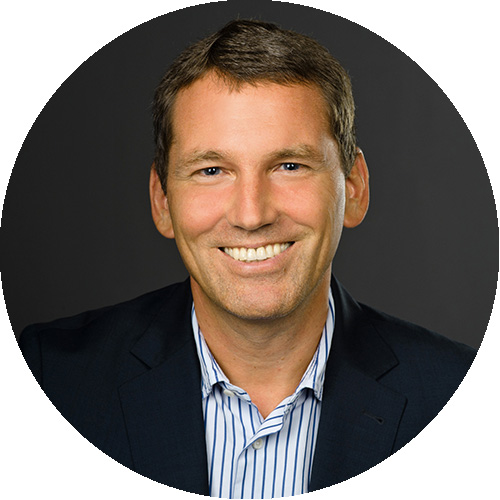
Interview with Mag. Gunther Fürstberger, CEO of MDI Management Development International.

This year OKR proved to be a great method to overcome crisis situations. Therefore, I interviewed our CEO Gunther Fürstberger about the direct impact of OKR on our growth as a consulting and training company and asked an essential question: Does OKR – Objectives and Key results actually pay off?”

Aline: “In many companies across all industries upper management is discussing, whether the implementation of OKR in their company makes sense. For sure, an essential question is: Does OKR pay off”?

Gunther: “Yes I am also hearing these discussions especially in the finance and health industry at the moment.”

Aline: “I suppose it is difficult to give a general answer. But you are a CEO of a smaller company group in the areas of consulting, tourism and real estate and you have been working with OKR for 4 years, what is your resumé?”

Gunther: “In the time before Covid, OKR contributed a lot to our growth path. We grew 76% in 3 years and it had a great impact on commitment in our team. Since Covid the growth party was sadly over. Because almost all our offered solutions had to do with people coming together: seminars, events and renting out apartments to tourists. This year OKR proved to be a great method to overcome crisis situations. Never has it been more important to adjust continually to a dynamic environment. All companies of the Fürstberger Holding survived all setbacks without the need of making any debts.”


Aline: “That sounds great, but could you be more a little but more specific on how to measure the impact of OKR?”

All hands OKR meeting

This year OKR proved to be a great method to overcome crisis situations. Never has it been more important to adjust continually to a dynamic environment.

Gunther: “Each company is different, and you need to work with assumptions and estimations, but I can share, how I see the costs and benefits at MDI GmbH – a consulting and training company.”

Aline: “Can you give us some hard facts about the company?”

Gunther: “Sure, we are talking about 27 employees, 4 of them in leadership positions. Let’s take 3 months as calculation period and a quarterly revenue of € 1.300.000,-.”

Aline: “Thank you. Now I am curious about the impact of OKR on the balance sheet.”

Gunther: “Good, let’s start with costs: For a quarterly planning meeting we need 6 people for 5h i.e. 30 hours altogether. And 27 people spend each 2 hours on formulating team OKRs including listening to the presentation of company goals and presenting afterwards the new quarterly OKRs to each other, that are 54 h.

Then we need to take into consideration the Check in meetings: Each second week 30 minutes for each employee + 2h for 4 leaders = 12h + 8 h = 20 h; 5x in a quarter are 100 h.

In total we come to 154 h per quarter. If we calculate € 50, – per hour we have people costs of € 7.700, -.

As all organisations who did not introduce OKR somehow deal with goals, we must consider that there are always related people costs. Probably in a classical MbO (Management by objectives) -organisation less time for planning is needed, but on the other side lot of time is spent on ad hoc priority talks.

After analysing the direct costs of running OKR, let’s look at the impact:

My estimation is, that 10% of sales is the result of OKR decisions, due to flexibility in creating and offering fitting solutions, better processes, training, marketing. That counts for € 130.000,- per quarter. But for sure, higher sales means also higher costs involved. For € 130.000 higher sales the related costs might be appr. 80%. That leaves an additional gross margin of € 26.000,-.

But OKR influences also productivity and thus the costs. OKR focuses on change, not on the routine tasks. It helps you to think again and again about which routine task can be stopped, started and optimised. This results in automatization and digitalization. OKR helps to drive this faster and smarter. If we reach a productivity growth of 2% per quarter and the competition only 1 %, we could argue that OKR contributes in our example to € 10.400,- cost advantage. Calculation: If we have 80% of sales as needed costs this means in absolute numbers 1% of € 1.040.000,- of means a competitive advantage of € 10.400,-.

Summing up the financial impact of OKR per quarter we get:

  • Gross margin on higher sales:   € 26.000,-
  • Productivity advantage:              € 10.400,-
  • Total:                                              € 36.400,-

The positive impact on the balance sheet of OKR is almost 5 x higher than the related people costs.”

Aline: “It seems you are convinced that OKR pays off?”

 Gunther: “For us, it is definitely a YES!

What serves you next?

Benefits of OKR

What are the benefits of the OKR system?

What are the benefits of the OKR method and how does it work exactly? MDI trainer and OKR master Susanne Spath gives us an introduction and a story to visualize the OKR method.

Read article

Agile leadership orientation and basics

Agile leadership - orientation and basics

There are plenty of agile methods – but what are the benefits of each method? MDI trainer Alexandra Sock talks about her agile leadership seminar, which gives you an overview of different agile methods.

Read article

Scrum& Agile leadership

Scrum & Agile leadership

Scrum is one of the oldest agile methods and is the mother of all agile methods in many people’s opinion. Susanne Spath is OKR master and Scrum certified gives us an introduction to this method and tells us for whom it makes sense to implement Scrum.

Read article

Design virtual Meetings effectively and efficiently

Design virtual Meetings effectively and efficiently

​We are doing it… many weeks with the stricter regulations have passed, still a great part of your working time may be characterized by meetings which are facilitated virtually.

Leaders and HR managers from various organisations I work with describe different experiences. These range from „We are more focused in our meetings than before“ to „Our meetings get out of hand because everyone just says what they are doing“ to “Only one person speaks, everyone else is muted”.

So, what does it take to design virtual meetings effectively and efficiently?

In a nutshell: Use all the elements, which make effective and efficient face-to-face meetings and focus on C D I.

C D I stand for

  • Clarity,
  • Discipline and
  • Personal Interaction

Weaknesses and gaps that may have existed in face-to-face meetings are becoming more apparent in a virtual context, so the level of suffering increases.

Here you have some practical hacks to be able to focus more on your C D I:

CLARITY


Be clear about the following questions:

  • “What is the specific objective of the meeting?“ Is the meeting the best way to handle the subject?
  • “Which outcome would you like to achieve with the meeting?”
  • Which type of meeting is it?” (e.g. transfer of information, brainstorming, decision-making, exchange of experience)
  • “Why am I in this meeting?, “What is my task, my duty?”, “What can I contribute?”, “What is expected from me?”
  • “Who else should be involved in the meeting?” (e.g. Stake holders, decision makers, knowledge carriers)

Yes, it seems tedious to clarify these questions, but only if there is clarity for the participants, they go into meetings with the same expectations.

DISCIPLINE & FOCUS


  • Preparation: When objectives and type of meeting are clear, all attendees know what to prepare for the meeting. Lead by example and be prepared!

  • Punctuality and interference-free environment: When a meeting is set for 9:00, then everyone should be dialled in and the required infrastructure and equipment ready to go, so that the meeting can start on time and without interference.

  • Stick to the plan: An hour-long meeting ends after one hour. If at the end more time would be needed, clarify how to continue working on the pending topics.


  • Shorter meetings (45-60 minutes max): Have shorter meetings, in which all attendees fully focus. If there are several topics that require more time, make virtual breaks after 60 minutes.

  • Make sure there is a summary of the results and agreement for follow-up activities.

  • … and well known, but not always easily implemented: make sure you really listen to each other and don’t interrupt.

PERSONAL INTERACTION


  • So far, in addition to virtual meetings, there usually would be the possibility for personal interaction. Therefore, the focus in these virtual meetings is often “on the matter/topic”.


  • Since the possibility of personal interaction is currently very limited, make time and (virtual) space for it.


  • If the infrastructure allows it, hold virtual meetings in video mode as it creates further closeness. It gives you the opportunity to engage more with the reaction of your dialogue partners.


  • At the beginning of the meeting, consciously plan time for social onboarding. These can be questions such as “What is your current energy level at the moment?”, “What do you need so you can get involved in the meeting in the best possible way?”, “What does it take so we can use the meeting as best as possible?”.


  • Generally, use questions more often so that the engagement is increased. In addition to the open and closed questions scale questions are also suitable. You can use it to query various things, from assessment to commitment to experience. For example, “On a scale of 1 to 10, what is your commitment to implement the proposed idea?”. Then ask further questions, such as “What does it take to get from 6 to 7?”. Use one-word questions to quickly get opinions or ideas.


  • If social onboarding is needed at the beginning of the meeting, a feedback loop at the end is just as important. Questions like, “What went well today? What should we keep? What should we change next time?” help to continuously improve the quality and efficiency of meetings.


  • Recommendation! ROTI = Return On Invested Time as a feedback method. With the scale question “Was the time you invested in this meeting worthwhile – in relation to achieved/achievable benefit/advantage?”, you get feedback on the meeting. The scale ranges from “1 = worthless” to “5 = great benefit”. This is followed by the questions mentioned above.


Finally, two more practical tips:


  • Make sure that there is a moderator for each meeting who ensures that the essential principles of effective meetings are adhered to.


  • … and last but not least: It needs the mindset / attitude of all attendees that virtual meetings are a suitable form of meetings.

In need of a working virtual Set-Up?

We prepared interactive and virtual Masterclasses, inhouse workshops and video courses for your needs right now!

What serves you next?

Leaving the comfort zone - More courage for more training results

The core changes of the digital disruption

Digitalization is a global megatrend that forces almost every company to change significantly. But what are the main characteristics of those changes? Khan identified 6 core changes of the digital disruption – interconnectedness, abundance of information, increased complexity and transparency, less hierarchical and more empowerment and man-machine cooperation. But what does this mean for a company?

Read more

Boosting innovation by developing experts

The disruption surfer

Due to the digitalization, the world we live and work in has become more and more fluid and is constantly changing. Changes are happening so fast that we can barely build on a solid ground. Therefore, it is essential – as a leader – to keep an eye on the approaching waves of change. Gunther Fürstberger explained what you need to successfully respond to those changes.

Read article

International leadership development with Mondi

Implementation of OKR - an experience report

In 2017, we started to implement agile methods at MDI. The first method we introduced was OKR (Objective and Key Results) – a goal setting and modern leadership system which was invented by Intel and is used by companies such as Google, Airbnb & Co. After 6 months of working with OKR’s, we could already see significant changes. Read more about our experiences and the meeting structure of this agile method.

Read article

Executive Coaching in Italy and Switzerland – a look into the present and the future

Executive Coaching in Italy and Switzerland – a look into the present and the future

Alexander Rehm has been working as an executive coach and leadership expert for many years already. He is originally from Munich but lived in Italy for a long time and is currently living in Switzerland. He works as a coach in both countries and knows the cultural differences between them. We talked to him about his work as an executive coach, the role of executives in the digital transformation and the future of face 2 face coachings.


You have lived in Italy for a long time and still work there as a coach today. Currently, you’re living in Switzerland. Has your work as a coach and the expectations of your clients, the executives, changed over the past few years?


Alexander: 20 years ago, coaching was not an issue at all in Italy. It was more the opposite: anyone who needed a coach was “sick” in the eyes of the others. Italian companies were usually very hierarchical and once someone made it to the top, the person was quite resistant to any “advice” or coaching. Unfortunately, this has hardly changed in many companies until today. Most of my clients work for international companies, therefore their leadership culture is obviously different. The reason for coaching is almost always a result from feedback, either directly from the supervisor or through 360° feedback. In that sense, my work has hardly changed, even though the expectation of me as a coach is going in the direction of consulting. Some clients are genuinely disappointed when I tell them that they cannot only get some advice from me about what they can do better. They actually have to work on themselves to trigger the desired change.


What is the situation in Switzerland, what differences do you see between the two countries?


In my opinion, the biggest difference between the countries is the attitude. In Switzerland, coaching is a perfectly accepted tool for personal development. I think that Swiss executives are more actively taking on further training opportunities than their colleagues in Italy. As a coach, you may have less need for explanation, but the topics are usually very similar.


A very general question: In your opinion, what are currently the biggest challenges that managers in Italy and Switzerland have to face?


Leadership has so many different aspects that answering that question could fill an entire book. Therefore, I would like to direct my answer to one topic – and that is the understanding of leadership especially in the context of differences between the generations. Nowadays, we have up to 3 different age groups or generations in a company. Very hierarchical structures and leadership styles are not up-to-date anymore. Just yesterday, I had a conversation with a client who told me how difficult it would be to have a good friend as an employee. When I asked him why he thought so, he said that he would feel uncomfortable giving him instructions. So I asked him why he thinks that his other employees would like instructions. I think that’s when something happened to him…


Executive Coaching in digital times


We live in a VUCA world and digitalization has an impact on many aspects of our lives. In your opinion, how do you have to act as a leader to respond to this change? Is that an important topic for you in coaching?


What does digitalization bring with it? Change! Changes or rather the fear of it or even the refusal to face it is always a key issue in coaching. Therefore, I do not see a big difference to a merger, a restructuring, an adjustment of the business model, etc. Something I notice, however, is the lack of understanding, which opportunities the digitalization offers for the companies. It is not (more) about the replacement of the typewriter by a computer, but the integration of all digital possibilities in the business process. In my opinion, many internal but also external change managers should do a better job here.


Are you using many digital tools in your coaching and how do you see the future of face 2 face coaching?


My coaching is always a mix of face 2 face sessions and short virtual sequences. Often it is about keeping the client involved in the process and therefore, Skype or Zoom calls are the ideal tools. But I am a bit concerned about the large number of offers on the subject of speed or telephone coaching. What makes us coaches, is the ability to hear between the lines – and that is not possible without the perception of body language in my opinion. So I think that also in the future, coaching will be a good mix of digital and face 2 face coaching sessions.

Executive coaching

Online tools can, of course, add some value to a coaching session but what makes a good coach is the ability to hear between the lines and this is not possible without the perception of body language.

You have worked in an international environment in sales and marketing for a long time. What was the reason to start working in the field of human resources development and specialize in leadership development?


At some point, everyone is wondering if this is it and what the reason is to get up every day. I was able to live out my passion for human development as the head of a European organization. The results were so encouraging that I – within the group – reoriented myself towards leadership development. The establishment and leadership of the company’s Academy inspired me to live my mission as an independent coach after many years.

Where do you see the biggest challenges in leadership development in the next few years? On the one hand for coaches, on the other hand for executives themselves.


Leadership development will (have to) go even more in the direction of personality development. Business schools like IMD in Lausanne or INSEAD near Paris have been recognizing this for a long time. They offer a good mix of management knowledge as well as best practice examples and intensive coaching sequences in their programs. In these sequences, e.g. the results of a 360 ° feedback are discussed in small groups. The coach has a rather moderating role here. The participants are taught coaching techniques based on current practical examples, which help them to strengthen their self-perception. I believe that all of us – leaders and coaches – will need to be even more flexible and willing to learn in the future.

Our interview partner
What are your favorite coaching topics?

Life crisis, leadership problems, the lack of (self) motivation, reorientation, location determination and difficult top managers who believe they know everything but still feel that something is missing.

What motivates or drives you in your job?

I have a strong need to work with leaders, to help them find access to their own issues and to keep them involved in the process. I want them to not only think about possible solutions but accompanying them with the implementation of those solutions.

Do you have a personal motto or slogan?

My mission is to support leaders finding their own purpose

What serves you next?

Leaving the comfort zone - More courage for more training results

Purpose & Engagement in digital times

Why do I do what I am doing? What do I contribute and what is the point of all of this? Many of today’s leaders are asking themselves questions like this. In a time where everything changes so fast and nothing seems to be permanent, it is only natural to deal with such issues. Anita Berger is an expert when it comes to engagement and motivation. She told us why the question of meaning is such an important issue and why the purpose of a company plays a crucial role.

Read article

Boosting innovation by developing experts

Transformational coaching

The coaching industry is undergoing major changes caused by topics such as AI, VUCA, and digitalization. A few years ago, when we had a leadership problem, we were hiring a coach who can help and the problem was solved. But it’s no longer as simple as that. Inge Simons is working as an executive coach and told us more about the changes within the coaching industry and why it is becoming more and more important to work with the individual in its whole team.

Read article

International leadership development with Mondi

Leadership Training & Coaching in the Middle East

Laurie Santos is originally from the US but has been living in different European countries and the Middle East for several years. She is still working as a coach and trainer in Kuwait. She gave us some insights into the business world in the Middle East, the current challenges for organizations there and the view on international leadership development.

Read article